





Search
-
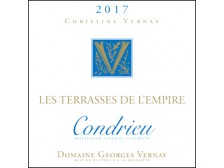
Georges Vernay was once known as the “Pope of Condrieu”, resurrecting this appellation from a mere 7 ha in 1960 to almost 200 ha today. Since 1997, his daughter Christine has continued his work step by step, converting the entire vineyard to biodynamic viticulture and creating new cuvées (Les Terrasses de l'Empire, Maison Rouge, Blonde du Seigneur...) for better parcel management.
Rated three stars in the Revue du Vin de France guide.
Les Terrasses de l'Empire is the archetypal Condrieu “on the fruit”, with inimitable aromas of white peach, apricot kernels and pruned almond. To be enjoyed young, for its pleasant freshness and finesse.The 2023 vintage in the press:
La Revue du Vin de France (Guide 2026): 93/100 "Les Terrasses de l'Empire, for its generous fruitiness and immediate accessibility."
Bettane + Desseauve (Guide 2026) : 91/100
Vinous (N. Greinacher - November 2024): 92/100 "Fresh apricot, mango, spring blossom, banana and a touch os jasmine introduce the 2023 Condrieu Les Terrasses de L'Empire, a medium-bodied, hauntingly elegant Condrieu. Touching the palate with gentle concentration, the 2023 ends with a slice of juicy apricot on the sapid finish."
More- To keep or to drink:
- Ready to drink
- Apogée:
- 2025-2030
- Organic certification:
- 2020
- Alcohol degree:
- 14%
-
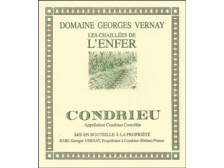
Georges Vernay was in his time known as the "Pope of Condrieu", resurrecting this appellation which counted only 7 ha in 1960 (nearly 200 ha today). Since 1997, his daughter Christine has continued his work step by step with the creation of new vintages (Les Terrasses de l'Empire, Maison Rouge, Blonde du Seigneur...) for a better parcel management and the conversion of the whole vineyard to biodynamic farming.
Rated three stars in the Revue du Vin de France guide.Les Chaillées de l'Enfer is a wine of tension and balance, with fruity notes (grapefruit, white peach) and herbal notes (mint, lemon thyme).
The 2024 vintage in the press :
La Revue du Vin de France (Guide 2027) : 96/100 Coup de ♥ "Les Chaillées de l’Enfer combine finesse and power, with rich, savoury fruit and lovely bitter notes."
Bettane + Desseauve (Guide 2027) : 94/100
More- To keep or to drink:
- Wait 1 to 2 years
- Apogée:
- 2027-2037
- Organic certification:
- 2020
- Grape varieties:
- 100% Viognier
-
Georges Vernay was in his time known as the "Pope of Condrieu", resurrecting this appellation which counted only 7 ha in 1960 (nearly 200 ha today). Since 1997, his daughter Christine has continued his work step by step with the creation of new vintages (Les Terrasses de l'Empire, Maison Rouge, Blonde du Seigneur...) for a better parcel management and the conversion of the whole vineyard to biodynamic farming.
Rated three stars in the Revue du Vin de France guide.Les Chaillées de l'Enfer is a wine of tension and balance, with fruity notes (grapefruit, white peach) and herbal notes (mint, lemon thyme).
The 2023 vintage in the press:
La Revue du Vin de France (Guide 2026): 96/100 "Les Chaillées de l'Enfer, with a sunny and complex profile, blending aromas of white and yellow fruits, flowers and citrus."
Bettane + Desseauve (Guide 2026) : 93/100
More- To keep or to drink:
- Ready to drink
- Apogée:
- 2026-2033
- Organic certification:
- 2020
- Alcohol degree:
- 14%
-
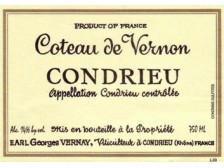
Georges Vernay was once known as the “Pope of Condrieu”, resurrecting this appellation from a mere 7 ha in 1960 to almost 200 ha today. Since 1997, his daughter Christine has continued his work step by step, converting the entire vineyard to biodynamic viticulture and creating new cuvées (Les Terrasses de l'Empire, Maison Rouge, Blonde du Seigneur...) for better parcel management.
Rated three stars in the Revue du Vin de France guide.Coteau de Vernon is the epicenter (and quintessence) of Condrieu: a wine of great aromatic complexity and extreme elegance.
The 2022 vintage in the press:
La Revue du Vin de France (Guide 2026): 97/100 "The phenomenal Coteau de Vernon, with remarkable balance and length."
Bettane + Desseauve (Guide 2026) : 97/100
More- To keep or to drink:
- Ready to drink
- Apogée:
- 2026-2038
- Organic certification:
- 2020
-
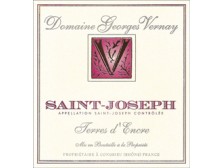
Georges Vernay was once known as the “Pope of Condrieu”, resurrecting this appellation from a mere 7 ha in 1960 to almost 200 ha today. Since 1997, his daughter Christine has continued his work step by step, converting the entire vineyard to biodynamic viticulture and creating new cuvées (Les Terrasses de l'Empire, Maison Rouge, Blonde du Seigneur...) for better parcel management.
Rated three stars in the Revue du Vin de France guide.More- To keep or to drink:
- Ready to drink
- Apogée:
- 2025-2033
- Organic certification:
- 2020
- Alcohol degree:
- 13%
-
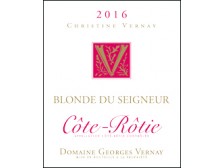
Georges Vernay was once known as the “Pope of Condrieu”, resurrecting this appellation from a mere 7 ha in 1960 to almost 200 ha today. Since 1997, his daughter Christine has continued his work step by step, converting the entire vineyard to biodynamic viticulture and creating new cuvées (Les Terrasses de l'Empire, Maison Rouge, Blonde du Seigneur...) for better parcel management.
Rated three stars in the Revue du Vin de France guide.Blonde du Seigneur is an alliance of power and delicacy: a voluptuous, smoky wine with black fruit, olive and pepper, enhanced by a floral component provided by Viognier (5%).
The 2023 vintage in the press:
La Revue du Vin de France (Guide 2027) : 90/100 “The 2023 La Blonde du Seigneur Côte-Rôtie releases a scent that is more smoky than fruity; whilst one might appreciate its liveliness and freshness, the wood sweetens the fruit and dries it out, such is its presence in the structure.”
Bettane + Desseauve (Guide 2027) : 91/100
More- To keep or to drink:
- Wait 1 to 2 years
- Apogée:
- 2028-2038
- Organic certification:
- 2020
-
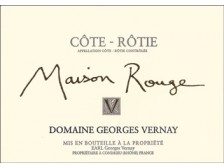
Georges Vernay was once known as the “Pope of Condrieu”, resurrecting this appellation from a mere 7 ha in 1960 to almost 200 ha today. Since 1997, his daughter Christine has continued his work step by step, converting the entire vineyard to biodynamic viticulture and creating new cuvées (Les Terrasses de l'Empire, Maison Rouge, Blonde du Seigneur...) for better parcel management.
Rated three stars in the Revue du Vin de France guide.Made from old Syrah vines on the eponymous plot, Maison Rouge is a powerful, structured Côte-Rôtie with great ageing potential.
The 2022 vintage in the press :
La Revue du Vin de France (Guide 2027) : 90/100 “The 2022 Maison Rouge Côte-Rôtie is overwhelmed by an unintegrated oakiness, both on the nose and on the palate, which masks the fruit without allowing the terroir to shine through — with a hint of dryness to boot.”
Bettane + Desseauve (Guide 2027) : 94/100
More- To keep or to drink:
- Wait 3 to 5 years
- Apogée:
- 2030-2044
- Organic certification:
- 2020
-
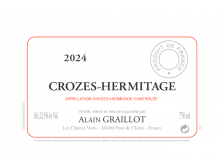
Regarded as the ‘pope of Crozes-Hermitage’, the Alain Graillot estate has, since the 1980s, played a major role in raising the profile of this appellation, which was previously so undervalued. On alluvial gravel soils (at the confluence of the Isère and Rhône rivers), this estate has been producing straightforward, juicy, elegant and, above all, perfectly easy-drinking wines for 40 years. Awarded two stars in the 2026 edition of the Revue du Vin de France guide.
The 2024 vintage in the press:
La Revue du Vin de France (Guide 2027) : 93/100 “The white Crozes takes us on a flavourful journey: creamy, enveloping fruit, with depth and structure.”
Vinous (N. Greinacher – January 2026): 89/100 “The light to medium-bodied 2024 Crozes-Hermitage Blanc starts its aromatic profile with flinty lemon flesh, ripe pear and white peach. Crisp and bright, the 2024 packs moderate overall substance and concludes with a clean finish.”
More- To keep or to drink:
- Wait 1 to 2 years
- Apogée:
- 2027-2034
- Grape varieties:
- 80% marsanne, 20% roussanne
-
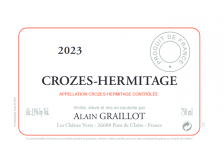
Regarded as the ‘pope of Crozes-Hermitage’, the Alain Graillot estate has, since the 1980s, played a major role in raising the profile of this appellation, which was previously so undervalued. On alluvial gravel soils (at the confluence of the Isère and Rhône rivers), this estate has been producing straightforward, juicy, elegant and, above all, perfectly easy-drinking wines for 40 years. Awarded two stars in the 2026 edition of the Revue du Vin de France guide.
The 2023 vintage in the press:
La Revue du Vin de France (2026 Guide): 92/100 “The reds are up to the task: in the typically ‘unpretentious’ style we’ve come to expect, the Crozes delivers a spicy and juicy performance, carried by the whole-cluster harvest which lends it a noble vegetal character. It’s hard to resist.”
Vinous (N. Greinacher – January 2026): 91/100 “The 2023 Crozes-Hermitage comes out shining, opening with dried violets, orange rind and ripe red fruits. Delicately assertive fleshy tones add more complexity. Midweighted and refined, the 2023 surpasses the 2022 by a landslide, doubling down with accentuated freshness on the savoury finale.”
More- To keep or to drink:
- Wait 1 to 2 years
- Apogée:
- 2027-2035
-
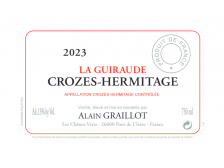
Regarded as the ‘pope of Crozes-Hermitage’, the Alain Graillot estate has, since the 1980s, played a major role in raising the profile of this appellation, which was previously so undervalued. On alluvial gravel soils (at the confluence of the Isère and Rhône rivers), this estate has been producing straightforward, juicy, elegant and, above all, perfectly easy-drinking wines for 40 years. Awarded two stars in the 2026 edition of the Revue du Vin de France guide.
La Guiraude is not a single-vineyard cuvée but a selection of the finest barrels from a great vintage. In 2023, it was a "coup de cœur" in the Revue du Vin de France, scoring 94/100: "Admirable, with depth, length and a wonderfully juicy expression".
The 2023 vintage in the press:
La Revue du Vin de France (2026 Guide): 94/100 Coup de ♥ “La Guiraude, a selection of barrels, is admirable, with depth, length and a wonderfully juicy character.”
Vinous (N. Greinacher – January 2026): 93/100 “The 2023 Crozes-Hermitage La Guiraude shows well, opening with pronounced spice box, dried violets, forest strawberry and ripe black cherry. Medium-bodied and concentrated, the 2023 shows outstanding overall balance, bringing the palate to rest with well-etched tension and gentle tannic structure.”
More- To keep or to drink:
- Wait 1 to 2 years
- Apogée:
- 2028-2040
-
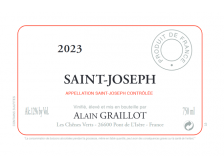
Regarded as the ‘pope of Crozes-Hermitage’, the Alain Graillot estate has, since the 1980s, played a major role in raising the profile of this appellation, which was previously so undervalued. On alluvial gravel soils (at the confluence of the Isère and Rhône rivers), this estate has been producing straightforward, juicy, elegant and, above all, perfectly easy-drinking wines for 40 years. Awarded two stars in the 2026 edition of the Revue du Vin de France guide.
The 2023 vintage in the press:
La Revue du Vin de France (2026 Guide): 93/100
Vinous (N. Greinacher – January 2026): 90/100 “The 2023 Saint-Joseph comes forward nicely in these early days, opening with delicate licorice, black cherry, clove and hints of blackberry. Round and refined, the medium-bodied 2023 checks out with spicy persistence.”
More- To keep or to drink:
- Wait 1 to 2 years
- Apogée:
- 2028-2037
-
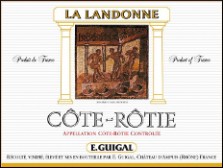
In two generations (Etienne in 1946 then Marcel in 1961), the name Guigal has established itself as the standard bearer in the northern Rhône. Its three mythical Côte-Rôtie cuvées (La Mouline, La Landonne and La Turque) have ensured the Maison's reputation for excellence beyond the borders of France.
Domaine rated two stars in La Revue du Vin de France 2021's guide.100% Syrah (35 years old), aged 40 months in new barrels, La Landonne is a super-powerful wine with a massive tannic structure, extraordinary concentration and the ability to stand the test of time. The 2009 vintage was rated 100/100 by Robert Parker "a killer wine, built like Arnold Schwarzenegger".
The 2009 vintage in the press :
Vinous (J. Raynolds - March 2014): 96/100 "Glass-staining purple. Explosive aromas of dark berries, fresh violet and anise, with a hint of smokiness in the background. Sappy and incisive on the palate, offering deeply pitched, spice-tinged cassis and bitter cherry flavors accented by bitter herbs. Closes extremly long, with firm tannic grip and alluring sweetness, leaving a zesty mineral note behind. Showing a surprising degree of elegance for the vintage and for this bottling, which is usually the most forbidding of Guigal's big-gun Cote-Roties."
More- To keep or to drink:
- Ready to drink
- Apogée:
- 2025-2050
- Alcohol degree:
- 13%
-
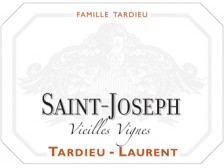
Since 1994, Michel Tardieu has been selecting and growing wines from very old vines and from the best terroirs of each appellation. Associated until 2007 with Dominique Laurent, known for the concentration of his Burgundy wines, Michel Tardieu has, because of the innate richness of the Rhone Valley wines, always sought to favour elegance and aromatic complexity in his selections.
Promoted two stars in the 2021 Revue du Vin de France guide.Saint-Joseph Vieilles Vignes, with a dominant of marsanne, comes from 30 to 40 years old vines.
More- To keep or to drink:
- Ready to drink
- Apogée:
- 2026-2033
- Grape varieties:
- 85% roussanne, 15% marsanne
-
Since 1994, Michel Tardieu has been selecting and growing wines from very old vines and from the best terroirs of each appellation. Associated until 2007 with Dominique Laurent, known for the concentration of his Burgundy wines, Michel Tardieu has, because of the innate richness of the Rhone Valley wines, always sought to favour elegance and aromatic complexity in his selections.
Promoted two stars in the 2021 Revue du Vin de France guide.Saint-Péray Vieilles Vignes: 50% marsanne (with 100 years old vines!) and 50% roussanne. On a background of honeyed and toasted notes, intense aromas of white flowers and quince, the freshness is well present and, in the mouth, the vivacity balances the roundness.
More- To keep or to drink:
- Ready to drink
- Apogée:
- 2026-2032
- Grape varieties:
- 50% marsanne, 50% roussanne
-
Since 1994, Michel Tardieu has been selecting and growing wines from very old vines and from the best terroirs of each appellation. Associated until 2007 with Dominique Laurent, known for the concentration of his Burgundy wines, Michel Tardieu has, because of the innate richness of the Rhone Valley wines, always sought to favour elegance and aromatic complexity in his selections.
Promoted two stars in the 2022 Revue du Vin de France guide.A blend of grenache, roussanne, clairette and bourboulenc, this white Châteauneuf plays the card of freshness and discretion. With aromas of white peach and orange blossom, its natural power will be fully expressed after 5 to 6 years of aging.
More- To keep or to drink:
- Ready to drink
- Apogée:
- 2026-2035
- Grape varieties:
- 40% grenache, 30% roussanne, 20% clairette et 10% bourboulenc
-
Since 1994, Michel Tardieu has been selecting and growing wines from very old vines and from the best terroirs of each appellation. Associated until 2007 with Dominique Laurent, known for the concentration of his Burgundy wines, Michel Tardieu has, because of the innate richness of the Rhone Valley wines, always sought to favour elegance and aromatic complexity in his selections.
Promoted two stars in the 2022 Revue du Vin de France guide.100% Viognier (45 years old), from the best terroirs of the appellation. A Condrieu that is restrained, expressive and complex but without exuberance.
More- To keep or to drink:
- Ready to drink
- Apogée:
- 2026-2033
- Grape varieties:
- 100% Viognier
-
Since 1994, Michel Tardieu has been selecting and growing wines from very old vines and from the best terroirs of each appellation. Associated until 2007 with Dominique Laurent, known for the concentration of his Burgundy wines, Michel Tardieu has, because of the innate richness of the Rhone Valley wines, always sought to favour elegance and aromatic complexity in his selections.
Promoted two stars in the 2022 Revue du Vin de France guide.
Splendid Hermitage white wine, 80% Marsanne and 20% Roussanne, with aromas of peach and acacia honey, with a characteristic touch of marzipan.The 2023 vintage in the press:
La Revue du Vin de France (2026 Guide): 94/100 “The Hermitage has an extra burst of vigour on the palate. The ageing is evident in a hint of vanilla that in no way detracts from the fruit, as the wine has the density to absorb it.”
More- To keep or to drink:
- Ready to drink
- Apogée:
- 2026-2036
- Grape varieties:
- 80% marsanne, 20% roussanne
-
Since 1994, Michel Tardieu has been selecting and growing wines from very old vines and from the best terroirs of each appellation. Associated until 2007 with Dominique Laurent, known for the concentration of his Burgundy wines, Michel Tardieu has, because of the innate richness of the Rhone Valley wines, always sought to favour elegance and aromatic complexity in his selections.
Promoted two stars in the 2022 Revue du Vin de France guide.Thanks to vines (Syrah) 60 years old, Michel Tardieu produces a 'grand' Crozes-Hermitage. Divided between fruit and minerality, in a round and silky style more Burgundian than Rhodanian, a perfect introduction to the Hermitage's wines.
More- To keep or to drink:
- Wait 1 to 2 years
- Apogée:
- 2027-2035
-
Since 1994, Michel Tardieu has been selecting and growing wines from very old vines and from the best terroirs of each appellation. Associated until 2007 with Dominique Laurent, known for the concentration of his Burgundy wines, Michel Tardieu has, because of the innate richness of the Rhone Valley wines, always sought to favour elegance and aromatic complexity in his selections.
Promoted two stars in the 2022 Revue du Vin de France guide.This Saint-Joseph Vieilles Vignes is a perfect balance between the gourmet raspberry/cherry fruit (as in Hermitage) and the mineral tension of the schist and granite subsoil (as in Cornas). Syrah and serine (small syrah), aged 60 and over 100 years respectively.
The 2023 vintage in the press:
La Revue du Vin de France (2026 Guide): 91/100 “Further north, the Saint-Joseph is full-bodied and lush, with a subtle, well-integrated buttery note complementing the fruit, where violet notes dominate.”
Bettane + Desseauve (Guide 2027) : 92/100
More- To keep or to drink:
- Wait 1 to 2 years
- Apogée:
- 2028-2038
-

Since 1994, Michel Tardieu has been selecting and growing wines from very old vines and from the best terroirs of each appellation. Associated until 2007 with Dominique Laurent, known for the concentration of his Burgundy wines, Michel Tardieu has, because of the innate richness of the Rhone Valley wines, always sought to favour elegance and aromatic complexity in his selections.
Promoted two stars in the 2022 Revue du Vin de France guide.Cornas from Syrah and small Syrah aged 60 years minimum. The austerity due to the schistose soil is perfectly balanced here by Michel Tardieu's talent as a breeder. A model for the northern Rhône.
More- To keep or to drink:
- Wait 1 to 2 years
- Apogée:
- 2027-2038
- Alcohol degree:
- 13.5%
-
Since 1994, Michel Tardieu has been selecting and growing wines from very old vines and from the best terroirs of each appellation. Associated until 2007 with Dominique Laurent, known for the concentration of his Burgundy wines, Michel Tardieu has, because of the innate richness of the Rhone Valley wines, always sought to favour elegance and aromatic complexity in his selections.
Promoted two stars in the 2022 Revue du Vin de France guide.The rare Cuvée Vieilles Vignes is uncompromising, with Syrahs aged from 80 to over 100 years on two plots of land on the hillside, vinified 75% in whole clusters. Expect at least 15 years of cellar ageing.
More- To keep or to drink:
- Wait 5 to 10 years
- Apogée:
- 2033-2050
- Alcohol degree:
- 13.5%
-

Since 1994, Michel Tardieu has been selecting and growing wines from very old vines and from the best terroirs of each appellation. Associated until 2007 with Dominique Laurent, known for the concentration of his Burgundy wines, Michel Tardieu has, because of the innate richness of the Rhone Valley wines, always sought to favour elegance and aromatic complexity in his selections.
Promoted two stars in the 2021 Revue du Vin de France guide.A new cuvée created in 2017, a Côte-Rôtie Vieilles Vignes from the heart of the hillside on the major terroirs of the Côte Brune. Phenomenal concentration, energetic tannin, a compact but refined wine, to wait at least 10 years before considering tasting.
The 2023 vintage in the press:
La Revue du Vin de France (2026 Guide): 94/100 “Let’s conclude with this pure Côte-Rôtie, which offers a lovely fruity finish. This deep, age-worthy wine is characterised by rich, refined fruit.”
Bettane + Desseauve (Guide 2027) : 97/100
More- To keep or to drink:
- Wait 3 to 5 years
- Apogée:
- 2030-2040
-
Since 1994, Michel Tardieu has been selecting and growing wines from very old vines and from the best terroirs of each appellation. Associated until 2007 with Dominique Laurent, known for the concentration of his Burgundy wines, Michel Tardieu has, because of the innate richness of the Rhone Valley wines, always sought to favour elegance and aromatic complexity in his selections.
Promoted two stars in the 2021 Revue du Vin de France guide.A new cuvée created in 2017, a Côte-Rôtie Vieilles Vignes from the heart of the hillside on the major terroirs of the Côte Brune. Phenomenal concentration, energetic tannin, a compact but refined wine, to wait at least 10 years before considering tasting.
The 2021 vintage in the press:
Vinous (N.Greinacher - October 2023): 92/100 “The deep purple-colored 2021 Côte-Rotie Vieilles Vignes checks in at 13% alcohol. Ripe red fruits, cedar, licorice and meaty nuances are all pushed forward. Medium-bodied, round and polished, the 2021 engages the palate with good concentration and bright acidity. Ripe yet firm tannins call for a few more years in bottle. It closes with persistence on the sapid finale.”
More- To keep or to drink:
- Wait 5 to 10 years
- Apogée:
- 2032-2045
-
Since 1994, Michel Tardieu has been selecting and growing wines from very old vines and from the best terroirs of each appellation. Associated until 2007 with Dominique Laurent, known for the concentration of his Burgundy wines, Michel Tardieu has, because of the innate richness of the Rhone Valley wines, always sought to favour elegance and aromatic complexity in his selections.
Promoted two stars in the 2022 Revue du Vin de France guide.More roundness and flesh than Côte-Rôtie, with a texture of fatty and melting tannins, the solar side of the Hermitage hillside is perfectly highlighted here.
More- To keep or to drink:
- Wait 1 to 2 years
- Apogée:
- 2028-2042
-
Since 1994, Michel Tardieu has been selecting and growing wines from very old vines and from the best terroirs of each appellation. Associated until 2007 with Dominique Laurent, known for the concentration of his Burgundy wines, Michel Tardieu has, because of the innate richness of the Rhone Valley wines, always sought to favour elegance and aromatic complexity in his selections.
Promoted two stars in the 2022 Revue du Vin de France guide.More roundness and flesh than Côte-Rôtie, with a texture of fatty and melting tannins, the solar side of the Hermitage hillside is perfectly highlighted here.
The 2022 vintage in the press:
Vinous (N. Greinacher - December 2024): 92/100 "Dark and brooding, the 2022 Hermitage unwinds with intense notes of licorice, black cherry jam, clove, wood smoke and vanilla. Full-bodied, concentrated and bold, the 2022 is an ambitious, firmly structured Hermitage that demands at least three more years of cellaring. This ends with stamina on the refined, precise finale."
More- To keep or to drink:
- Wait 3 to 5 years
- Apogée:
- 2030-2042
- Alcohol degree:
- 13.5%
-
Since 1994, Michel Tardieu has been selecting and growing wines from very old vines and from the best terroirs of each appellation. Associated until 2007 with Dominique Laurent, known for the concentration of his Burgundy wines, Michel Tardieu has, because of the innate richness of the Rhone Valley wines, always sought to favour elegance and aromatic complexity in his selections.
Promoted two stars in the 2022 Revue du Vin de France guide.More roundness and flesh than Côte-Rôtie, with a texture of fatty and melting tannins, the solar side of the Hermitage hillside is perfectly highlighted here.
The 2021 vintage in the press:
Vinous (N.Greinacher - October 2023): 92/100 “The 2021 Hermitage exhibits bright raspberry, red cherry, leafy shadings, cedarwood and violet traces. Polished and round, the 2021 engages the palate with great concentration and juicy core of fruit. Checking in at 13.5% alcohol, it will benefit from two more years in bottle.”
More- To keep or to drink:
- Wait 3 to 5 years
- Apogée:
- 2030-2045
-
Since 1994, Michel Tardieu has been selecting and growing wines from very old vines and from the best terroirs of each appellation. Associated until 2007 with Dominique Laurent, known for the concentration of his Burgundy wines, Michel Tardieu has, because of the innate richness of the Rhone Valley wines, always sought to favour elegance and aromatic complexity in his selections.
Promoted two stars in the 2022 Revue du Vin de France guide.More roundness and flesh than Côte-Rôtie, with a texture of fatty and melting tannins, the solar side of the Hermitage hillside is perfectly highlighted here.
More- To keep or to drink:
- Wait 3 to 5 years
- Apogée:
- 2030-2045
- Alcohol degree:
- 14%
-
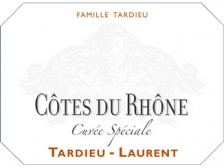
Since 1994, Michel Tardieu has been selecting and growing wines from very old vines and from the best terroirs of each appellation. Associated until 2007 with Dominique Laurent, known for the concentration of his Burgundy wines, Michel Tardieu has, because of the innate richness of the Rhone Valley wines, always sought to favour elegance and aromatic complexity in his selections.
Promoted two stars in the 2021 Revue du Vin de France guide.The Côtes-du-Rhône Cuvée Spéciale is made with Grenache, a wine with soft tannins and a fruity character.
More- To keep or to drink:
- Ready to drink
- Apogée:
- 2026-2032
- Grape varieties:
- 100% grenache
-
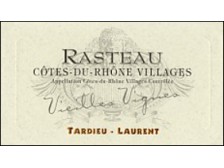
Since 1994, Michel Tardieu has been selecting and growing wines from very old vines and from the best terroirs of each appellation. Associated until 2007 with Dominique Laurent, known for the concentration of his Burgundy wines, Michel Tardieu has, because of the innate richness of the Rhone Valley wines, always sought to favour elegance and aromatic complexity in his selections.
Promoted two stars in the 2022 Revue du Vin de France guide.
Blend of Grenache aged 80 years, Syrah (40 years) and Mourvèdre (40 years), on the clay-limestone slopes of Rasteau, a fleshy, generous wine, typical southern Rhône.
More- To keep or to drink:
- Ready to drink
- Apogée:
- 2026-2034
- Grape varieties:
- 70% grenache, 20% syrah, 10% mourvèdre
-
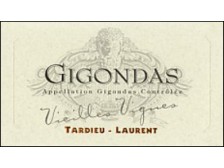
Since 1994, Michel Tardieu has been selecting and growing wines from very old vines and from the best terroirs of each appellation. Associated until 2007 with Dominique Laurent, known for the concentration of his Burgundy wines, Michel Tardieu has, because of the innate richness of the Rhone Valley wines, always sought to favour elegance and aromatic complexity in his selections.
Promoted two stars in the 2022 Revue du Vin de France guide.Built like a "small" Châteauneuf-du-Pape, this Gigondas is just as velvety, just as fruity, but slightly softer. Very strong majority of grenache (vines aged from 60 to more than 100 years), completed with syrah and mourvèdre.
The 2023 vintage in the press:
La Revue du Vin de France (2026 Guide): 92/100 “With lovely aromatic freshness, this Gigondas has a slender body, a pleasingly fine texture and fruit of great purity: a fine expression of this great terroir.”
Bettane + Desseauve (Guide 2027) : 94/100
More- To keep or to drink:
- Wait 1 to 2 years
- Apogée:
- 2028-2040
- Grape varieties:
- 70% grenache, 20% mourvèdre, 10% syrah