





Catalog
To celebrate Black Friday, we're offering discounts on a wide selection of items from our catalog for the first time ever. Take advantage of these exclusive prices to get ready for the holidays or just treat yourself.
-

Cédric Moussé took over the reins of the family estate in 2014, determined to produce ‘better’ wine: eco-grazing, self-sufficient electricity, lighter bottles, paper capsules… A fervent advocate of Pinot Meunier, he produces full-bodied, complex wines that are neither flabby nor rustic. Featured in the 2027 edition of the Revue du Vin de France guide ‘He cultivates the refined, careful and energetic expression of his cuvées, with a magnificent delicacy of bubbles’.
Les Terres d’Illite is a blend of Pinot Noir (80%) and Pinot Meunier (20%) from a plot of chalky marl rich in green clay.
The Cuvée ‘Blanc de Noirs Terre d'Illite’ vintage 2020 in the press:
La Revue du Vin de France (Guide 2026) : 90/100 "Terres d'Illite 2020 is rather well managed for the vintage. Some vegetal notes remain on the Pinots, but the palate embraces this profile."
Vinous (A. Galloni - March 2024): 93/100 "The 2018 Brut Blanc de Noirs Terre d'Illite is impressive. Creamy and ample on the palate, with terrific depth, the Terre d'Illite offers notable resonance. The blend of 80% Meunier and 20% Pinot Noir works so well here. Hints of kirsh, red plum, crushed flowers, spice and lightly honeyed notes all build affortlessly. This is such a gorgeous and complete Champagne."
More- To keep or to drink:
- Ready to drink
- Apogée:
- 2024-2032
- Alcohol degree:
- 12%
-

In 2011, the Descours family took over this old House (1851) with the aim of restoring it to its 19th century glory. The gamble paid off, and was widely acclaimed by the critics: "Charles Heidsieck richly deserves to be considered one of today's most brilliant brands" for Mr Bettane, "Heidsieck is back in the limelight with a complete range of top-class wines" for the Revue du Vin de France.
Predominantly Chardonnay, the 'Charles' style is based on elegance and, above all, great freshness tempered by long maturation (from 5 years for the Brut Réserve to 15 years for the Blanc des Millénaires) in their famous chalk pits near Reims. Throughout the range, there's no trace of oxidation, no rancio, just an extreme smoothness. Great art!The cuvée Blanc des Millénaires is 100% chardonnay.
Company rated two stars in the Revue du Vin de France's annual guide.
Le Blanc des Millénaires received two successive coups de coeur ♥ from the Hachette guide, for its 2006 and 2007.
The 2014 vintage of ‘Blanc des Millénaires’ in the press:
La Revue du Vin de France (Guide 2026) : 95/100 Coup de ♥ "Blanc des Millénaires 2014 is a superb success. Pure and chiselled, it magnifies the Chardonnay in a refined register."
Bettane + Desseauve (Guide 2026) : 97/100
More- To keep or to drink:
- Ready to drink
- Apogée:
- 2025-2035
- Alcohol degree:
- 12%
- Grape varieties:
- 100% chardonnay
-

A precise and meticulous worker, Francis Égly is at the pinnacle of Champagne. With his vineyards beautifully located in grand cru (Pinot Noir and Chardonnay in Ambonnay, Bouzy, and Verzenay) and premier cru (in Vrigny and Bisseuil) appellations, he produces wines of prodigious vinosity, intensity, and noble character, always walking the fine line between the great maturity of the grapes and a subtle chalky minerality. All of its cuvées are vinified in wood and without malolactic fermentation. Critics are enthusiastic, such as Mr. Bettane: “Égly-Ouriet sets the tone for all Champagne viticulture with wines of sidereal depth.” Égly-Ouriet has been awarded its fourth star in the 2025 guide of the Revue du Vin de France.
More- To keep or to drink:
- Ready to drink
- Apogée:
- 2026-2035
- Grape varieties:
- 70% Pinot noir et 30% Chardonnay
- Bottling:
- 2015
- Dosage:
- 1 g/L
-

Known for its red wine, Château Rollan de By also owns 2 ha of alluvial sands on the Gironde estuary, which were planted with Sauvignon Blanc some 30 years ago with the intention of producing a great Medoc white wine.
The owner, Mr. Guyon, decided to apply to the letter the traditional practices for the elaboration of a neat white wine, in the vineyard (high density of 6500 vines per hectare, 100% grassing, manual harvest in crates...) as well as in the cellar (no fining, no filtration, the wine is only clarified by successive rackings, maturing in French oak barrels...).
But he has also integrated the qualitative precepts of today's oenology: short pre-fermentation maceration, low temperature vinification, stirring of the lees, minimal sulfiting...
In a way, the best of both worlds (ancient and modern) are combined to best express the temperate oceanic climate of the northern tip of the Médoc, ideal for white wines: optimal sunshine, mild temperatures without excess, regular rainfall.Its 2019 vintage is exciting, with a combination of minty freshness and saline minerality, on a full, creamy and deep palate. The richness that envelops the texture of this wine is reminiscent of Meursault, perhaps that's why it's bottled in a Burgundy bottle?
More- To keep or to drink:
- Ready to drink
- Apogée:
- 2021-2029
- Alcohol degree:
- 15%
-
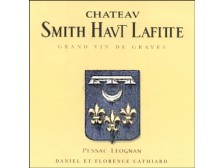
Smith Haut Lafitte's white wine has built up a solid reputation over the past 20 years, even though it is not a grand cru classé (but neither are Haut-Brion blanc and Pape-Clément blanc). A happy marriage of wood and fruit, it always delivers a beautiful aromatic complexity, from lime blossom to citrus fruit, and a lively, rich, fine structure.
The 2022 vintage in the press:
La Revue du Vin de France (Guide 2026): 91/100 "Smith Haut Lafitte goes far in terms of the sweetness and maturity of the fruit. Its flamboyant style seems to be further accentuated by the character of the vintage. The exotic flavour, suggesting passion fruit and pineapple with a hint of coconut milk, echoes a velvety, even languid texture! Slightly overwhelmed by its alcoholic richness, a corollary of its generosity, the wine nevertheless displays poise and authority, expressed through a long finish of flavours with a hint of bitterness."
Vinous (N. Martin - January 2025): 96/100 "The 2022 Smith Haut Lafitte Blanc is superb. What a wine. Rich, ample and creamy, with striking balance, the 2022 dazzles from start to finish. Ripe pear, tangerine peel, chamomile, mint and a kiss of spice all meld together in a stunning Blanc that belies the warm, dry year. Plush, generous contours wrap it all togaether in style. The blance here is magnificent."
J-M Quarin (February 2025): 97/100 "Pale yellow colour. Very aromatic nose, fine, with ripe fruit, developing superbly when the glass is shaken. Floral and buttery nuances. Hints of liquorice and even chardonnay. Once again, the tactile grace of this wine sweeps the palate away and shatters any attempt to describe it, as it melts, perfumes and stretches out long, delicate, powerful and airy all at once. Enjoy it now!"
Bettane + Desseauve (Guide 2027) : 94/100
More- To keep or to drink:
- Wait 1 to 2 years
- Apogée:
- 2027-2035
- Organic certification:
- 2022
-
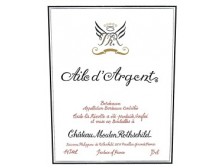
Mouton-Rothschild’s little-known dry white wine (1,000 cases produced annually). Made from 55 per cent Sauvignon, 45 per cent Sémillon and a touch of Muscadelle, the intense and flavourful 2024 vintage (citrus, menthol and white pepper) does credit to the white wines of the Médoc.
More- To keep or to drink:
- Wait 3 to 5 years
- Apogée:
- 2029-2040
-

Rothschild (de Lafite) property. Adjacent to Yquem, Rieussec was until 2012 one of the sweetest wines of Sauternes, revealing itself only after a minimum of 10 years of cellaring. First (r)evolution from 2013 towards a more elegant and delicate style, combining richness and finesse.
Second (r)evolution in 2019 with a drastic tightening of the selections, Rieussec thought as the "head cream" of Château Rieussec, accompanied by a total break of the visual codes: new bottle, new labeling, new repositionable cork, new packaging (box of 4 bottles). Rieussec is now positioned on the second step of Sauternes behind Yquem.
The 2019 vintage in the press:
Bettane et Desseauve (Guide 2024): 94/100
Vinous (N. Martin - January 2022): 97/100 "The 2019 Rieussec is absolutely gorgeous. Gracious and supremely elegant in feel, the 2019 is immediately impressive. An exotic melange of lemon confit, marzipan, white flowers, passionfruit and tangerine oil opens effortlessly. The 2019 is compelling from start to finish. Harvest tool place from October 8 to 15, in three passes. The 2019 is the first vintage that will be offered in a stylish new bottle. It is no secret Sauternes has struggled of late. I must say I really liked the new and very modern presentation, which shows a more playful side of Sauternes that might just work in creating a bite more excitement around these wines."
Hachette (Guide 2023): Coup de ♥ “A sublime Rieussec, with exceptional balance and elegance.”
J-M Quarin (April 2023): 93/100 “The palate heralds the great return of Rieussec.”
More- To keep or to drink:
- Ready to drink
- Apogée:
- 2024-2045
- Alcohol degree:
- 14%
-

Puyguéraud is the reference of the Côtes de Francs, producing with great regularity wines of very high level. The owner, Nicolas Thienpont, also manages Pavie-Macquin and Larcis-Ducasse in St-Émilion. Always well rated, Puyguéraud proves better than others that it is possible to taste a beautiful and great Bordeaux for less than 15 € a bottle.
More- To keep or to drink:
- Ready to drink
- Apogée:
- 2016-2032
- Alcohol degree:
- 14.5%
-

Les Trois Croix is the personal property of Mr. Léon, who was technical director of Mouton-Rothschild for more than 20 years. He is dedicated to producing straightforward, digestible Fronsacs, among the most elegant and distinguished in the sector. The dresses are not the darkest but the power and harmony are there. In confidence!
The 2017 vintage in the press:
Vinous (N. Martin-February 2020): 92/100 “The palate is medium-bodied with very fine tannins, a superb line of acidity and a sublime, quite mineral-driven finish that is pure class. This comes highly recommended.”
Vinous (A.Galloni-March 2020): 92/100 “The 2017 Les Trois Croix is just as compelling from bottle as it was from barrel. Inky, racy and voluptuous to the core, the 2017 offers superb depth and tons of sheer character. [...] The 2017 is fabulous. That's all there is to it.”
More- To keep or to drink:
- Ready to drink
- Apogée:
- 2021-2028
-

In 2008, Denis Durantou fell head over heels for this splendid 12-hectare clay-limestone vineyard, which he purchased the very next year. Located at the top of a hill on the first tier of the Dordogne hillside, Montlandrie is to Castillon (which it directly overlooks) what Ausone is to Saint-Émilion.
As with the family’s other estates (L’Église-Clinet, Les Cruzelles, La Chenade...), Noëmie Durantou applies all her expertise and perfectionism to produce a fresh, floral wine with crisp, juicy fruit: plot-by-plot vinification, low-temperature fermentation, gentle hand-pumping over...
Few Bordeaux wines deserve the description “vibrant wine” as much as Montlandrie.
The 2017 vintage in the press:
J-M Quarin (October 2020): 91/100 “Very aromatic nose, with ripe, deep fruit. Delicate on the attack, suave in development, with a superb mouthfeel and plenty of brightness in the flavor, the wine finishes long, savory, on a fine grain.”
Vinous (N. Martin-February 2020): 91/100 “The palate is medium-bodied with supple tannins, very silky in texture with hints of Indian and brown spices towards the elegant finish. Approachable in style, drink this over the next decade.”
More- To keep or to drink:
- Ready to drink
- Apogée:
- 2022-2032
- Alcohol degree:
- 14.5%
-
In 2008, Denis Durantou fell head over heels for this splendid 12-hectare clay-limestone vineyard, which he purchased the very next year. Located at the top of a hill on the first tier of the Dordogne hillside, Montlandrie is to Castillon (which it directly overlooks) what Ausone is to Saint-Émilion.
As with the family’s other estates (L’Église-Clinet, Les Cruzelles, La Chenade...), Noëmie Durantou applies all her expertise and perfectionism to produce a fresh, floral wine with crisp, juicy fruit: plot-by-plot vinification, low-temperature fermentation, gentle hand-pumping over...
Few Bordeaux wines deserve the description “vibrant wine” as much as Montlandrie.
The 2015 vintage in the press:
Vinous (N. Martin - February 2025): 93+/100 "The 2015 Montlandrie has a relatively lighter, well-defined bouquet with mainly red fruit, peppermint and blood orange aromas gaining intensity in the glass."
More- To keep or to drink:
- Ready to drink
- Apogée:
- 2021-2032
- Alcohol degree:
- 14.5%
-
In 2008, Denis Durantou fell head over heels for this splendid 12-hectare clay-limestone vineyard, which he purchased the very next year. Located at the top of a hill on the first tier of the Dordogne hillside, Montlandrie is to Castillon (which it directly overlooks) what Ausone is to Saint-Émilion.
As with the family’s other estates (L’Église-Clinet, Les Cruzelles, La Chenade...), Noëmie Durantou applies all her expertise and perfectionism to produce a fresh, floral wine with crisp, juicy fruit: plot-by-plot vinification, low-temperature fermentation, gentle hand-pumping over...
Few Bordeaux wines deserve the description “vibrant wine” as much as Montlandrie.
More- To keep or to drink:
- Ready to drink
- Apogée:
- 2018-2028
- Alcohol degree:
- 13.5%
-
In 2008, Denis Durantou fell head over heels for this splendid 12-hectare clay-limestone vineyard, which he purchased the very next year. Located at the top of a hill on the first tier of the Dordogne hillside, Montlandrie is to Castillon (which it directly overlooks) what Ausone is to Saint-Émilion.
As with the family’s other estates (L’Église-Clinet, Les Cruzelles, La Chenade...), Noëmie Durantou applies all her expertise and perfectionism to produce a fresh, floral wine with crisp, juicy fruit: plot-by-plot vinification, low-temperature fermentation, gentle hand-pumping over...
Few Bordeaux wines deserve the description “vibrant wine” as much as Montlandrie.
The 2012 vintage in the press:
Vinous (N. Martin - february 2022): 90/100 "The 2012 Montlandrie has an open and expressive bouquet with a mixture of red and black fruit, tobacco and light earthy scents; this is a little more floral than its peers which adds another layer of complexity. The palate is medium-bodied with pliant tannins and a fine bead of acidity, lightly spiced with savory/dried blood notes filtering through on the granular finish. This has character, though it is fully mature and will not improve further in bottle."
More- To keep or to drink:
- Ready to drink
- Apogée:
- 2016-2030
- Alcohol degree:
- 14%
-

Dalem is a beautiful 20-hectare vineyard (90% Merlot) in Fronsac, where the owner, Mrs Rullier, devotes herself wholeheartedly to the estate. Her energy is evident in her wines, which are full-bodied and assertive yet endowed with genuine elegance, in both great and lesser vintages.
The 2021 vintage in the press:
La Revue du Vin de France (Guide 2027): 91/100
Vinous (N. Martin - November 2023): 92/100 “The 2021 Dalem offers ample black fruit on the nose with hints of lavender and rose petals, showing a pastille-like purity that is quite seductive. The palate is medium-bodied with fine tannins, very silky in texture, revealing just a touch of bitterness on the finish that lends tension and energy. This is a fine Fronsac that will age well over the next 15 to 20 years”.
Jean-Marc Quarin (April 2022): 90/100 “Dark, bright color. Moderately intense nose, with precise fruitiness. Aromatic. Delicate on the entry, very aromatic in the middle and above all very well constructed, the wine stretches out on the finish, pleasant and fragrant, without an ounce of tannin. It's very good.”
More- To keep or to drink:
- Ready to drink
- Apogée:
- 2026-2035
- Alcohol degree:
- 14%
-
Dalem is a beautiful 20-hectare vineyard (90% Merlot) in Fronsac, where the owner, Mrs Rullier, devotes herself wholeheartedly to the estate. Her energy is evident in her wines, which are full-bodied and assertive yet endowed with genuine elegance, in both great and lesser vintages.
The 2020 vintage in the press:
La Revue du Vin de France (Guide 2027): 91/100
Vinous (N. Martin - December 2022): 93/100 “First vintage under Eric Boissenot's direction, presents a tertiary bouquet infused with undergrowth with a blend of red and black fruits, discreet at first but opening up magnificently in the glass. The palate is medium-bodied, with fine tannins, citrus freshness and impressive concentration, gradually building to a clean, precise finish. This is a first-rate Fronsac that will give pleasure for 20 to 25 years”.
J-M Quarin (March 2023): 93/100 “Dark, intense, youthful color. Very aromatic, fruity, fresh, ripe and subtle nose. Floral and red fruit nuances. The palate is a world of mellow, suave aromas, with a sparkle in the middle. Very pretty, delicious and long finish with a very coated texture. Good length."
More- To keep or to drink:
- Ready to drink
- Apogée:
- 2024-2037
- Alcohol degree:
- 14.5%
-

Coralie de Boüard (daughter of Hubert de Boüard, owner of Angélus) has embarked on a new project in Montagne Saint-Émilion. Right from its first vintage (2016), Clos de Boüard is already a success, greedy, fleshy and devilishly seductive (85% Merlot). According to Michel Bettane and Thierry Desseauve, Clos Boüard is “a trusted address for wine lovers”.
The 2017 vintage in the press:
Vinous (Neal Martin - February 2020) : 92/100 “Clos de Boüard 2017 offers delicious aromas of blackberry, brioche and light tobacco on the nose, which prove nicely concentrated. The palate is medium-bodied, with excellent acidity. The texture is velvety and very harmonious, with subtle notes of tar and graphite on the finish. This is an excellent Montagne Saint-Émilion from the de Boüard family. Apogée 2022-2036." (remarkable note for a wine at less than €25.00 a bottle)
More- To keep or to drink:
- Ready to drink
- Apogée:
- 2022-2030
- Alcohol degree:
- 14.5%
-
Coralie de Boüard (daughter of Hubert de Boüard, owner of Angélus) has embarked on a new project in Montagne Saint-Émilion. Right from its first vintage (2016), Clos de Boüard is already a success, greedy, fleshy and devilishly seductive (85% Merlot). According to Michel Bettane and Thierry Desseauve, Clos Boüard is “a trusted address for wine lovers”.
The 2016 vintage in the press:
J-M Quarin (February 2019): 90/100 “Dark, intense, beautiful and even deep color. Nose moderately aromatic, fruity, ripe and suave. Caressing on the attack and finely fleshy, the wine develops tasty, refined to the touch and very well balanced. The finish is long, sappy, savory and dense. Very good! A superb Outsider."
Vinous (A. Galloni - December 2018): 91/100 "The 2016 Clos de Boüard is a rich, powerful wine. Dark red cherry, respberry, mocha, licorice and rose petal all flesh out in this succulent, potent Montagne Saint-Emilion. This is an impressive debut. Even so, it will be interesting to see is this wine can be more nuanced in future vintages".
More- To keep or to drink:
- Ready to drink
- Apogée:
- 2022-2032
- Alcohol degree:
- 15%
-

Vinified in the cellars of Ch. Ducru-Beaucaillou, this cuvée benefits from the best care. Its higher proportion of Merlot (68%) makes it a wine of pleasure, gourmet and quickly enjoyable.
More- To keep or to drink:
- Ready to drink
- Apogée:
- 2023-2031
- Alcohol degree:
- 13.5%
-

Rollan de By has always been an excellent introduction to the wines of the Médoc, offering each vintage a frank, sapid, velvety and seductive wine without being devoid of finesse, at its best after only 3 to 5 years of aging. Its accessibility as a young wine can be explained by the fact that 2/3 of the grapes are Merlot.
More- To keep or to drink:
- Ready to drink
- Apogée:
- 2020-2028
- Alcohol degree:
- 13.5%
-

Léoville-Barton did not have any attached cru (such as Potensac and Léoville-Las Cases, Pibran and Pichon-Baron, etc.). This "gap" was filled in 2011 with the acquisition of a beautiful historical cru bourgeois de Moulis, Mauvesin, immediately renamed Mauvesin-Barton to show the Barton family's involvement in this new challenge. In all confidence!
The 2021 vintage in the press:
La Revue du Vin de France (Guide 2025): 92/100 “Juicy to perfection, with a mouth of fresh red fruit and silky tannins. A very pretty wine already well established”.
Vinous (N.Martin - November 2023): 90/100 “ The 2021 Mauvesin Barton has a well-defined bouquet with brambly red fruit, crushed iris flower and a hint of cinnamon. Very classic in style, it's nicely focused with neathly integrated aok. the palate is medium-bodied with more tension than the Deuxième Vin and gentle grip. Quite juicy in style thaks to the 48% Merlot, a pinch of cracked black pepper emerges toward the finish, tingling on the aftertaste.”
Bettane + Desseauve (Guide 2026) : 91/100
More- To keep or to drink:
- Ready to drink
- Apogée:
- 2025-2032
- Alcohol degree:
- 13%
-
Léoville-Barton did not have any attached cru (such as Potensac and Léoville-Las Cases, Pibran and Pichon-Baron, etc.). This "gap" was filled in 2011 with the acquisition of a beautiful historical cru bourgeois de Moulis, Mauvesin, immediately renamed Mauvesin-Barton to show the Barton family's involvement in this new challenge. In all confidence!
More- To keep or to drink:
- Ready to drink
- Apogée:
- 2015-2028
- Alcohol degree:
- 13%
-

The incessant work of Mr. and Mrs. Dief since 2000 is bearing fruit today: in a tense and distinguished style, Clos Manou shines with a vibrant, deep energy, with pure and radiant fruit, combining length and density. Undoubtedly the most beautiful revelation of the northern Médoc in recent vintages.
The 2017 vintage in the press:
La Revue du Vin de France (November 2021): 93/100 “For several years now, we've been under the spell of this discreet ‘outsider’. The 2017 is ample, rich, with a hint of eucalyptus and coffee. The palate is generous, full-bodied but finishes on a lovely fresh note.”
Vinous (N. Martin - December 2019): 91/100 "The 2017 Clos Manou is dark and sumptuous in the glass with no hard edges and exceptional balance. Super-ripe black cherry, chocolate, spice, new leather and licorice all meld together in this racy, flamboyant wine.”
J-M Quarin (October 2020): 92/100 “Delicate on the attack and very tasty in the mid-palate, the wine glides through the tasting before finishing long, pleasant and barely marked by tannin.”
More- To keep or to drink:
- Ready to drink
- Apogée:
- 2022-2031
- Alcohol degree:
- 13%
-
The incessant work of Mr. and Mrs. Dief since 2000 is bearing fruit today: in a tense and distinguished style, Clos Manou shines with a vibrant, deep energy, with pure and radiant fruit, combining length and density. Undoubtedly the most beautiful revelation of the northern Médoc in recent vintages.
More- To keep or to drink:
- Ready to drink
- Apogée:
- 2016-2028
- Alcohol degree:
- 13%
-

Located at the northern tip of the Médoc, the vineyard of Château La Goulée was abandoned in 2007 when Cos d'Estournel acquired it. The aim was to produce an intensely flavoursome, tasty and charming wine thanks to an almost (90%) pure Merlot grape variety.
The contract was perfectly fulfilled with this magnificent 2019, a real delicacy rated 92/100 by M. Galloni (Vinous).
The 2020 vintage in the press:
J-M Quarin (September 2023): 91/100 “Smoky touch. Immediately juicy on the palate, developing into a gourmet, tasty wine with good staying power. Long, seductive, perfumed finish. Very good.”
More- To keep or to drink:
- Ready to drink
- Apogée:
- 2026-2036
- Alcohol degree:
- 13%
-
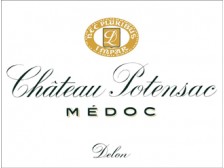
With remarkable consistency, Potensac has been one of the most regular crus bourgeois in the northern Médoc for 30 years, proof of the know-how of the Léoville-Las Cases team (same owner). Its ability to age is always surprising, even and especially in the "early years".
More- To keep or to drink:
- Ready to drink
- Apogée:
- 2019-2030
- Alcohol degree:
- 13.5%
-

This 12 ha vineyard is admirably located between its two illustrious neighbours, Chasse-Spleen and Poujeaux. A single watchword for the production of wines, whatever the vintage: the finesse of the tannins. Refined and silky, Branas Grand Poujeaux has been a revelation since 2009. Advised by Mr. de Boüard from 2012, it is now one of the finest bourgeois wines in the Médoc.
The 2014 vintage in the press:
Vinous (N.Martin - February 2024): 90/100 “The 2014 Branas Grand Poujeaux has a much fresher nose than many of the big names, with scents of black fruit, raspberry, allspice and cedar. The palate is medium-bodied, with supple tannins, perhaps a little looser than I remember, but with a lovely caressing finish. This is undoubtedly one of the best Left Bank wines of the vintage.”
More- To keep or to drink:
- Ready to drink
- Apogée:
- 2020-2030
- Alcohol degree:
- 13.5%
-
This 12 ha vineyard is admirably located between its two illustrious neighbours, Chasse-Spleen and Poujeaux. A single watchword for the production of wines, whatever the vintage: the finesse of the tannins. Refined and silky, Branas Grand Poujeaux has been a revelation since 2009. Advised by Mr. de Boüard from 2012, it is now one of the finest bourgeois wines in the Médoc.
The 2010 vintage in the press:
Vinous (N.Martin - June 2021): 91/100 "The 2010 Branas Grand Poujeaux is fresher and more vigorous on the nose than the 2009: blackberry, raspberry, singed leather and minty aromas unfurling with time. The palate is medium-bodied with fine grain tannins, cedar and black pepper intermixes with light ferrous notes, though here there is more precision on the finish compared to the 2009. Very fine - perhaps the first to realize the full potential of the estate even if it was iltimately surpassed."
More- To keep or to drink:
- Ready to drink
- Apogée:
- 2015-2028
- Alcohol degree:
- 14%
-

Bought in 2008 by M. Cuvelier (Clos Fourtet), a new era is beginning at Poujeaux under the leadership of Messrs Thienpont and Derenoncourt.
With its racy elegance, natural velvetiness and delicate yet deep texture, Poujeaux is the most Saint-Julien of the Moulis wines, and a model of style for all the crus bourgeois of the Médoc. The vintage is making steady progress, as evidenced by the 94/100 rating awarded by the Revue du Vin de France for its 2020 vintage « voilà un vin très séveux et prometteur ».
The 2017 vintage in the press:
Vinous (N.Martin - novembre 2019): 90+/100 “It seems a little pinched at the moment, but it has the weight and intensity to flesh out with bottle age. It would perhaps benefit from more complexity on the finish, but otherwise this is a well-constructed Poujeaux.”
More- To keep or to drink:
- Ready to drink
- Apogée:
- 2022-2033
- Alcohol degree:
- 13.5%
-
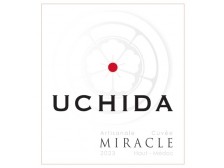
The Médoc has its local appellations, its châteaux, its terraces... and its Japanese winemaker. Arriving in 2010, Osamu Uchida settled in the commune of Cissac-Médoc (bordering Pauillac and Saint-Estèphe) with the aim of producing wines that combine Japanese perfectionism with Bordeaux oenological know-how. On his micro-vineyard of less than 3 ha, Osamu Uchida produces several cuvées, including Miracle, 100% Cabernet-Sauvignon, 20% de-stemmed by hand, aged in 500-l barrels, bottled unfined and unfiltered, with a minimum of SO2. His 2023 is fresh, fruity (pure blackberry juice), moderately tannic and slightly acidic, a Médoc with good length, as delicate as it is original.
More- To keep or to drink:
- Wait 1 to 2 years
- Apogée:
- 2028-2038
- Alcohol degree:
- 11.5%
-

The second wine of Haut-Bailly, called La Parde de Haut-Bailly until 2018. In the same style as its big brother, all restraint and finesse, and increasingly charming thanks to an increased proportion of Merlot since 2010.
A second wine of “flawless consistency and unfailing elegance”, according to Bettane & Desseauve (Guide 2025).
The 2021 vintage in the press:
La Revue du Vin de France (Guide 2025): 92/100 “Haut-Bailly II is already delicious. Svelte, tender, expressive, relaxed, it seems to hover above the pitfalls of the vintage, while offering the chewiness and staying power one expects from a wine from the estate.”
Jean-Marc Quarin (April 2022): 92/100 “Dark, deep and beautiful color. Intense, ripe fruity nose, evolving fragrantly in the glass. Immediately aromatic on the palate, but also tannic, with a happy textural attention to detail and plenty of perfume. Moderate body, leaving plenty of room for the aromas. Very good.”
Vinous (A. Galloni - December 2023): 93/100 “The 2021 Haut-Bailly II is terrific. Savory, aromatic and super-expressive, the II has so much to offer, starting with its understated complexity and overall class. Although the II is a Merlot-based wine (while the Grand Vin leans on Cabernet Sauvignon), it very much captures the personality of the estate. I find it exquisite and extremely delicious.”
More- To keep or to drink:
- Ready to drink
- Apogée:
- 2024-2033