





Catalog
To celebrate Black Friday, we're offering discounts on a wide selection of items from our catalog for the first time ever. Take advantage of these exclusive prices to get ready for the holidays or just treat yourself.
-

Following the sharing of the Pierre Amiot estate with his brother Jean-Louis in 2020, Didier Amiot created his own 3.2 hectare estate in Gevrey, Morey and Chambolle, which he immediately put into organic conversion (certification expected in 2023).
Didier Amiot 's guiding principle is to produce wines that are always seductive, spontaneously fruity, fleshy and silky-textured. This contract will be perfectly fulfilled in 2021 with his second vintage.
More- To keep or to drink:
- Ready to drink
- Apogée:
- 2025-2035
- Organic certification:
- 2023
- Alcohol degree:
- 13.5%
-

Following the sharing of the Pierre Amiot estate with his brother Jean-Louis in 2020, Didier Amiot created his own 3.2 hectare estate in Gevrey, Morey and Chambolle, which he immediately put into organic conversion (certification expected in 2023).
Didier Amiot 's guiding principle is to produce wines that are always seductive, spontaneously fruity, fleshy and silky-textured. This contract will be perfectly fulfilled in 2021 with his second vintage.
More- To keep or to drink:
- Wait 3 to 5 years
- Apogée:
- 2030-2042
- Organic certification:
- 2023
- Alcohol degree:
- 13.5%
-

Cyprien Arlaud has awakened this beautiful family estate of 15 hectares between Gevrey, Morey and Chambolle. Its wines, biodynamic since 2010, complete and delicious, have a frankness, a voluptuousness of texture and a rare aromatic elegance. The most recent vintages attest to remarkable progress, this domain clearly aims for excellence. Awarded three stars in the 2027 guide of La Revue du Vin de France.
The 2021 vintage in the press:
Vinous (N. Martin - November 2022): 94-96/100 "The 2021 Charmes-Chambertin Grand Cru is a little more "gourmand" on the nose, cohering with time in the glass, loamy, almost peaty aromas emerge with time. The palate is medium-bodied with finely-honed tannins. Lovely symmetry here, with a slight creaminess in texture towards the finish, where it feels very persistent. This is a lovely Charmes-Chambertin that should evolve wonderfully in bottle."
More- To keep or to drink:
- Wait 3 to 5 years
- Apogée:
- 2030-2044
- Organic certification:
- 2010
- Alcohol degree:
- 13%
-
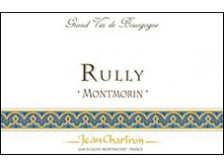
In 2004, Jean-Michel Chartron gave new impetus to the family domaine, blessed with an extraordinary land heritage (Clos des Chevaliers is the best part of Chevalier-Montrachet, itself considered the best climat in Puligny after Montrachet). The estate's 14.5 hectares have been farmed organically (without certification) ever since.
Mineral, nervous, powerful and long, with a crystalline purity, its wines are among Puligny's finest.The 2022 vintage in the press:
Vinous (N.Martin - October 2023): 88/100 “The 2022 Rully Montmorin has a light nose with Granny smiths and fresh pear, a light limestone aroma hovering in the backgroud. The palate is well-balanced with fine poise and little more nerve than the Bourgogne Blanc. The neatly integrated 10% new oak rounds out the finish nicely. Worth seeking out.”
More- To keep or to drink:
- Ready to drink
- Apogée:
- 2024-2030
- Alcohol degree:
- 13%
-
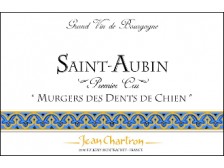
In 2004, Jean-Michel Chartron gave new impetus to the family domaine, blessed with an extraordinary land heritage (Clos des Chevaliers is the best part of Chevalier-Montrachet, itself considered the best climat in Puligny after Montrachet). The estate's 14.5 hectares have been farmed organically (without certification) ever since.
Mineral, nervous, powerful and long, with a crystalline purity, its wines are among Puligny's finest.More- To keep or to drink:
- Ready to drink
- Apogée:
- 2026-2035
- Alcohol degree:
- 13.5%
-
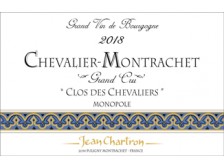
In 2004, Jean-Michel Chartron gave new impetus to the family domaine, blessed with an extraordinary land heritage (Clos des Chevaliers is the best part of Chevalier-Montrachet, itself considered the best climat in Puligny after Montrachet). The estate's 14.5 hectares have been farmed organically (without certification) ever since.
Mineral, nervous, powerful and long, with a crystalline purity, its wines are among Puligny's finest.The 2022 vintage in the press:
Vinous (N.Martin - June 2026): 96/100 “The 2022 Chevalier-Montrachet Clos de Chevaliers Grand Cru has a more subdued nose compared to its peers, despite rigorous coaxing of my glass. This is not wanting to come out and play, save for light sea spray and crustacean scents. The palate is well balanced with satisfying weight and depth. The acidity is well judged and tightly coiled, with a pleasant tanginess towards the finish that lingers nicely in the mouth with a sapid, almost briny aftertaste. I believe in this wine, but it requires several years in bottle.”
More- To keep or to drink:
- Wait 5 to 10 years
- Apogée:
- 2032-2045
- Alcohol degree:
- 14%
-

C'est William Trouillet (5ème génération) qui gère aujourd'hui le domaine familial de 19,5 ha, réparti sur les meilleures appellations du mâconnais : Mâcon-Solutré, Pouilly-Fuissé, Pouilly Loché, Pouilly Vinzelles et Saint-Véran. Avec comme ligne directrice la volonté de produire de grands blancs à la minéralité affirmée mais toujours lovés dans une chair ample et dense. Des vins généreux et immédiatement séducteurs, au rapport qualité/prix/plaisir garanti !
Cette cuvée s'appelle Nord-Sud car provenant de deux parcelles, une au nord et l'autre au sud de Saint-Véran.
The 2023 vintage in the press:
Bourgogne Aujourd'hui (August 2024): 16/20 “Fresh, lemony nose with a hint of white peach. Juicy on the palate, with fruit and substance. Beautiful balance.”
More- To keep or to drink:
- Ready to drink
- Apogée:
- 2024-2030
- Alcohol degree:
- 13%
-
Graeme, originally from New Zealand, and Julie cut their teeth at Domaine Ogier before setting up their own estate in 2015, with the aim of producing pure, precise and, above all, harmonious wines, both white and red. What a journey they have been on over the past decade, as the estate is now one of the most sought-after in the northern Rhône. It has been awarded two stars in the 2026 edition of the Revue du Vin de France guide (having earned its first star in the 2025 edition).
More- To keep or to drink:
- Ready to drink
- Apogée:
- 2026-2030
-
Graeme, originally from New Zealand, and Julie cut their teeth at Domaine Ogier before setting up their own estate in 2015, with the aim of producing pure, precise and, above all, harmonious wines, both white and red. What a journey they have been on over the past decade, as the estate is now one of the most sought-after in the northern Rhône. It has been awarded two stars in the 2026 edition of the Revue du Vin de France guide (having earned its first star in the 2025 edition).
The wines of Les Collines Rhodaniennes come from the Seyssuel terroir, opposite Côte-Rôtie on the left bank of the Rhône, with extremely stony soil – gneiss and mica schist – hence the name Kâmaka (meaning ‘rock’ in Māori).
The 2024 vintage in the press :
La Revue du Vin de France (Guide 2027) : 89/100 “Kamaka is a pure Viognier that emphasises freshness, with a light-bodied wine.”
More- To keep or to drink:
- Ready to drink
- Apogée:
- 2026-2032
- Grape varieties:
- 100% Viognier
-
Graeme, originally from New Zealand, and Julie cut their teeth at Domaine Ogier before setting up their own estate in 2015, with the aim of producing pure, precise and, above all, harmonious wines, both white and red. What a journey they have been on over the past decade, as the estate is now one of the most sought-after in the northern Rhône. It has been awarded two stars in the 2026 edition of the Revue du Vin de France guide (having earned its first star in the 2025 edition).
The 2023 vintage in the press:
La Revue du Vin de France (2026 Guide): 94/100
Bettane + Desseauve (Guide 2027) : 93/100
More- To keep or to drink:
- Wait 1 to 2 years
- Apogée:
- 2027-2032
-
Graeme, originally from New Zealand, and Julie cut their teeth at Domaine Ogier before setting up their own estate in 2015, with the aim of producing pure, precise and, above all, harmonious wines, both white and red. What a journey they have been on over the past decade, as the estate is now one of the most sought-after in the northern Rhône. It has been awarded two stars in the 2026 edition of the Revue du Vin de France guide (having earned its first star in the 2025 edition).
The wines of Les Collines Rhodaniennes come from the Seyssuel terroir, opposite Côte-Rôtie on the left bank of the Rhône, with extremely stony soil – gneiss and mica schist – hence the name Kâmaka (meaning ‘rock’ in Māori).
More- To keep or to drink:
- Wait 3 to 5 years
- Apogée:
- 2030-2040
- Grape varieties:
- 100% Syrah
-

Since 1994, Michel Tardieu has been selecting and growing wines from very old vines and from the best terroirs of each appellation. Associated until 2007 with Dominique Laurent, known for the concentration of his Burgundy wines, Michel Tardieu has, because of the innate richness of the Rhone Valley wines, always sought to favour elegance and aromatic complexity in his selections.
Promoted two stars in the 2022 Revue du Vin de France guide.In addition to his classic Châteauneuf-du-Pape, Michel Tardieu produces a cuvée Vieilles Vignes, a blend of grenache (80 to over 100 years), mourvèdre (60 to 80 years) and syrah (50 years), more tense and spicier (pepper, clove, laurel), an interminable finish, a wine of great style and long ageing potential.
More- To keep or to drink:
- Wait 3 to 5 years
- Apogée:
- 2030-2042
- Alcohol degree:
- 14.5%
-
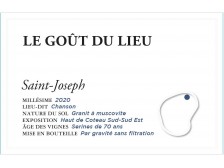
Since 1994, Tardieu-Laurent has been selecting and ageing wines from very old vines grown in the finest terroirs of each appellation. A partner until 2007 with Dominique Laurent, renowned for the concentration of his Burgundy wines, Michel Tardieu has, owing to the innate richness of the wines of the Rhône Valley, always sought to emphasise elegance and aromatic complexity in his selections.
Since the 2018 vintage, Michel and Bastien Tardieu have been setting aside, as soon as the harvest begins, any cuvée (rarely more than two barrels) with exceptional characteristics, a combination of an exceptional terroir, very old vines and an ideal vintage. These micro-selections receive special care tailored to the circumstances: vinification entirely or partly using whole bunches, fermentation in barrels, extended ageing on fine lees plus six months of finishing in stoneware amphorae, and bottling without fining or filtration.
These exceptional cuvées, capable of rivalling the finest wines from the Rhône’s greatest producers, are named “Le Goût du Lieu” because each bottle comes from a specific plot and aims to be the perfect embodiment of the appellation from which it originates.
The Saint-Joseph "Goût du Lieu" comes from the Chanson vineyard in Chavanay, with century-old vines (Petite Serine).
More- To keep or to drink:
- Wait 5 to 10 years
- Apogée:
- 2032-2045
- Alcohol degree:
- 13.5%
-
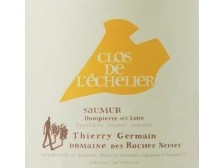
This is the domain which, by its passage into biodynamic viticulture and its parcel selections, shows the most beautiful qualitative progression of the Loire Valley. Crystalline Chenins and ripe Cabernet Franc, all matured with mastery to sublimate the purity and identity of the juices, between tension, crispness, refinement and generosity. In white as in red, a dazzling and flawless range.
Rated three stars in the Revue du Vin de France guide.The 2018 vintage in the press :
Vinous (R. Gibb - July 2024) : 92/100 « The 2018 Saumur blanc L'Échelier is dry, round, nutty and tropical. It was a very warm vintage, giving richness and ripe pineapple character. A racy acidity holds this wine together like tight reins. There's a contrast here between that tropicality and the zingy, crunchy acidity, which messes with your head. »
More- To keep or to drink:
- Ready to drink
- Apogée:
- 2020-2030
- Organic certification:
- 2004
- Alcohol degree:
- 13.5%
-
This is the domain which, by its passage into biodynamic viticulture and its parcel selections, shows the most beautiful qualitative progression of the Loire Valley. Crystalline Chenins and ripe Cabernet Franc, all matured with mastery to sublimate the purity and identity of the juices, between tension, crispness, refinement and generosity. In white as in red, a dazzling and flawless range.
Rated three stars in the Revue du Vin de France guide.The 2017 vintage in the press :
Vinous (R. Gibb - July 2024) : 93/100 "The golden-hued 2017 Saumur blanc L'Échelier shows ripe flavors of pineapple, honey and truffle, almost as if there's some botrytis–but there's not. It's bone-dry, yet there's a tender middle to this light-bodied wine. Expect iodine, giving a salty-like-the-sea impression. The 2017 is ready to enjoy now."
More- To keep or to drink:
- Ready to drink
- Apogée:
- 2021-2028
- Organic certification:
- 2004
- Alcohol degree:
- 13%
-
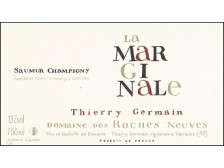
This is the domain which, by its passage into biodynamic viticulture and its parcel selections, shows the most beautiful qualitative progression of the Loire Valley. Crystalline Chenins and ripe Cabernet Franc, all matured with mastery to sublimate the purity and identity of the juices, between tension, crispness, refinement and generosity. In white as in red, a dazzling and flawless range.
Rated three stars in the Revue du Vin de France guide.La Marginale is the cuvée of reference for the red wines of the Domaine des Roches Neuves, 100% Cabernet Franc facing south on deep limestone.
More- To keep or to drink:
- Ready to drink
- Apogée:
- 2016-2028
- Organic certification:
- 2004
- Alcohol degree:
- 12.5%
-
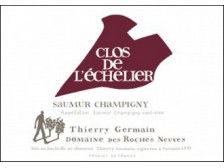
This is the domain which, by its passage into biodynamic viticulture and its parcel selections, shows the most beautiful qualitative progression of the Loire Valley. Crystalline Chenins and ripe Cabernet Franc, all matured with mastery to sublimate the purity and identity of the juices, between tension, crispness, refinement and generosity. In white as in red, a dazzling and flawless range.
Rated three stars in the Revue du Vin de France guide.More- To keep or to drink:
- Ready to drink
- Apogée:
- 2021-2030
- Organic certification:
- 2004
- Alcohol degree:
- 13%
-

This is the domain which, by its passage into biodynamic viticulture and its parcel selections, shows the most beautiful qualitative progression of the Loire Valley. Crystalline Chenins and ripe Cabernet Franc, all matured with mastery to sublimate the purity and identity of the juices, between tension, crispness, refinement and generosity. In white as in red, a dazzling and flawless range.
Rated three stars in the Revue du Vin de France guide.The 2021 vintage in the press:
Vinous (Rebecca Gibb - Master of Wine - December 2023): 94/100 “Made from vines planted on clay-limestone in 1904, Les Mémoires 2021 is fragrant, refined and long. It displays rich concentration in an elegant, rather delicate whole. As expected with a wine of this age, it's young and bright, with aromas of red currant fruit, flowers, black olive and even a hint of smoky wood. There's definitely depth and tannins, but they melt away on the palate. The finish is refined and assured, with a shimmering acidity that gives it a fabulous backbone. Apogee 2024-2038.”
More- To keep or to drink:
- Wait 3 to 5 years
- Apogée:
- 2030-2042
- Organic certification:
- 2004
-

The Domaine des Roches Neuves is the estate which, through its transition to biodynamic viticulture and its parcel selections, shows the most beautiful qualitative progression in the Loire Valley. Crystalline Chenins and ripe Cabernet Franc, all matured with mastery to sublimate the purity and identity of the juices, between tension, crispness, refinement and generosity. In white as in red, a dazzling and flawless range.
Rated three stars in the Revue du Vin de France guide.
Les Pentes is produced under the name of Michel Chevré, the vineyard manager of the Domaine des Roches Neuves for more than 20 years.Michel CHEVRÉ a travaillé aux côtés de Thierry GERMAIN en tant que chef de culture du Domaine des Roches Neuves. Depuis 2007, en collaboration avec Thierry GERMAIN, il élabore sur 3 ha sur une butte calcaire plein sud, deux grands chenins en culture biologique : Clos de l'Écotard et Les Pentes.
« Doté d'une formidable trame saline et ferme, c'est une boule de nerf de chenin mûr. » noté 17/20 par la Revue du Vin de France.
More- To keep or to drink:
- Ready to drink
- Apogée:
- 2024-2030
-

With 7 hectares spread over 28 plots held like gardens, Guillaume Sorbe is an outstanding goldsmith. On its two appellations Quincy and Reuilly in the Cher valley, it chisels fantastic wines, white (sauvignon) and red (pinot noir), esthetic wines that are both tasty and mineral, fat and tense. His excellence is already recognized: "Winemaker of the year 2018" for the Revue du Vin de France, and cited in the Top 10 of the best producers in the Bettane&Desseauve 2019 guide.
Pouilly-Fumé: Sauvignon on two terroirs: half caillotte (small limestone pebbles) and half flint. The most tense wine of the cellar, mineral and salty as desired.
Domaine rated two stars in the Revue du Vin de France annual guide.
The 2023 vintage in the press :
Bettane + Desseauve (Guide 2027) : 91/100
More- To keep or to drink:
- Ready to drink
- Apogée:
- 2026-2035
- Alcohol degree:
- 13%
- Grape varieties:
- 100% Sauvignon blanc
-
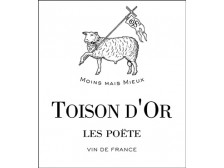
With 7 hectares spread over 28 plots held like gardens, Guillaume Sorbe is an outstanding goldsmith. On its two appellations Quincy and Reuilly in the Cher valley, it chisels fantastic wines, white (sauvignon) and red (pinot noir), esthetic wines that are both tasty and mineral, fat and tense. His excellence is already recognized: "Winemaker of the year 2018" for the Revue du Vin de France, and cited in the Top 10 of the best producers in the Bettane&Desseauve 2019 guide.
In order to avoid the regulatory constraints of the INAO, Guillaume Sorbe now prefers to label his wines under the generic name "Vin de France". This does not change anything about their origin or their quality. The comment of the Revue du Vin France is eloquent: "No wine in the sector reaches this level of precision and substance. They are among the most ambitious whites in the Loire Valley."
Toison d'or : 100% pinot gris vinified in white, as in Alsace, offering a full, velvety and delicately spiced wine.
Domaine rated two stars in the Revue du Vin de France annual guide.
More- To keep or to drink:
- Ready to drink
- Apogée:
- 2024-2032
- Alcohol degree:
- 13%
- Grape varieties:
- 100% Pinot gris
-
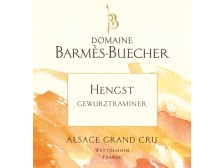
The 2023 vintage in the press:
La Revue du Vin de France (Guide 2026): 95/100 "The grands crus are radiant: the marl-limestone Hengst is particularly incisive and invigorating in Riesling, with an energy that is also found in the Gewurztraminer, which is haunting and robust."
Vinous (A. Krebiehl - April 2025) : 95/100 "The 2023 Gewurztraminer Hengst Grand Cru was made in stainless steel only. The nose has a gentle note of Navel orange peel. The palate has the same aromatic brightness and unexpected light-footedness. It is slender, flowing and juicy, with 27g/L of residual sugar adding emollience rather than sweetness since it has astonishing, outstanding freshness."
Bettane + Desseauve (Guide 2026) : 92/100
More- To keep or to drink:
- Wait 1 to 2 years
- Apogée:
- 2028-2040
- Organic certification:
- 2001
- Alcohol degree:
- 13.5%
-
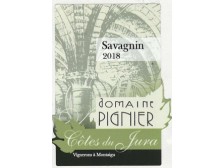
An estate that is as traditional (in the Pignier family since 1794) as it is avant-garde (cultivated biodynamically since 1998). Its vineyard (14 hectares in the commune of Montaigu) extends over clay-marl-limestone soils, planted with red grape varieties (mainly Trousseau and Poulsard) on south-facing slopes, and white varieties (Chardonnay and Gamay Blanc) on north/north-east facing slopes. The entire range expresses the qualities of purity, spontaneity and authenticity that make Jura wines so successful today. Awarded two stars in the Revue du Vin de France guide.
The Savagnin sous voile is matured in barrels for 60 months, without topping up, to develop the nutty, rancio aromas typical of Jura yellow wines.
More- To keep or to drink:
- Ready to drink
- Apogée:
- 2024-2035
- Organic certification:
- 2002
- Alcohol degree:
- 14.5%
-
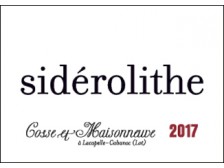
A new generation of winegrowers is waking Cahors up. Rustic wines with coarse tannins are a thing of the past. Make way for digestible, tasty, fruity and velvety malbecs. The duo Matthieu Cosse (the oenologist) / Catherine Maisonneuve (the winegrower) is part of this new Cadurian elite, with a magnificent range of wines where purity, precision and elegance prevail. "Transcending the boundaries of its appellation, the estate is one of the best in France" for Mr. Bettane.
Rated two stars in the Revue du Vin de France guide.
Sidérolithe is the 100% cabernet franc counterpart (on iron clay) of their other cuvée Marguerite which is 100% malbec. Its aromas of raspberry and violet and its velvety texture are immediately reminiscent of Pomerol.
The 2020 vintage in the reviews:
La Revue du Vin de France (Guide 2026) : 93/100
Bettane + Desseauve (Guide 2027) : 93/100
More- To keep or to drink:
- Wait 1 to 2 years
- Apogée:
- 2028-2042
- Alcohol degree:
- 14.5%
-
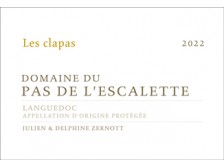
This is one of the most original estates in the Languedoc: for its altitude (350 m), on the southern edge of the Larzac plateau, and for its vineyards (2 ha of white and 18 ha of red) made up of old vines on around fifty terraces (like in the Douro) surrounded by stone walls and clapas (= piles of stones). Julien and Delphine Zernott, a passionate and determined couple, are at the helm of the estate, working hard to make the most of the cool, windy micro-climate of the Combe de l'Escalette to produce wines where freshness and sapidity are paramount.
A blend of white carignan, white grenache and terret bourret. Far from the southern cliché, Les Clapas stands out for its freshness and saline notes.
Domaine rated two stars in the Revue du Vin de France annual guide.
The 2022 vintage in the press:
La Revue du Vin de France (Guide 2025): 92/100 “Les Clapas blanc 2022 shows itself to be very fair in this warm year, textured but energetic, with beautiful bitters.”
More- To keep or to drink:
- Ready to drink
- Apogée:
- 2024-2028
- Organic certification:
- 2012
-
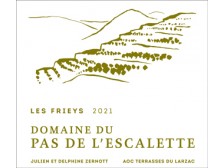
This is one of the most original estates in the Languedoc: for its altitude (350 m), on the southern edge of the Larzac plateau, and for its vineyards (2 ha of white and 18 ha of red) made up of old vines on around fifty terraces (like in the Douro) surrounded by stone walls and clapas (= piles of stones). Julien and Delphine Zernott, a passionate and determined couple, are at the helm of the estate, working hard to make the most of the cool, windy micro-climate of the Combe de l'Escalette to produce wines where freshness and sapidity are paramount.
Les Frieys, made from a parcel of old Carignan, Mourvèdre and Grenache vines planted on terraces, is the estate's top cuvée. A dense, elegant wine of remarkable complexity, rated 96/100 by the Revue du Vin de France.
Domaine rated two stars in the Revue du Vin de France annual guide.
The 2021 vintage in the press :
La Revue du Vin de France (Guide 2024): 96/100 "The parcel of old vines of Carignan, Mourvèdre and Grenache which makes up Les Frieys once again offers us, in 2021, a graceful, powdery and sparkling wine of great complexity".
More- To keep or to drink:
- Wait 1 to 2 years
- Apogée:
- 2027-2038
- Organic certification:
- 2012
- Alcohol degree:
- 13%
-
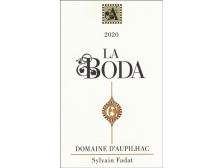
Sylvain Fadat started out by working the family's 5 hectares of vines, with the means at hand: vinification in tanker vats, limited ageing, bottling by hand... Convinced of the potential of the Montpeyroux appellation, he gradually enlarged his estate, built a winery, planted vines, converted to biodynamic viticulture...
Thirty years later, with his wife Désirée, he runs a 25-hectare estate, spread over two very distinct terroirs: the "hot" Aupilhac, made up of south-facing terraces on the edge of the garrigue, planted with Mediterranean grape varieties (mourvèdre and carignan) capable of withstanding the summer heat; and the "cool" Cocalières, a natural volcanic amphitheater situated at an altitude of 350 meters and facing north, home to the more sensitive grape varieties (syrah, grenache, marsanne...).
The estate has a two-star rating in the Revue du Vin de France guide, which praises the Fadat's "energy, respect for the environment and the precision of their wines".La Boda, which means “marriage” in Spanish a blend of the estate's two terroirs: syrah from Cocalières and mourvèdre from Aupilhac. Designed for ageing, it combines spicy notes (zan, vanilla) and a velvety mouthfeel.
More- To keep or to drink:
- Ready to drink
- Apogée:
- 2025-2035
- Organic certification:
- 2000
-

Sylvain Fadat started out by working the family's 5 hectares of vines, with the means at hand: vinification in tanker vats, limited ageing, bottling by hand... Convinced of the potential of the Montpeyroux appellation, he gradually enlarged his estate, built a winery, planted vines, converted to biodynamic viticulture...
Thirty years later, with his wife Désirée, he runs a 25-hectare estate, spread over two very distinct terroirs: the "hot" Aupilhac, made up of south-facing terraces on the edge of the garrigue, planted with Mediterranean grape varieties (mourvèdre and carignan) capable of withstanding the summer heat; and the "cool" Cocalières, a natural volcanic amphitheater situated at an altitude of 350 meters and facing north, home to the more sensitive grape varieties (syrah, grenache, marsanne...).
The estate has a two-star rating in the Revue du Vin de France guide, which praises the Fadat's "energy, respect for the environment and the precision of their wines".Le Clos, old vines of carignan (40%), mourvèdre (40%) and syrah (20%) on clay, is their great cuvée for laying down, fermented in wooden vats then aged 30 months in barrels.
More- To keep or to drink:
- Wait 1 to 2 years
- Apogée:
- 2028-2042
- Organic certification:
- 2000
-

Young and passionate winegrower, Alexandre Delétraz created the Cave des Amandiers in 2008 on the small steep terraces of Fully overlooking the Swiss Rhone Valley, between 400 and 900 m of altitude. This is an ideal terroir for the expression of Petite Arvine (a magnificent white grape variety native to the Valais) and Syrah (as in the French Northern Rhône Valley). "A heroic viticulture. The wines have gained in precision consecrating the estate among the stars of the region" for the Revue du Vin de France.
The two facets of Petite Arvine: crystalline and tense on the granitic terroir of Seyes, rounder and deeper on the Rhone alluvium of the Saillon terroir, down below.
More- To keep or to drink:
- Ready to drink
- Apogée:
- 2024-2032
- Alcohol degree:
- 13.5%
-
In 20 years (first vintage in 1988), Mrs. Chappaz has become the emblematic winemaker of Switzerland, following the example of Mrs. Bize-Leroy in Burgundy. In her 10 ha vineyard on the southern slopes of Fully, she tries to express the typicity and authenticity of each grape variety by an ultra careful viticulture (biodynamic since 2003).
Fendant Côteau de Plamont: parcel wine in Fully, 100% chasselas on "red earth" (loess on granite)More- To keep or to drink:
- Ready to drink
- Apogée:
- 2026-2035
- Alcohol degree:
- 12.5%