





Search
-
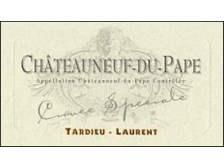
Since 1994, Michel Tardieu has been selecting and growing wines from very old vines and from the best terroirs of each appellation. Associated until 2007 with Dominique Laurent, known for the concentration of his Burgundy wines, Michel Tardieu has, because of the innate richness of the Rhone Valley wines, always sought to favour elegance and aromatic complexity in his selections.
Promoted two stars in the 2022 Revue du Vin de France guide.In addition to his classic Châteauneuf-du-Pape, Michel Tardieu produces an original cuvée, the Cuvée Spéciale, 100% century-old Grenache, which is incredibly rich and voluptuous. A superlative wine aged in barrels in barrels of at least one wine (no new barrels to best express the sweetness of old grenaches).
The 2023 vintage in the press :
Bettane + Desseauve (Guide 2026) : 96/100
More- To keep or to drink:
- Wait 1 to 2 years
- Apogée:
- 2028-2042
- Grape varieties:
- 100% grenache
-
Since 1994, Michel Tardieu has been selecting and growing wines from very old vines and from the best terroirs of each appellation. Associated until 2007 with Dominique Laurent, known for the concentration of his Burgundy wines, Michel Tardieu has, because of the innate richness of the Rhone Valley wines, always sought to favour elegance and aromatic complexity in his selections.
Promoted two stars in the 2022 Revue du Vin de France guide.In addition to his classic Châteauneuf-du-Pape, Michel Tardieu produces an original cuvée, the Cuvée Spéciale, 100% century-old Grenache, which is incredibly rich and voluptuous. A superlative wine aged in barrels in barrels of at least one wine (no new barrels to best express the sweetness of old grenaches).
The 2022 vintage in the press :
Bettane + Desseauve (Guide 2026) : 95/100
More- To keep or to drink:
- Wait 3 to 5 years
- Apogée:
- 2030-2042
- Alcohol degree:
- 14.5%
-
Since 1994, Michel Tardieu has been selecting and growing wines from very old vines and from the best terroirs of each appellation. Associated until 2007 with Dominique Laurent, known for the concentration of his Burgundy wines, Michel Tardieu has, because of the innate richness of the Rhone Valley wines, always sought to favour elegance and aromatic complexity in his selections.
Promoted two stars in the 2022 Revue du Vin de France guide.In addition to his classic Châteauneuf-du-Pape, Michel Tardieu produces an original cuvée, the Cuvée Spéciale, 100% century-old Grenache, which is incredibly rich and voluptuous. A superlative wine aged in barrels in barrels of at least one wine (no new barrels to best express the sweetness of old grenaches).
More- To keep or to drink:
- Wait 3 to 5 years
- Apogée:
- 2030-2040
- Alcohol degree:
- 14.5%
-
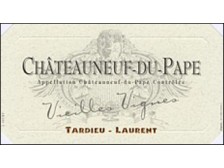
Since 1994, Michel Tardieu has been selecting and growing wines from very old vines and from the best terroirs of each appellation. Associated until 2007 with Dominique Laurent, known for the concentration of his Burgundy wines, Michel Tardieu has, because of the innate richness of the Rhone Valley wines, always sought to favour elegance and aromatic complexity in his selections.
Promoted two stars in the 2022 Revue du Vin de France guide.In addition to his classic Châteauneuf-du-Pape, Michel Tardieu produces a cuvée Vieilles Vignes, a blend of grenache (80 to over 100 years), mourvèdre (60 to 80 years) and syrah (50 years), more tense and spicier (pepper, clove, laurel), an interminable finish, a wine of great style and long ageing potential.
More- To keep or to drink:
- Wait 3 to 5 years
- Apogée:
- 2030-2042
- Grape varieties:
- 80% grenache, 10% mourvèdre, 10% syrah
-
Since 1994, Michel Tardieu has been selecting and growing wines from very old vines and from the best terroirs of each appellation. Associated until 2007 with Dominique Laurent, known for the concentration of his Burgundy wines, Michel Tardieu has, because of the innate richness of the Rhone Valley wines, always sought to favour elegance and aromatic complexity in his selections.
Promoted two stars in the 2022 Revue du Vin de France guide.In addition to his classic Châteauneuf-du-Pape, Michel Tardieu produces a cuvée Vieilles Vignes, a blend of grenache (80 to over 100 years), mourvèdre (60 to 80 years) and syrah (50 years), more tense and spicier (pepper, clove, laurel), an interminable finish, a wine of great style and long ageing potential.
More- To keep or to drink:
- Wait 3 to 5 years
- Apogée:
- 2030-2042
- Alcohol degree:
- 14.5%
-
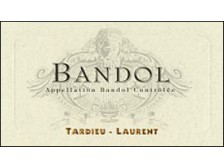
Since 1994, Michel Tardieu has been selecting and growing wines from very old vines and from the best terroirs of each appellation. Associated until 2007 with Dominique Laurent, known for the concentration of his Burgundy wines, Michel Tardieu has, because of the innate richness of the Rhone Valley wines, always sought to favour elegance and aromatic complexity in his selections.
Promoted two stars in the 2022 Revue du Vin de France guide.A true Bandol, almost pure Mourvèdre, taking with ageing accents of Cabernet Sauvignon. Very long ageing potential (20 years or more).
The 2023 vintage in the press :
Bettane + Desseauve (Guide 2027) : 95/100
More- To keep or to drink:
- Wait 3 to 5 years
- Apogée:
- 2030-2042
-
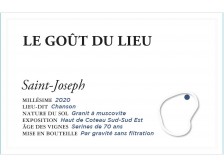
Since 1994, Tardieu-Laurent has been selecting and ageing wines from very old vines grown in the finest terroirs of each appellation. A partner until 2007 with Dominique Laurent, renowned for the concentration of his Burgundy wines, Michel Tardieu has, owing to the innate richness of the wines of the Rhône Valley, always sought to emphasise elegance and aromatic complexity in his selections.
Since the 2018 vintage, Michel and Bastien Tardieu have been setting aside, as soon as the harvest begins, any cuvée (rarely more than two barrels) with exceptional characteristics, a combination of an exceptional terroir, very old vines and an ideal vintage. These micro-selections receive special care tailored to the circumstances: vinification entirely or partly using whole bunches, fermentation in barrels, extended ageing on fine lees plus six months of finishing in stoneware amphorae, and bottling without fining or filtration.
These exceptional cuvées, capable of rivalling the finest wines from the Rhône’s greatest producers, are named “Le Goût du Lieu” because each bottle comes from a specific plot and aims to be the perfect embodiment of the appellation from which it originates.
The Saint-Joseph ‘Goût du Lieu’ comes from the Chanson vineyard in Chavanay, with century-old vines (Petite Serine).
More- To keep or to drink:
- Wait 5 to 10 years
- Apogée:
- 2032-2045
- Alcohol degree:
- 13.5%
-
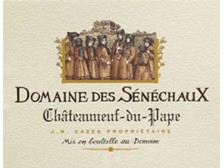
This old estate (14th century) of Châteauneuf-du-Pape was bought in 2006 by Mr. Cazes (Lynch-Bages, Haut-Batailley, Ormes de Pez...). With 25 hectares (60% Grenache, 20% Syrah and 20% Mourvèdre), in two excellent sectors (La Nerthe and Rayas), and by voluntarily limiting the yields to 30hl/ha, Mr. Cazes strives to produce only one vintage in red as well as in white, Châteauneufs that are accessible both on the gustatory and financial levels.
The white is fine, airy, without excess generosity, with a beautiful energy brought by the clairette (30%). The red is a classic Châteauneuf, refined and silky, also focusing more on finesse and aromatic intensity than on power, in the spirit of Rayas.
The 2023 vintage in the press :
Bettane + Desseauve (Guide 2026) : 88/100
More- To keep or to drink:
- Ready to drink
- Apogée:
- 2025-2033
- Alcohol degree:
- 14%
-
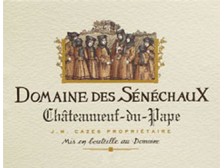
This old estate (14th century) of Châteauneuf-du-Pape was bought in 2006 by Mr. Cazes (Lynch-Bages, Haut-Batailley, Ormes de Pez...). With 25 hectares (60% Grenache, 20% Syrah and 20% Mourvèdre), in two excellent sectors (La Nerthe and Rayas), and by voluntarily limiting the yields to 30hl/ha, Mr. Cazes strives to produce only one vintage in red as well as in white, Châteauneufs that are accessible both on the gustatory and financial levels.
The white is fine, airy, without excess generosity, with a beautiful energy brought by the clairette (30%). The red is a classic Châteauneuf, refined and silky, also focusing more on finesse and aromatic intensity than on power, in the spirit of Rayas.
The 2021 vintage in the press:
Vinous (N. Greinacher - June 2024): 91/100 “Round and refreshing, the 2021 Châteauneuf-du-Pape offers plenty of bang for the buck. Combining licorice with dried herbs, raspberry, black tea and black cherry, the medium-to full-bodied 2021 is enveloped by soft tannins. Concentrated and layered, this is a remarkably refined Châteauneuf-du-Pape from Domaine des Sénéchaux that should drink well right out of the gate.”
More- To keep or to drink:
- Ready to drink
- Apogée:
- 2024-2033
- Alcohol degree:
- 15%
-
This old estate (14th century) of Châteauneuf-du-Pape was bought in 2006 by Mr. Cazes (Lynch-Bages, Haut-Batailley, Ormes de Pez...). With 25 hectares (60% Grenache, 20% Syrah and 20% Mourvèdre), in two excellent sectors (La Nerthe and Rayas), and by voluntarily limiting the yields to 30hl/ha, Mr. Cazes strives to produce only one vintage in red as well as in white, Châteauneufs that are accessible both on the gustatory and financial levels.
The white is fine, airy, without excess generosity, with a beautiful energy brought by the clairette (30%). The red is a classic Châteauneuf, refined and silky, also focusing more on finesse and aromatic intensity than on power, in the spirit of Rayas.
The 2017 vintage in the press :
Vinous (J. Raynolds - December 2019): 93-94/100 "Glistening ruby-red. Expansive, oak-spiced black and blue fruit and candied lavender aromas show sharp delineation, and a hint of garrigue builds with air. Stains the palate with sappy cassis, boysenberry and spicecake flavors that smoothly blend richness and energy. Fine-grained tannins sneak in stealthily on an impressively long, penetrating finish that echoes the vanillaand the floral notes."
More- To keep or to drink:
- Ready to drink
- Apogée:
- 2024-2033
- Alcohol degree:
- 15%
-
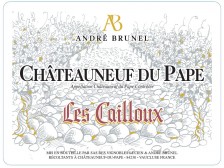
Far removed from trends and media hype, the Brunel family has been committed since the 17th century to producing Châteauneuf-du-Pape wines that are eminently traditional but above all elegant and refreshing. The vineyard (25 hectares) covers a dozen or so areas from north to south of the appellation, combining rounded pebbles, sand and clay. Combining traditional practices (very few chemical inputs) with modern techniques (permanent grass cover, ageing without wood), their wines are refined and nuanced, with a long, superbly fruity finish. Awarded two stars in the Guide de la Revue du Vin de France.
Les Cailloux white, 80% Roussanne, is pure, sappy and complex with a beautiful, salivating energy.
The 2024 vintage in the press:
La Revue du Vin de France (Guide 2026): 95/100 "Les Cailloux blanc 2024 appears very rich and aromatic on the nose, revealing notes of herbs and white-fleshed fruits. The palate offers contrast with its freshness at the heart of a juice built on bitterness and a fine minerality. A wine that needs to be left to develop aromatically for at least two years."
Bettane + Desseauve (Guide 2026) : 94/100
Vinous (N Greinacher - October 2025): 92/100 "The 2024 Châteauneuf-du-Pape Blanc Les Cailloux begins with intense honeysuckle, yellow apple, pear and hay aromas. Full-bodied, round and concentrated, the 2024 is a full-throttle white Châteauneuf packing ample intensity and substance before winding down with plenty of freshness on the complex finish."
More- To keep or to drink:
- Wait 1 to 2 years
- Apogée:
- 2027-2035
-
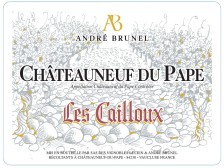
Far removed from trends and media hype, the Brunel family has been committed since the 17th century to producing Châteauneuf-du-Pape wines that are eminently traditional but above all elegant and refreshing. The vineyard (25 hectares) covers a dozen or so areas from north to south of the appellation, combining rounded pebbles, sand and clay. Combining traditional practices (very few chemical inputs) with modern techniques (permanent grass cover, ageing without wood), their wines are refined and nuanced, with a long, superbly fruity finish. Awarded two stars in the Guide de la Revue du Vin de France.
Les Cailloux, 70% grenache, is the opposite of the demonstrative and warm Châteauneuf, displaying a remarkable race and finesse that make us forget its richness.The 2022 vintage in the reviews :
La Revue du Vin de France (Guide 2026) : 95/100 Coup de ♥ “The 2022 red wine captivates with its elegant bouquet, blending fruit and floral notes. On the palate, it adds to this refinement with a graceful, supple texture and a soft, fully ripe fruitiness, underpinned by tannins that are both delicate and structuring.”
Vinous (N. Greinacher - August 2024) : 91/100 "Starting off a little reductive, the 2022 Châteauneuf-du-Pape Les Cailloux gradually unlocks rosewater, wild strawberry and licorice aromas. White pepper adds another layer. Full-bodied, round and refreshing, the 2022 engages the palate with a juicy core of ripe red fruits. It closes with good length on the elegant finish."
More- To keep or to drink:
- Wait 1 to 2 years
- Apogée:
- 2027-2040
-
Far removed from trends and media hype, the Brunel family has been committed since the 17th century to producing Châteauneuf-du-Pape wines that are eminently traditional but above all elegant and refreshing. The vineyard (25 hectares) covers a dozen or so areas from north to south of the appellation, combining rounded pebbles, sand and clay. Combining traditional practices (very few chemical inputs) with modern techniques (permanent grass cover, ageing without wood), their wines are refined and nuanced, with a long, superbly fruity finish. Awarded two stars in the Guide de la Revue du Vin de France.
Les Cailloux, 70% grenache, is the opposite of the demonstrative and warm Châteauneuf, displaying a remarkable race and finesse that make us forget its richness.The 2021 vintage in the reviews :
La Revue du Vin de France (October 2023) : 94-95/100 « Fine, reserved nose, lovely pure fruit on the palate for this delicately textured wine, built on finesse, with aromas that are a little backward in this early life. a little behind its early years. »
More- To keep or to drink:
- Wait 1 to 2 years
- Apogée:
- 2028-2040
- Alcohol degree:
- 14.5%
-
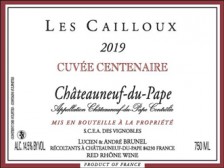
Far removed from trends and media hype, the Brunel family has been committed since the 17th century to producing Châteauneuf-du-Pape wines that are eminently traditional but above all elegant and refreshing. The vineyard (25 hectares) covers a dozen or so areas from north to south of the appellation, combining rounded pebbles, sand and clay. Combining traditional practices (very few chemical inputs) with modern techniques (permanent grass cover, ageing without wood), their wines are refined and nuanced, with a long, superbly fruity finish. Awarded two stars in the Guide de la Revue du Vin de France.
The Cuvée Centenaire, 95% very old vines (over 120 years) of grenache, is produced in the greatest vintages (2010, 2015, 2016, 2019 ...). Wine of very high quality, impressive accuracy and balance, gone to defy the time. Immensely successful in export, the most affordable of the exceptional Chateauneuf cuvées (Rayas, Hommage de Beaucastel, Da Capo de Pegaü...).The vintage 2022 in the press:
La Revue du Vin de France (November 2024): 97/100 “The olfactory intensity rises with pronounced richness. In a similar vein, the palate shows the concentration and richness provided by the old vines, with a soft touch, fleshy, juicy fruit and fine but solid tannins. A cuvée that never shows off, with fruit of great elegance”.
Vinous (N.Greinacher - June 2024): 94/100 “Aged for 18 months in a combination of concrete tanks (94%) and old oak barriques (6%), the pale ruby-colored 2022 Châteauneuf-du-pape Cuvée Centenaire is game-on. Rose petal, strawberry, raspberry, orange rind, licorice and white pepper are all nicely delineated. The 2022 is an ambitious and streamlined Grenache, round and refined, sliding into a complex and persistent finish. Although clearly a long-distance runner, it should be accessible from early on.”
Bettane + Desseauve (Guide 2026) : 95/100
More- To keep or to drink:
- Wait 5 to 10 years
- Apogée:
- 2032-2045
- Alcohol degree:
- 14.5%
-
Far removed from trends and media hype, the Brunel family has been committed since the 17th century to producing Châteauneuf-du-Pape wines that are eminently traditional but above all elegant and refreshing. The vineyard (25 hectares) covers a dozen or so areas from north to south of the appellation, combining rounded pebbles, sand and clay. Combining traditional practices (very few chemical inputs) with modern techniques (permanent grass cover, ageing without wood), their wines are refined and nuanced, with a long, superbly fruity finish. Awarded two stars in the Guide de la Revue du Vin de France.
The Cuvée Centenaire, 95% very old vines (over 120 years) of grenache, is produced in the greatest vintages (2010, 2015, 2016, 2019 ...). Wine of very high quality, impressive accuracy and balance, gone to defy the time. Immensely successful in export, the most affordable of the exceptional Chateauneuf cuvées (Rayas, Hommage de Beaucastel, Da Capo de Pegaü...).More- To keep or to drink:
- Wait 5 to 10 years
- Apogée:
- 2032-2042
- Alcohol degree:
- 14.5%
-
Taking over 10 hectares of vines from the family estate to set up his own winery, Mickaël Salmon launched his venture in 2019 with a clear vision: conversion to organic farming, ageing on lees in suitable vessels (glazed cement vats, ceramic jars, clay eggs, oak demi-muids, etc.), no stirring to preserve the wines’ full freshness, and bottling without filtration and under inert gas. From his very first vintages, Lucas Salmon has been among the rising stars of Muscadet, an appellation undergoing a revival. Featured in the 2027 edition of the Revue du Vin de France guide: “His wines retain the classic style and integrity that define the greatness of the Muscadet appellation, whilst embracing a freer, more contemporary approach”.
Le Fief Cognard is made entirely from Folle Blanche, a mass selection of old vines planted between 1949 and 1977, showcasing the vigour and liveliness of this grape variety, beautifully refined by 10 months’ ageing in clay eggs.
More- To keep or to drink:
- Wait 1 to 2 years
- Apogée:
- 2028-2035
- Alcohol degree:
- 12%
- Grape varieties:
- 100% Folle Blanche
-
Taking over 10 hectares of vines from the family estate to set up his own winery, Mickaël Salmon launched his venture in 2019 with a clear vision: conversion to organic farming, ageing on lees in suitable vessels (glazed cement vats, ceramic jars, clay eggs, oak demi-muids, etc.), no stirring to preserve the wines’ full freshness, and bottling without filtration and under inert gas. From his very first vintages, Lucas Salmon has been among the rising stars of Muscadet, an appellation undergoing a revival. Featured in the 2027 edition of the Revue du Vin de France guide: “His wines retain the classic style and integrity that define the greatness of the Muscadet appellation, whilst embracing a freer, more contemporary approach”.
Terroirs comes from two plots of young vines (7 and 10 years old), Les Brosses from the old vines (25 to 75 years old) of the vineyard, and Les Enfermures, a selection from a plot planted in 1950. These wines are crisp and lively, with citrus notes and a vibrant minerality. What’s more, the value for money of these three wines is outstanding!
The 2024 vintage in the press :
La Revue du Vin de France (July–August 2026) : 91/100 “This perfectly crafted white wine beautifully captures the essence of the terroir. It has substance and a subtly bitter, upright character.”
More- To keep or to drink:
- Ready to drink
- Apogée:
- 2026-2030
- Alcohol degree:
- 12%
- Grape varieties:
- 100% Melon de Bourgogne
-
Taking over 10 hectares of vines from the family estate to set up his own winery, Mickaël Salmon launched his venture in 2019 with a clear vision: conversion to organic farming, ageing on lees in suitable vessels (glazed cement vats, ceramic jars, clay eggs, oak demi-muids, etc.), no stirring to preserve the wines’ full freshness, and bottling without filtration and under inert gas. From his very first vintages, Lucas Salmon has been among the rising stars of Muscadet, an appellation undergoing a revival. Featured in the 2027 edition of the Revue du Vin de France guide: “His wines retain the classic style and integrity that define the greatness of the Muscadet appellation, whilst embracing a freer, more contemporary approach”.
Terroirs comes from two plots of young vines (7 and 10 years old), Les Brosses from the old vines (25 to 75 years old) of the vineyard, and Les Enfermures, a selection from a plot planted in 1950. These wines are crisp and lively, with citrus notes and a vibrant minerality. What’s more, the value for money of these three wines is outstanding!
The 2024 vintage in the press :
La Revue du Vin de France (Guide 2027) : 91/100 “Les Brosses goes one step further with a light touch and a flavour that’s incredibly mouth-watering.”
More- To keep or to drink:
- Ready to drink
- Apogée:
- 2026-2032
- Alcohol degree:
- 12%
- Grape varieties:
- 100% Melon de Bourgogne
-
Taking over 10 hectares of vines from the family estate to set up his own winery, Mickaël Salmon launched his venture in 2019 with a clear vision: conversion to organic farming, ageing on lees in suitable vessels (glazed cement vats, ceramic jars, clay eggs, oak demi-muids, etc.), no stirring to preserve the wines’ full freshness, and bottling without filtration and under inert gas. From his very first vintages, Lucas Salmon has been among the rising stars of Muscadet, an appellation undergoing a revival. Featured in the 2027 edition of the Revue du Vin de France guide: “His wines retain the classic style and integrity that define the greatness of the Muscadet appellation, whilst embracing a freer, more contemporary approach”.
Terroirs comes from two plots of young vines (7 and 10 years old), Les Brosses from the old vines (25 to 75 years old) of the vineyard, and Les Enfermures, a selection from a plot planted in 1950. These wines are crisp and lively, with citrus notes and a vibrant minerality. What’s more, the value for money of these three wines is outstanding!
More- To keep or to drink:
- Wait 1 to 2 years
- Apogée:
- 2028-2038
- Alcohol degree:
- 12%
- Grape varieties:
- 100% Melon de Bourgogne
-
Within the Anjou wine region, Savennières is a 150-hectare municipal appellation dedicated to white wines (100% Chenin), comprising, as in Burgundy, two contiguous sub-appellations: Roche aux Moines (22 hectares) and Coulée de Serrant (7 hectares). At the heart of the Roche aux Moines appellation, the iconic Aux Moines estate (12 hectares) shines brightly with superb dry white wines that perfectly combine body and crystalline purity, refinement and mineral energy. Bravo! Logically awarded two stars in the 2026 edition of the Revue du Vin de France guide.
The Aux Moines estate produces only two wines. Le Berceau des Fées comes from the estate’s young vines (2 ha), vinified and aged in stainless steel vats, bottled unfiltered and without sulphur. La Roche aux Moines is their flagship wine (10 ha), aged for 12 months in barrels and casks. Refined and with dazzling mineral energy, it is one of the greatest wines the Loire has to offer!
The 2025 vintage in the press :
La Revue du Vin de France (Guide 2027) : 89/100 “A lively, full-bodied wine from Le Berceau des Fées, perfect for enjoying now as an aperitif.”
More- To keep or to drink:
- Ready to drink
- Apogée:
- 2026-2030
- Organic certification:
- 2017
- Grape varieties:
- 100% Chenin
-
Within the Anjou wine region, Savennières is a 150-hectare municipal appellation dedicated to white wines (100% Chenin), comprising, as in Burgundy, two contiguous sub-appellations: Roche aux Moines (22 hectares) and Coulée de Serrant (7 hectares). At the heart of the Roche aux Moines appellation, the iconic Aux Moines estate (12 hectares) shines brightly with superb dry white wines that perfectly combine body and crystalline purity, refinement and mineral energy. Bravo! Logically awarded two stars in the 2026 edition of the Revue du Vin de France guide.
The Aux Moines estate produces only two wines. Le Berceau des Fées comes from the estate’s young vines (2 ha), vinified and aged in stainless steel vats, bottled unfiltered and without sulphur. La Roche aux Moines is their flagship wine (10 ha), aged for 12 months in barrels and casks. Refined and with dazzling mineral energy, it is one of the greatest wines the Loire has to offer!
The 2024 vintage in the presse :
La Revue du Vin de France (Guide 2027) : 93/100
More- To keep or to drink:
- Wait 1 to 2 years
- Apogée:
- 2028-2038
- Organic certification:
- 2017
- Grape varieties:
- 100% Chenin
-
It is François Chidaine who, since 1989, has sounded the awakening of Touraine wines and given the white Chenin its letters of nobility. Biodynamic since 1999, his wines show a crystalline purity and a vibrancy that are a reference... with prices that are just as exemplary.
Rated three stars in the Revue du Vin de France guide.
The Vouvray wines of Domaine Chidaine (Les Argiles, Baudoin) are hidden under the appellation Vin de France. They can no longer claim the Vouvray appellation since 2011 because they are vinified at the estate in Montlouis-sur-Loire (i.e. on the other side of the bridge over the Loire) and not in the commune of Vouvray. The INAO has reasons that reason does not know!More- To keep or to drink:
- Ready to drink
- Apogée:
- 2025-2032
- Organic certification:
- 1992
-
It is François Chidaine who, since 1989, has sounded the awakening of Touraine wines and given the white Chenin its letters of nobility. Biodynamic since 1999, his wines show a crystalline purity and a vibrancy that are a reference... with prices that are just as exemplary.
Rated three stars in the Revue du Vin de France guide.
The Vouvray wines of Domaine Chidaine (Les Argiles, Baudoin) are hidden under the appellation Vin de France. They can no longer claim the Vouvray appellation since 2011 because they are vinified at the estate in Montlouis-sur-Loire (i.e. on the other side of the bridge over the Loire) and not in the commune of Vouvray. The INAO has reasons that reason does not know!The 2024 vintage in the press :
La Revue du Vin de France (Guide 2027) : 92/100 “What panache! Baudoin flows as clear as crystal, fluid and full of energy.”
More- To keep or to drink:
- Wait 1 to 2 years
- Apogée:
- 2027-2037
- Organic certification:
- 1992
- Alcohol degree:
- 12.5%
-
It is François Chidaine who, since 1989, has sounded the awakening of Touraine wines and given the white Chenin its letters of nobility. Biodynamic since 1999, his wines show a crystalline purity and a vibrancy that are a reference... with prices that are just as exemplary.
Rated three stars in the Revue du Vin de France guide.Clos du Breuil, slender and saline, comes from 60-year-old vines on a flinty clay terroir.
The 2024 vintage in the press :
La Revue du Vin de France (Guide 2027) : 91/100
More- To keep or to drink:
- Ready to drink
- Apogée:
- 2025-2032
- Organic certification:
- 1992
- Alcohol degree:
- 12.5%
-
It is François Chidaine who, since 1989, has sounded the awakening of Touraine wines and given the white Chenin its letters of nobility. Biodynamic since 1999, his wines show a crystalline purity and a vibrancy that are a reference... with prices that are just as exemplary.
Rated three stars in the Revue du Vin de France guide.Les Choisilles, a blend of different parcels, is more rounded and full-bodied, with notes of white peach.
The 2022 vintage in the press:
La Revue du Vin de France (Guide 2025): 93/100 “Fresh aromatic nuances (floral, aniseed), Les Choisilles delivers with finesse.”
La Revue du Vin de France (February 2024): 93/100 “ample and comfortable, firm and full of beautiful bitters.”
More- To keep or to drink:
- Ready to drink
- Apogée:
- 2025-2033
- Organic certification:
- 1992
- Alcohol degree:
- 13.5%
-
It is François Chidaine who, since 1989, has sounded the awakening of Touraine wines and given the white Chenin its letters of nobility. Biodynamic since 1999, his wines show a crystalline purity and a vibrancy that are a reference... with prices that are just as exemplary. Rated three stars in the Revue du Vin de France guide.
Les Bournais, produced from clay-limestone soil (tuffeau) free of flint, this is the winery's most intense wine, with remarkable length on the palate.
The 2024 vintage in the press :
La Revue du Vin de France (Guide 2027) : 94/100
More- To keep or to drink:
- Wait 1 to 2 years
- Apogée:
- 2027-2037
- Organic certification:
- 1992
- Alcohol degree:
- 13%
-
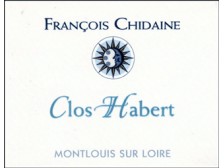
It is François Chidaine who, since 1989, has sounded the awakening of Touraine wines and given the white Chenin its letters of nobility. Biodynamic since 1999, his wines show a crystalline purity and a vibrancy that are a reference... with prices that are just as exemplary.
Rated three stars in the Revue du Vin de France guide.Clos Habert is a ''half sweet'' wine (11.9 g/L residual sugar), with fleshy fruit (Williams pear), a smooth palate and elegant freshness.
The 2020 vintage in the press:
En Magnum (March–April–May 2026): 93/100 “Notes of yellow fruit and saffron; on the palate, it is supple and worthy of the great vintages, with a briny tension that reveals the terroir and signals remarkable development in the bottle.”
La Revue du Vin de France (February 2024): 93/100 “a luminous, tender white, harmonious in its buried richness.”
Vinous (R. Gibb - May 2024): 90/100 "The 2020 Montlouis Clos Habert is an off-dry Chenin Blanc with the ripeness and richness of the vintage showing through. Pear and nectarine fruit edge into almost exotic notes and lees-derived pastry characters."
Bettane + Desseauve (Guide 2026) : 93/100
More- To keep or to drink:
- Ready to drink
- Apogée:
- 2025-2037
- Organic certification:
- 1992
- Alcohol degree:
- 14.5%
-
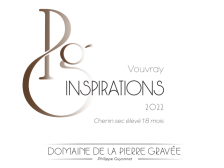
A lifelong wine lover, Philippe Guyonnet took the plunge in 2021 by purchasing 9 hectares in Vouvray, on the advice of his friend and mentor Jacky Blot (La Taille aux Loups). With his attention to detail, he immediately opted for organic viticulture, manual harvesting and fermentation with indigenous yeasts in small containers (amphorae and barrels) . From his time in the Mâconnais region, he retains a taste for long ageing (18 to 30 months), which he finishes with bottling without fining or filtration. His Chenin wines, vinified exclusively as dry wines, have a beautiful aromatic richness (chamomile, white peach, vanilla, etc.) and a richness that is perfectly balanced by a lively acidity. 2022 is his first vintage, and already a masterstroke. Everything is in place for this estate to quickly make a name for itself.
Made from vines aged 50 years and older, grown on flinty clay soil, Inspirations (aged for 18 months) is characterised by its finesse and liveliness.
More- To keep or to drink:
- Ready to drink
- Apogée:
- 2025-2030
- Organic certification:
- 2024
- Alcohol degree:
- 13.5%
-
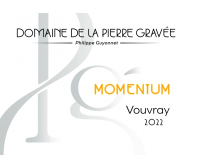
A lifelong wine lover, Philippe Guyonnet took the plunge in 2021 by purchasing 9 hectares in Vouvray, on the advice of his friend and mentor Jacky Blot (La Taille aux Loups). With his attention to detail, he immediately opted for organic viticulture, manual harvesting and fermentation with indigenous yeasts in small containers (amphorae and barrels) . From his time in the Mâconnais region, he retains a taste for long ageing (18 to 30 months), which he finishes with bottling without fining or filtration. His Chenin wines, vinified exclusively as dry wines, have a beautiful aromatic richness (chamomile, white peach, vanilla, etc.) and a richness that is perfectly balanced by a lively acidity. 2022 is his first vintage, and already a masterstroke. Everything is in place for this estate to quickly make a name for itself.
Made from vines aged 50 years and older, Momentum (aged for 30 months in barrels) has a creamy palate and impressive length.
More- To keep or to drink:
- Ready to drink
- Apogée:
- 2026-2035
- Organic certification:
- 2024
- Alcohol degree:
- 13.5%
-
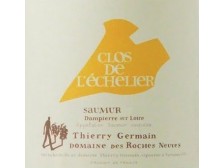
This is the domain which, by its passage into biodynamic viticulture and its parcel selections, shows the most beautiful qualitative progression of the Loire Valley. Crystalline Chenins and ripe Cabernet Franc, all matured with mastery to sublimate the purity and identity of the juices, between tension, crispness, refinement and generosity. In white as in red, a dazzling and flawless range.
Rated three stars in the Revue du Vin de France guide.The 2021 vintage in the press:
Vinous (R. Gibb - May 2024) : 92/100 "Don't mess with the 2021 Saumur blanc L'Échelier: it's got attitude–flirty, floral and transparent, with the purity of a glacier. The Germains didn't do any malolactic despite the natural acidity of this vintage. This is an acid fiend's wine, but it's ripe phenolics give real firmness, like a fierce girl. Melon and apple flavors linger on the very pure and strict conclusion."
More- To keep or to drink:
- Ready to drink
- Apogée:
- 2025-2032
- Organic certification:
- 2004