





2024 Futures

-
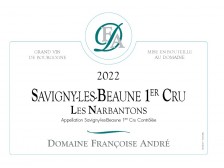
In 2010, the arrival of Lauriane André (Françoise's daughter-in-law) breathed new life into the family estate: 7.5 hectares around the famous Corton hill. This young winemaker had very clear ideas: conversion to biodynamic viticulture(acquired in 2012), limited yields, careful sorting of grapes, no yeasting, moderate use of new barrels (30% maximum). The results are already there, with the magazine Bourgogne Aujourd'hui nominating her as one of the 5 hopefuls of 2013, stating that " her wines are already among the best that the Côte de Beaune has to offer ". It has to be said that her role models are Patrick Bize and Jean-François Coche-Dury...
Well done! Lauriane André was named Burgundy Winemaker of the Year in the 2023 Hachette guide: " Domaine Françoise André has established itself as an essential Côte de Beaune signature ".
More- To keep or to drink:
- Available early 2027
- Organic certification:
- 2012
- Grape varieties:
- 100% Pinot noir
-
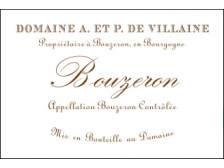
Aubert de Villaine, the emblematic co-owner and manager of La Romanée-Conti, lives and works in Bouzeron, the first village south of the Côte de Beaune, on his Domaine acquired in 1971. Assisted since 2003 by his nephew Pierre de Benoist, he practises the same high-flying viticulture as at La Romanée-Conti, combining tradition, openness, purity, rigour and organic cultivation (since 1986).
Domaine rated one star in the Revue du Vin de France guide, and named one of the top 5 producers of 2021 by the magazine Bourgogne Aujourd'hui.Bouzeron, 100% golden aligoté, carries high the values of this particularly underestimated grape variety.
Vinous (N. Martin): 89/100 "The 2024 Bouzeron has a pretty bouquet with touches of rose water, tincture and peachy fruit. Très Bouzeron. The palate is fresh and vibrant. Lovely weight and a little spicier than the previous vintage, with a healthy dash of ginger, but it is the texture that disarms the senses here. Enjoy over two or three years."
More- To keep or to drink:
- Available early 2027
- Organic certification:
- 1986
- Alcohol degree:
- 12.5%
- Grape varieties:
- 100% Aligoté
-
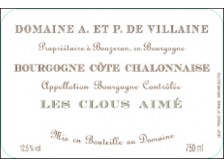
It is in Bouzeron (the first village in the south of the Côte de Beaune) that Aubert de Villaine, emblematic co-owner and manager of La Romanée-Conti, lives and works as a winegrower in his estate acquired in 1971. Assisted since 2003 by his nephew Pierre de Benoist, he practices the same high-flying viticulture as at La Romanée-Conti, combining tradition, openness, purity, rigour and organic farming (since 1986). Thank you to Mr. de Villaine for defending with the same passion the elite Burgundy and the artisan Burgundy. Domain rated one star in the 2020 Revue du Vin de France guide.
More- To keep or to drink:
- Available early 2027
- Organic certification:
- 1986
- Alcohol degree:
- 13%
-
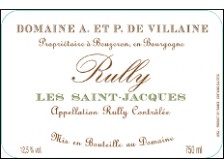
It is in Bouzeron (the first village in the south of the Côte de Beaune) that Aubert de Villaine, emblematic co-owner and manager of La Romanée-Conti, lives and works as a winegrower in his estate acquired in 1971. Assisted since 2003 by his nephew Pierre de Benoist, he practices the same high-flying viticulture as at La Romanée-Conti, combining tradition, openness, purity, rigour and organic farming (since 1986). Thank you to Mr. de Villaine for defending with the same passion the elite Burgundy and the artisan Burgundy. Domain rated one star in the 2021 Revue du Vin de France guide.
More- To keep or to drink:
- Available early 2027
- Organic certification:
- 1986
- Alcohol degree:
- 13%
- Grape varieties:
- 100% Chardonnay
-
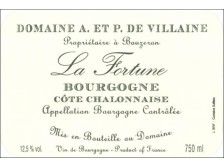
It is in Bouzeron (the first village in the south of the Côte de Beaune) that Aubert de Villaine, emblematic co-owner and manager of La Romanée-Conti, lives and works as a winegrower in his estate acquired in 1971. Assisted since 2003 by his nephew Pierre de Benoist, he practices the same high-flying viticulture as at La Romanée-Conti, combining tradition, openness, purity, rigour and organic farming (since 1986). Thank you to Mr. de Villaine for defending with the same passion the elite Burgundy and the artisan Burgundy. Domain rated one star in the 2019 Revue du Vin de France guide.
More- To keep or to drink:
- Available early 2027
- Organic certification:
- 1986
- Alcohol degree:
- 13.5%
- Grape varieties:
- 100% Pinot noir
-
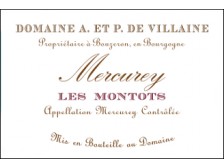
It is in Bouzeron (the first village in the south of the Côte de Beaune) that Aubert de Villaine, emblematic co-owner and manager of La Romanée-Conti, lives and works as a winegrower in his estate acquired in 1971. Assisted since 2003 by his nephew Pierre de Benoist, he practices the same high-flying viticulture as at La Romanée-Conti, combining tradition, openness, purity, rigour and organic farming (since 1986). Thank you to Mr. de Villaine for defending with the same passion the elite Burgundy and the artisan Burgundy. Domain rated one star in the 2020 Revue du Vin de France guide.
Vinous (N. Martin): 90/100 "The 2024 Mercurey Les Montots is quite backward on the nose, but as winemaker Pierre de Benoist suggested, you have to imagine this in four or five year's time. The palate is dense and quite structured for a Mercurey, classic in style with pepper and cloves that infuse the red fruit. Fine depth on the finish, yes, this is a Mercurey worthy of short-term cellaring."
More- To keep or to drink:
- Available early 2027
- Organic certification:
- 1986
- Alcohol degree:
- 13.5%
- Grape varieties:
- 100% Pinot noir
-
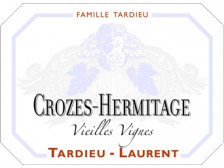
Since 1994, Michel Tardieu has been selecting and growing wines from very old vines and from the best terroirs of each appellation. Associated until 2007 with Dominique Laurent, known for the concentration of his Burgundy wines, Michel Tardieu has, because of the innate richness of the Rhone Valley wines, always sought to favour elegance and aromatic complexity in his selections.
Promoted two stars in the 2021 Revue du Vin de France guide.Predominantly Marsanne (vines over 50 years old), a Crozes-Hermitage Vieilles Vignes dry white wine, aromatic (apricot, peach, frangipane...) and fat, with a judicious touch of bitterness on the finish.
La Revue du Vin de France: 91/100 “It benefits from barrel aging, which still leaves its mark. But the body and flesh are there, and time should bring everything together. A dense, fleshy wine, undoubtedly suitable for aging.”
More- To keep or to drink:
- Available early 2027
- Alcohol degree:
- 13%
- Grape varieties:
- 80% Marsanne, 20% Roussanne
-
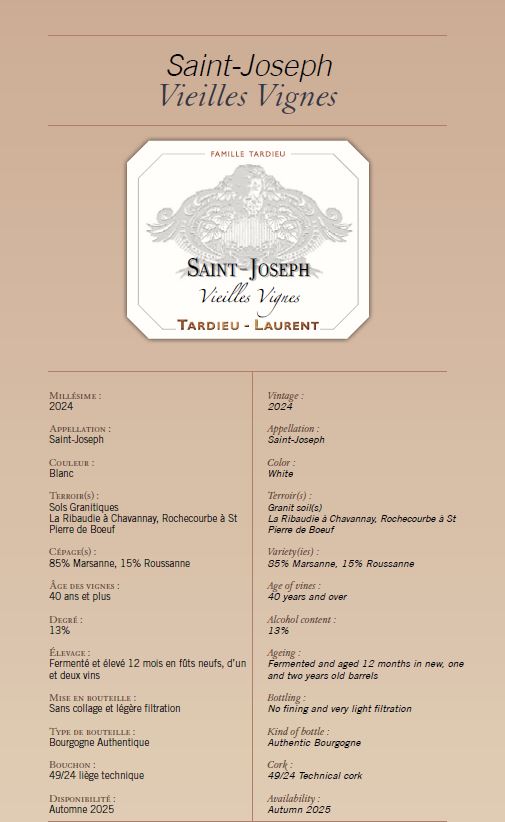
Since 1994, Michel Tardieu has been selecting and growing wines from very old vines and from the best terroirs of each appellation. Associated until 2007 with Dominique Laurent, known for the concentration of his Burgundy wines, Michel Tardieu has, because of the innate richness of the Rhone Valley wines, always sought to favour elegance and aromatic complexity in his selections.
Promoted two stars in the 2021 Revue du Vin de France guide.Saint-Joseph Vieilles Vignes, with a dominant of marsanne, comes from 30 to 40 years old vines.
More- To keep or to drink:
- Available early 2027
- Alcohol degree:
- 13%
- Grape varieties:
- 85% Marsanne, 15% Roussanne
-
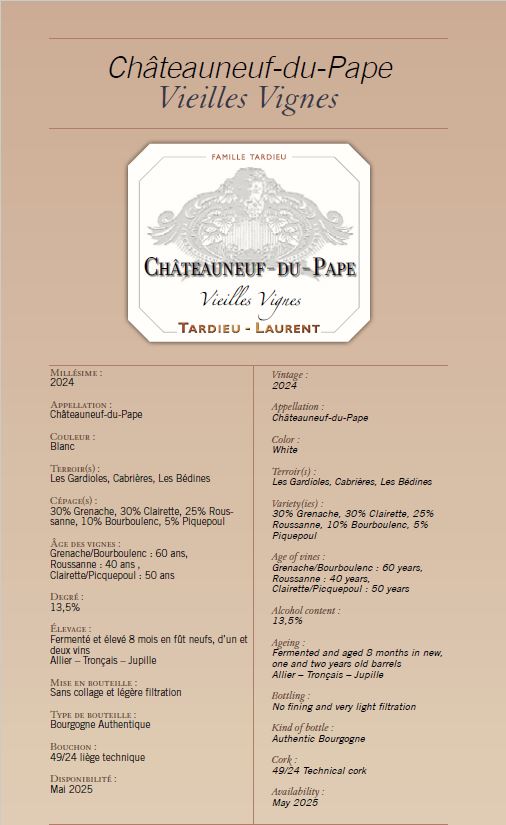
Since 1994, Michel Tardieu has been selecting and growing wines from very old vines and from the best terroirs of each appellation. Associated until 2007 with Dominique Laurent, known for the concentration of his Burgundy wines, Michel Tardieu has, because of the innate richness of the Rhone Valley wines, always sought to favour elegance and aromatic complexity in his selections.
Promoted two stars in the 2022 Revue du Vin de France guide.A blend of grenache, roussanne, clairette and bourboulenc, this white Châteauneuf plays the card of freshness and discretion. With aromas of white peach and orange blossom, its natural power will be fully expressed after 5 to 6 years of aging.
More- To keep or to drink:
- Available early 2027
- Alcohol degree:
- 13.5%
- Grape varieties:
- 85% Marsanne, 15% Roussanne
-
Since 1994, Maison Tardieu-Laurent has selected and matured wines from very old vines and from the best terroirs of each appellation. Partnered until 2007 with Dominique Laurent, known for the concentration of his Burgundy wines, Michel Tardieu has, because of the innate richness of Rhone Valley wines, always sought to favor elegance and aromatic complexity in his selections. Thanks to their precise selection of the best terroirs and their expertise in winemaking and ageing, Michel and his son Bastien produce great wines from the north to the south of the Rhône Valley.
Rated two stars in the Revue du Vin de France Guide.
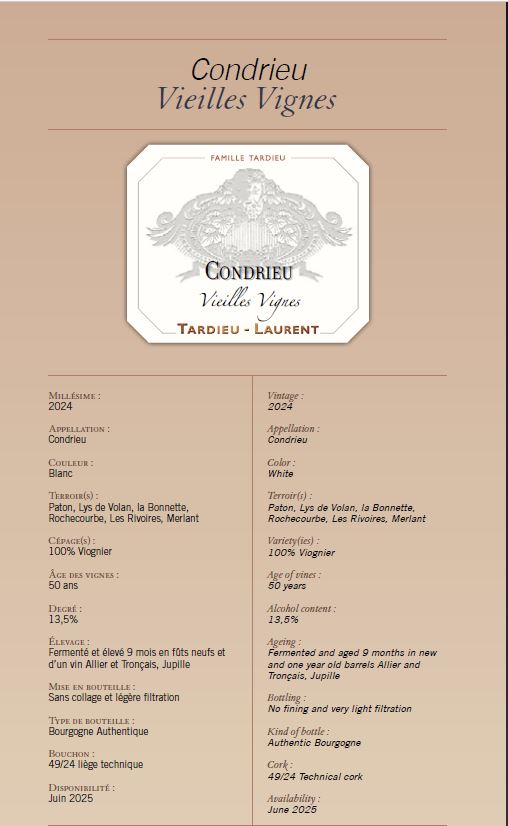
100% Viognier (50 years old), from the appellation's best terroirs. A Condrieu that's restrained, expressive and complex, but not exuberant.
More- To keep or to drink:
- Available early 2027
- Alcohol degree:
- 13.5%
- Grape varieties:
- 100% Viognier
-
Since 1994, Maison Tardieu-Laurent has selected and matured wines from very old vines and from the best terroirs of each appellation. Partnered until 2007 with Dominique Laurent, known for the concentration of his Burgundy wines, Michel Tardieu has, because of the innate richness of Rhone Valley wines, always sought to favor elegance and aromatic complexity in his selections. Thanks to their precise selection of the best terroirs and their expertise in winemaking and ageing, Michel and his son Bastien produce great wines from the north to the south of the Rhône Valley.
Rated two stars in the Revue du Vin de France Guide.
Splendid Hermitage blanc, 80% marsanne (50 years old) and 20% roussanne (40 years old), with aromas of peach and acacia honey, and a characteristic touch of almond paste.
More- To keep or to drink:
- Available early 2027
- Alcohol degree:
- 13.5%
- Grape varieties:
- 80% Marsanne, 20% Roussanne
-
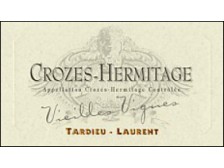
Since 1994, Michel Tardieu has been selecting and growing wines from very old vines and from the best terroirs of each appellation. Associated until 2007 with Dominique Laurent, known for the concentration of his Burgundy wines, Michel Tardieu has, because of the innate richness of the Rhone Valley wines, always sought to favour elegance and aromatic complexity in his selections.
Promoted two stars in the 2022 Revue du Vin de France guide.Thanks to vines (Syrah) 60 years old, Michel Tardieu produces a 'grand' Crozes-Hermitage. Divided between fruit and minerality, in a round and silky style more Burgundian than Rhodanian, a perfect introduction to the Hermitage's wines.
More- To keep or to drink:
- Available early 2027
- Alcohol degree:
- 13%
- Grape varieties:
- 100% Syrah
-
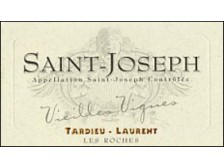
Since 1994, Michel Tardieu has been selecting and growing wines from very old vines and from the best terroirs of each appellation. Associated until 2007 with Dominique Laurent, known for the concentration of his Burgundy wines, Michel Tardieu has, because of the innate richness of the Rhone Valley wines, always sought to favour elegance and aromatic complexity in his selections.
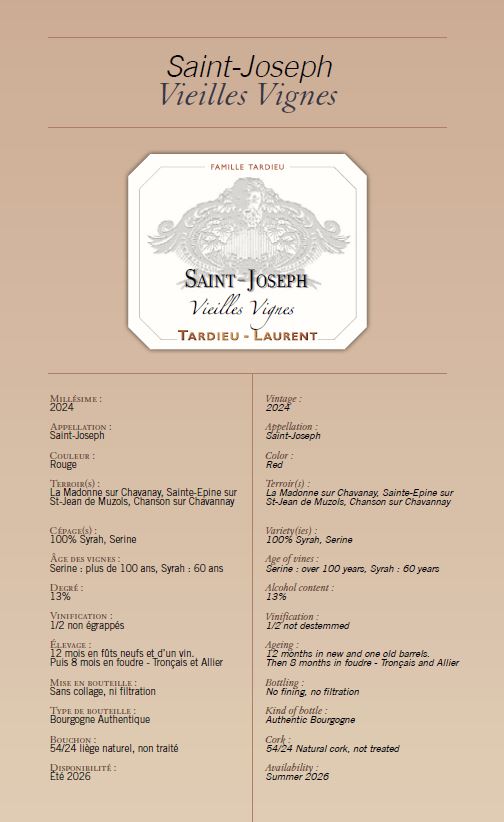
Promoted two stars in the 2022 Revue du Vin de France guide.This Saint-Joseph Vieilles Vignes is a perfect balance between the gourmet raspberry/cherry fruit (as in Hermitage) and the mineral tension of the schist and granite subsoil (as in Cornas). Syrah and serine (small syrah), aged 60 and over 100 years respectively.
More- To keep or to drink:
- Available early 2027
- Alcohol degree:
- 13%
- Grape varieties:
- 100% Syrah
-
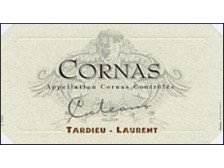
Since 1994, Michel Tardieu has been selecting and growing wines from very old vines and from the best terroirs of each appellation. Associated until 2007 with Dominique Laurent, known for the concentration of his Burgundy wines, Michel Tardieu has, because of the innate richness of the Rhone Valley wines, always sought to favour elegance and aromatic complexity in his selections.
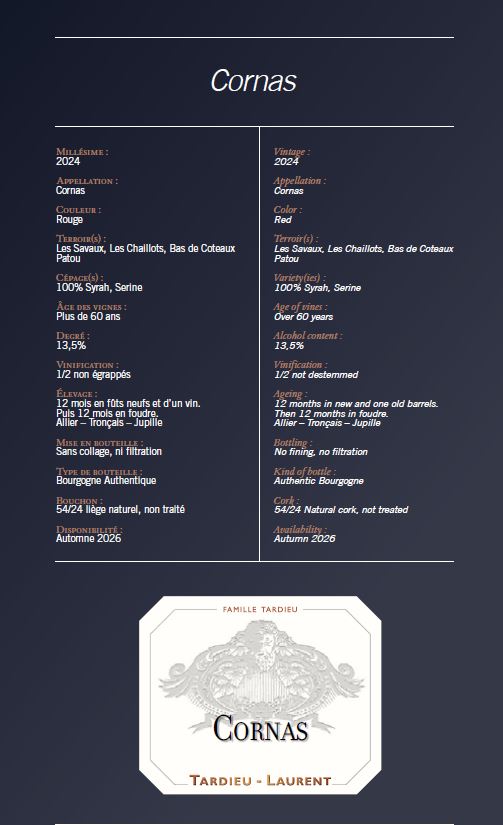
Promoted two stars in the 2022 Revue du Vin de France guide.Cornas from Syrah and small Syrah aged 60 years minimum. The austerity due to the schistose soil is perfectly balanced here by Michel Tardieu's talent as a breeder. A model for the northern Rhône.
More- To keep or to drink:
- Available early 2027
- Alcohol degree:
- 13.5%
- Grape varieties:
- 100% Syrah
-
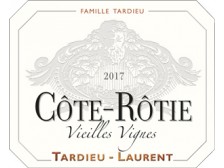
Since 1994, Michel Tardieu has been selecting and growing wines from very old vines and from the best terroirs of each appellation. Associated until 2007 with Dominique Laurent, known for the concentration of his Burgundy wines, Michel Tardieu has, because of the innate richness of the Rhone Valley wines, always sought to favour elegance and aromatic complexity in his selections.
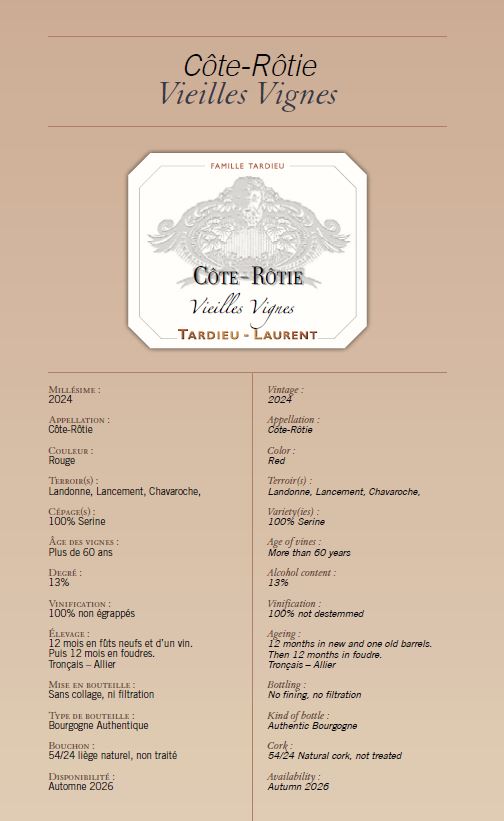
Promoted two stars in the 2021 Revue du Vin de France guide.A new cuvée created in 2017, a Côte-Rôtie Vieilles Vignes from the heart of the hillside on the major terroirs of the Côte Brune. Phenomenal concentration, energetic tannin, a compact but refined wine, to wait at least 10 years before considering tasting.
More- To keep or to drink:
- Available early 2027
- Alcohol degree:
- 13%
- Grape varieties:
- 100% Syrah
-
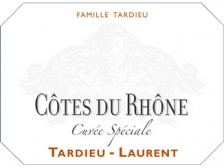
Since 1994, Michel Tardieu has been selecting and growing wines from very old vines and from the best terroirs of each appellation. Associated until 2007 with Dominique Laurent, known for the concentration of his Burgundy wines, Michel Tardieu has, because of the innate richness of the Rhone Valley wines, always sought to favour elegance and aromatic complexity in his selections.
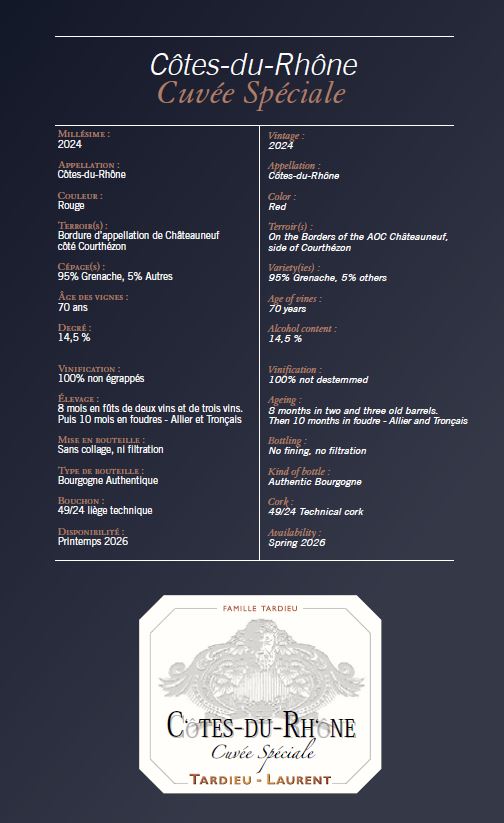
Promoted two stars in the 2021 Revue du Vin de France guide.The Côtes-du-Rhône Cuvée Spéciale is made with Grenache, a wine with soft tannins and a fruity character.
More- To keep or to drink:
- Available early 2027
- Alcohol degree:
- 14.5%
- Grape varieties:
- 95% Grenache, 5% Autre
-
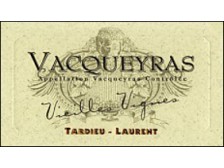
Since 1994, Michel Tardieu has been selecting and growing wines from very old vines and from the best terroirs of each appellation. Associated until 2007 with Dominique Laurent, known for the concentration of his Burgundy wines, Michel Tardieu has, because of the innate richness of the Rhone Valley wines, always sought to favour elegance and aromatic complexity in his selections.
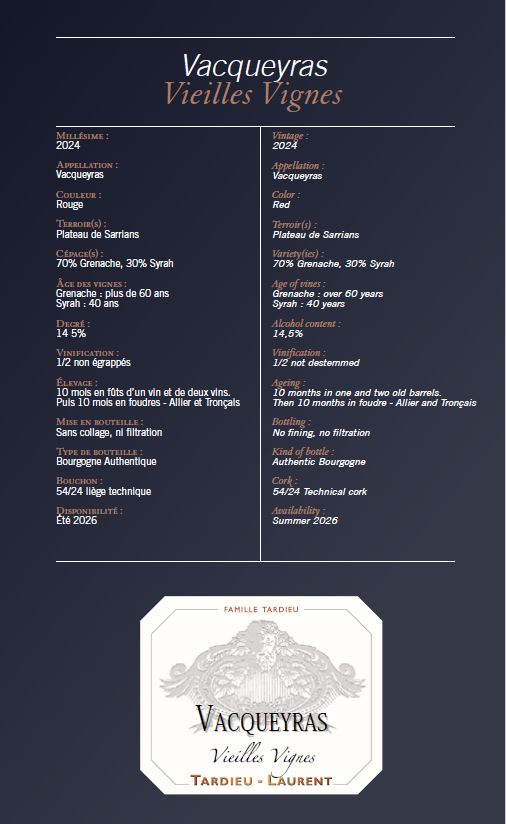
Promoted two stars in the 2022 Revue du Vin de France guide.Vacqueyras Vieilles Vignes: a blend of Grenache, Syrah and Mourvèdre, firm and earthy vigour, in a style comparable to that of the Gigondas.
More- To keep or to drink:
- Available early 2027
- Alcohol degree:
- 14.5%
- Grape varieties:
- 70% Grenache, 30% Syrah
-
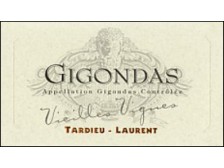
Since 1994, Michel Tardieu has been selecting and growing wines from very old vines and from the best terroirs of each appellation. Associated until 2007 with Dominique Laurent, known for the concentration of his Burgundy wines, Michel Tardieu has, because of the innate richness of the Rhone Valley wines, always sought to favour elegance and aromatic complexity in his selections.
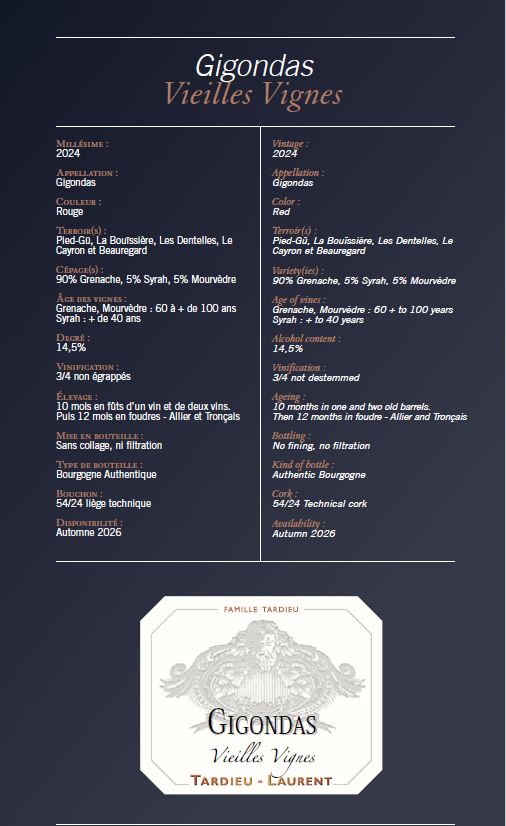
Promoted two stars in the 2022 Revue du Vin de France guide.Built like a "small" Châteauneuf-du-Pape, this Gigondas is just as velvety, just as fruity, but slightly softer. Very strong majority of grenache (vines aged from 60 to more than 100 years), completed with syrah and mourvèdre.
More- To keep or to drink:
- Available early 2027
- Alcohol degree:
- 14.5%
- Grape varieties:
- 90% Grenache, 5% Syrah, 5% Mourvèdre
-
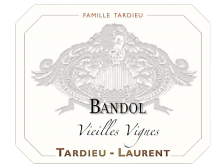
Since 1994, Maison Tardieu-Laurent has selected and matured wines from very old vines and from the best terroirs of each appellation. Partnered until 2007 with Dominique Laurent, known for the concentration of his Burgundy wines, Michel Tardieu has, because of the innate richness of Rhone Valley wines, always sought to favor elegance and aromatic complexity in his selections. Thanks to their precise selection of the best terroirs and their expertise in winemaking and ageing, Michel and his son Bastien produce great wines from the north to the south of the Rhône Valley.
Rated two stars in the Revue du Vin de France Guide.
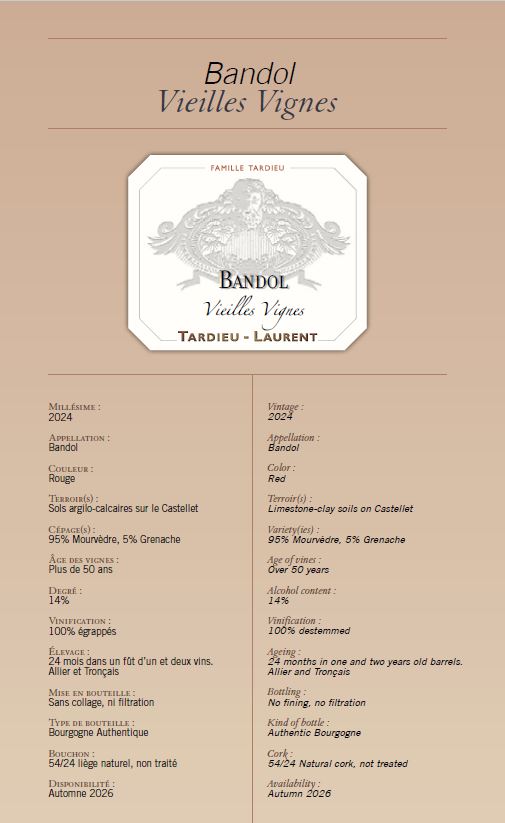
A true Bandol, almost pure Mourvèdre (with 5% Grenache added), taking on Cabernet Sauvignon accents with age. Potentially very long ageing potential (20 years or more).
More- To keep or to drink:
- Available early 2027
- Alcohol degree:
- 14%
- Grape varieties:
- 95% Mourvèdre, 5% Grenache
-
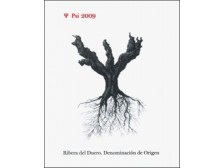
PSI (Peter Sisseck Initiative?) is the wine of a group of producers brought together by Mr. Sisseck according to precise specifications: tempranillo plots at least 30 years old, necessarily biodynamically grown, gentle extractions, long macerations and maturing practically without wood. A superior fruity wine, fine and with a great tannic softness.
More- To keep or to drink:
- Available early 2027
-
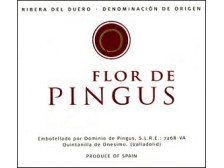
Amazing story as that of Dominio de Pingus. Created in 1995 by Peter Sisseck, a Danish (!), this estate a few kilometres from Vega Sicilia has become a cult in less than 15 years.
Flor de Pingus is the second wine, coming from the Dominio de Pingus and neighbouring parcels acquired by fermage, 100% tempranillo 35 to 50 years old, biodynamic since 2005. Delicious and elegant, Flor is a modern vision of Ribera del Duero.
More- To keep or to drink:
- Available early 2027



- < Previous
- 1
- 2
- 3
- 4
- 5
- > Next