





Catalog

 .
.Other labels exist (Demeter, Biodyvin, Nature et Progrès...). These have more demanding specifications than organic farming but are not recognised by public agencies.
-
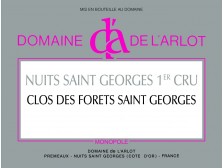
Owned by AXA Millésimes since 1987, Domaine de l'Arlot spans 15 hectares between Nuits-Saint-Georges (Prémeaux) and Vosne-Romanée. This is an estate of excellence, producing some of the most intense, precise whites on the Côte de Nuits, as well as dense reds with chiselled structures that are simultaneously fleshy and delicate.
Rated two stars in the Revue du Vin de France guide (from 2026 onwards).
The 2023 vintage in the press :
La Revue du Vin de France (Guide 2026) : 94/100 "Clos des Forêts has smoky notes and quite pronounced blond oak, which we feel oversimplifies the terroir."
More- To keep or to drink:
- Wait 5 to 10 years
- Apogée:
- 2032-2045
- Organic certification:
- 2022
-
Owned by AXA Millésimes since 1987, Domaine de l'Arlot spans 15 hectares between Nuits-Saint-Georges (Prémeaux) and Vosne-Romanée. This is an estate of excellence, producing some of the most intense, precise whites on the Côte de Nuits, as well as dense reds with chiselled structures that are simultaneously fleshy and delicate.
Rated two stars in the Revue du Vin de France guide (from 2026 onwards).
The 2022 vintage in the press:
Vinous (N.Martin - January 2024): 94-96/100 “The 2022 Nuits Saint-Georges Clos des Fôrets Saint-Georges 1er Cru was also raised in 40% new oak [Incidentally, 0.6ha will be planted with Chardonnay in 2024]. Slightly deeper in color compared to the Clos de l'Arlot, this has slightly more cohesion and complexity on the nose: dark cherries and crushed stone, a hint of wilted rose petals in the background. The palate is medium-bodied with beautifully integrated new oak, lending this a velvety veneer. It is a little plush yet with equivalent tension and a detailed, slightly piquant finish. This is an outstanding Nuits Saint-Georges from the Domaine.”
More- To keep or to drink:
- Wait 3 to 5 years
- Apogée:
- 2030-2045
- Organic certification:
- 2022
- Alcohol degree:
- 13.5%
-
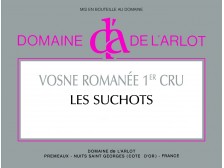
Owned by AXA Millésimes since 1987, Domaine de l'Arlot spans 15 hectares between Nuits-Saint-Georges (Prémeaux) and Vosne-Romanée. This is an estate of excellence, producing some of the most intense, precise whites on the Côte de Nuits, as well as dense reds with chiselled structures that are simultaneously fleshy and delicate.
Rated two stars in the Revue du Vin de France guide (from 2026 onwards).
The 2022 vintage in the press:
Vinous (N.Martin - January 2024): 93-95/100 “The 2022 Vosne-Romanée Les Suchots 1er Cru, matured in 40% new oak, is intense on the nose, opulent yet controlled with mainly red berry fruit, allspice and rose petal scents, just a hint of black olive emerging with time. Very well-defined. The medium-bodied palate comes armed with a voluptuous entry, almost viscous in texture, intense yet delineated with a gradual build to its sweet and detailed finish. This will require four to five years to open for business, but it is certainly a "serious" Les Suchots with a wonderful spicy edge.”
More- To keep or to drink:
- Wait 1 to 2 years
- Apogée:
- 2028-2045
- Organic certification:
- 2022
- Alcohol degree:
- 13.5%
-
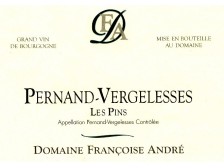
In 2010, the arrival of Lauriane André (Françoise's daughter-in-law) gave a new impetus to the family estate: 7.5 ha around the famous hill of Corton. This young winemaker had very clear ideas: conversion to biodynamic viticulture (acquired in 2012), limitation of yields, careful sorting of grapes, no yeasting, moderate use of new barrels (30% maximum). The results are already there, the magazine Bourgogne Aujourd'hui having nominated her among the 5 hopefuls of the year 2013, stating "her wines are already among the best that the Côte de Beaune can give". It must be said that her models are Patrick Bize and Jean-François Coche-Dury...
Well done! Lauriane André has been named Burgundy Winemaker of the Year in the Hachette 2023 guide: "Domaine Françoise André has established itself as an essential Côte de Beaune signature".
More- To keep or to drink:
- Ready to drink
- Apogée:
- 2025-2033
- Organic certification:
- 2012
-
In 2010, the arrival of Lauriane André (Françoise's daughter-in-law) gave a new impetus to the family estate: 7.5 ha around the famous hill of Corton. This young winemaker had very clear ideas: conversion to biodynamic viticulture (acquired in 2012), limitation of yields, careful sorting of grapes, no yeasting, moderate use of new barrels (30% maximum). The results are already there, the magazine Bourgogne Aujourd'hui having nominated her among the 5 hopefuls of the year 2013, stating "her wines are already among the best that the Côte de Beaune can give". It must be said that her models are Patrick Bize and Jean-François Coche-Dury...
Well done! Lauriane André has been named Burgundy Winemaker of the Year in the Hachette 2023 guide: "Domaine Françoise André has established itself as an essential Côte de Beaune signature".
More- To keep or to drink:
- Ready to drink
- Apogée:
- 2024-2033
- Organic certification:
- 2012
-
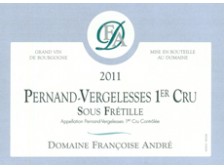
In 2010, the arrival of Lauriane André (Françoise's daughter-in-law) gave a new impetus to the family estate: 7.5 ha around the famous hill of Corton. This young winemaker had very clear ideas: conversion to biodynamic viticulture (acquired in 2012), limitation of yields, careful sorting of grapes, no yeasting, moderate use of new barrels (30% maximum). The results are already there, the magazine Bourgogne Aujourd'hui having nominated her among the 5 hopefuls of the year 2013, stating "her wines are already among the best that the Côte de Beaune can give". It must be said that her models are Patrick Bize and Jean-François Coche-Dury...
Well done! Lauriane André has been named Burgundy Winemaker of the Year in the Hachette 2023 guide: "Domaine Françoise André has established itself as an essential Côte de Beaune signature".
More- To keep or to drink:
- Ready to drink
- Apogée:
- 2026-2035
- Organic certification:
- 2012
- Alcohol degree:
- 13.5%
-
In 2010, the arrival of Lauriane André (Françoise's daughter-in-law) gave a new impetus to the family estate: 7.5 ha around the famous hill of Corton. This young winemaker had very clear ideas: conversion to biodynamic viticulture (acquired in 2012), limitation of yields, careful sorting of grapes, no yeasting, moderate use of new barrels (30% maximum). The results are already there, the magazine Bourgogne Aujourd'hui having nominated her among the 5 hopefuls of the year 2013, stating "her wines are already among the best that the Côte de Beaune can give". It must be said that her models are Patrick Bize and Jean-François Coche-Dury...
Well done! Lauriane André has been named Burgundy Winemaker of the Year in the Hachette 2023 guide: "Domaine Françoise André has established itself as an essential Côte de Beaune signature".
More- To keep or to drink:
- Ready to drink
- Apogée:
- 2025-2035
- Organic certification:
- 2012
- Alcohol degree:
- 13.5%
-
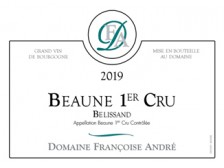
In 2010, the arrival of Lauriane André (Françoise's daughter-in-law) gave a new impetus to the family estate: 7.5 ha around the famous hill of Corton. This young winemaker had very clear ideas: conversion to biodynamic viticulture (acquired in 2012), limitation of yields, careful sorting of grapes, no yeasting, moderate use of new barrels (30% maximum). The results are already there, the magazine Bourgogne Aujourd'hui having nominated her among the 5 hopefuls of the year 2013, stating "her wines are already among the best that the Côte de Beaune can give". It must be said that her models are Patrick Bize and Jean-François Coche-Dury...
Well done! Lauriane André has been named Burgundy Winemaker of the Year in the Hachette 2023 guide: "Domaine Françoise André has established itself as an essential Côte de Beaune signature".
More- To keep or to drink:
- Ready to drink
- Apogée:
- 2026-2038
- Organic certification:
- 2012
- Alcohol degree:
- 13.5%
-
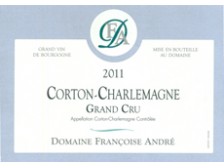
In 2010, the arrival of Lauriane André (Françoise's daughter-in-law) gave a new impetus to the family estate: 7.5 ha around the famous hill of Corton. This young winemaker had very clear ideas: conversion to biodynamic viticulture (acquired in 2012), limitation of yields, careful sorting of grapes, no yeasting, moderate use of new barrels (30% maximum). The results are already there, the magazine Bourgogne Aujourd'hui having nominated her among the 5 hopefuls of the year 2013, stating "her wines are already among the best that the Côte de Beaune can give". It must be said that her models are Patrick Bize and Jean-François Coche-Dury...
Well done! Lauriane André has been named Burgundy Winemaker of the Year in the Hachette 2023 guide: "Domaine Françoise André has established itself as an essential Côte de Beaune signature".
More- To keep or to drink:
- Wait 1 to 2 years
- Apogée:
- 2028-2042
- Organic certification:
- 2012
- Alcohol degree:
- 13.5%
-
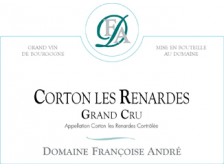
In 2010, the arrival of Lauriane André (Françoise's daughter-in-law) gave a new impetus to the family estate: 7.5 ha around the famous hill of Corton. This young winemaker had very clear ideas: conversion to biodynamic viticulture (acquired in 2012), limitation of yields, careful sorting of grapes, no yeasting, moderate use of new barrels (30% maximum). The results are already there, the magazine Bourgogne Aujourd'hui having nominated her among the 5 hopefuls of the year 2013, stating "her wines are already among the best that the Côte de Beaune can give". It must be said that her models are Patrick Bize and Jean-François Coche-Dury...
Well done! Lauriane André has been named Burgundy Winemaker of the Year in the Hachette 2023 guide: "Domaine Françoise André has established itself as an essential Côte de Beaune signature".
More- To keep or to drink:
- Wait 3 to 5 years
- Apogée:
- 2030-2042
- Organic certification:
- 2012
- Alcohol degree:
- 13.5%
-
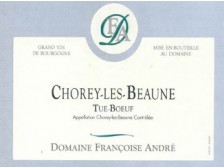
In 2010, the arrival of Lauriane André (Françoise's daughter-in-law) gave a new impetus to the family estate: 7.5 ha around the famous hill of Corton. This young winemaker had very clear ideas: conversion to biodynamic viticulture (acquired in 2012), limitation of yields, careful sorting of grapes, no yeasting, moderate use of new barrels (30% maximum). The results are already there, the magazine Bourgogne Aujourd'hui having nominated her among the 5 hopefuls of the year 2013, stating "her wines are already among the best that the Côte de Beaune can give". It must be said that her models are Patrick Bize and Jean-François Coche-Dury...
Well done! Lauriane André has been named Burgundy Winemaker of the Year in the Hachette 2023 guide: "Domaine Françoise André has established itself as an essential Côte de Beaune signature".
More- To keep or to drink:
- Ready to drink
- Apogée:
- 2025-2032
- Organic certification:
- 2012
-
In 2010, the arrival of Lauriane André (Françoise's daughter-in-law) gave a new impetus to the family estate: 7.5 ha around the famous hill of Corton. This young winemaker had very clear ideas: conversion to biodynamic viticulture (acquired in 2012), limitation of yields, careful sorting of grapes, no yeasting, moderate use of new barrels (30% maximum). The results are already there, the magazine Bourgogne Aujourd'hui having nominated her among the 5 hopefuls of the year 2013, stating "her wines are already among the best that the Côte de Beaune can give". It must be said that her models are Patrick Bize and Jean-François Coche-Dury...
Well done! Lauriane André has been named Burgundy Winemaker of the Year in the Hachette 2023 guide: "Domaine Françoise André has established itself as an essential Côte de Beaune signature".
More- To keep or to drink:
- Ready to drink
- Apogée:
- 2025-2032
- Organic certification:
- 2012
- Alcohol degree:
- 14%
-
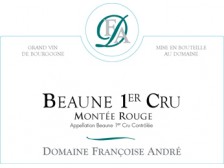
In 2010, the arrival of Lauriane André (Françoise's daughter-in-law) gave a new impetus to the family estate: 7.5 ha around the famous hill of Corton. This young winemaker had very clear ideas: conversion to biodynamic viticulture (acquired in 2012), limitation of yields, careful sorting of grapes, no yeasting, moderate use of new barrels (30% maximum). The results are already there, the magazine Bourgogne Aujourd'hui having nominated her among the 5 hopefuls of the year 2013, stating "her wines are already among the best that the Côte de Beaune can give". It must be said that her models are Patrick Bize and Jean-François Coche-Dury...
Well done! Lauriane André has been named Burgundy Winemaker of the Year in the Hachette 2023 guide: "Domaine Françoise André has established itself as an essential Côte de Beaune signature".
The 2022 vintage in the press:
Bourgogne Aujourd'hui (October–November 2025): 92/100 "Intense, brilliant colour. Open, fruity aromas: raspberries, cherries, morello cherries... The wine is very harmonious, concentrated, dense and invigorating, with good length and great aromatic purity. "
More- To keep or to drink:
- Ready to drink
- Apogée:
- 2026-2033
- Organic certification:
- 2012
- Alcohol degree:
- 13.5%
-
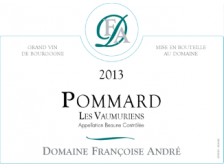
In 2010, the arrival of Lauriane André (Françoise's daughter-in-law) gave a new impetus to the family estate: 7.5 ha around the famous hill of Corton. This young winemaker had very clear ideas: conversion to biodynamic viticulture (acquired in 2012), limitation of yields, careful sorting of grapes, no yeasting, moderate use of new barrels (30% maximum). The results are already there, the magazine Bourgogne Aujourd'hui having nominated her among the 5 hopefuls of the year 2013, stating "her wines are already among the best that the Côte de Beaune can give". It must be said that her models are Patrick Bize and Jean-François Coche-Dury...
Well done! Lauriane André has been named Burgundy Winemaker of the Year in the Hachette 2023 guide: "Domaine Françoise André has established itself as an essential Côte de Beaune signature".
More- To keep or to drink:
- Ready to drink
- Apogée:
- 2026-2036
- Organic certification:
- 2012
- Alcohol degree:
- 13%
-
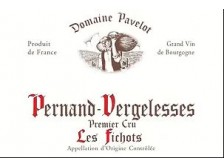
With 10 ha in the combe of Pernand-Vergelesses, Domaine Pavelot present the best facet of Burgundy: organic viticulture thought out in the respect of the viticultural tradition (manual harvest in wicker baskets, natural yeasts, vinification 30% to 50% in whole bunches, etc. ) with the tools and achievements of today's oenology (sorting on a vibrating table, precise sulphiting of the harvest, pre-fermentation maceration, etc.) and above all, prices that are the opposite of the prevailing speculation. Their whites and reds are models of style, balance and aromatic purity.
The Revue du Vin de France rightly hails the work accomplished by Luc Pavelot in recent vintages: “All his 2022s are intense, fragrant, with incredible density of fruit. Pure marvels with an exceptional price/pleasure ratio”.
Awarded one star in the 2026 Guide of the Revue du Vin de France.
The 2023 vintage in the press:
La Revue du Vin de France (Guide 2026): 93/100 "Slightly reduced on the nose, Les Fichots evokes brambles and tart fruit. Its pure, intense fruit reveals an almost rocky sensation despite its soft, silky flesh. A wine to keep in the cellar for at least five years."
More- To keep or to drink:
- Wait 1 to 2 years
- Apogée:
- 2028-2035
- Organic certification:
- 2009
- Alcohol degree:
- 13.5%
-
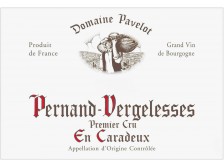
With 10 ha in the combe of Pernand-Vergelesses, Domaine Pavelot present the best facet of Burgundy: organic viticulture thought out in the respect of the viticultural tradition (manual harvest in wicker baskets, natural yeasts, vinification 30% to 50% in whole bunches, etc. ) with the tools and achievements of today's oenology (sorting on a vibrating table, precise sulphiting of the harvest, pre-fermentation maceration, etc.) and above all, prices that are the opposite of the prevailing speculation. Their whites and reds are models of style, balance and aromatic purity.
The Revue du Vin de France rightly hails the work accomplished by Luc Pavelot in recent vintages: “All his 2022s are intense, fragrant, with incredible density of fruit. Pure marvels with an exceptional price/pleasure ratio”.
Awarded one star in the 2026 Guide of the Revue du Vin de France.
The 2023 vintage in the press:
Bourgogne Aujourd'hui (September 2024): 16.5/20 “Beautiful deep nose of black fruits, blueberries, blackberry jam, a hint of smoke. The palate is balanced, dense, rich, velvety-textured, suave, with beautiful, well-melted notes of breeding.”
Bettane + Desseauve (Guide 2026) : 92/100
More- To keep or to drink:
- Wait 1 to 2 years
- Apogée:
- 2027-2035
- Organic certification:
- 2009
- Alcohol degree:
- 13%
-
With 10 ha in the combe of Pernand-Vergelesses, Domaine Pavelot present the best facet of Burgundy: organic viticulture thought out in the respect of the viticultural tradition (manual harvest in wicker baskets, natural yeasts, vinification 30% to 50% in whole bunches, etc. ) with the tools and achievements of today's oenology (sorting on a vibrating table, precise sulphiting of the harvest, pre-fermentation maceration, etc.) and above all, prices that are the opposite of the prevailing speculation. Their whites and reds are models of style, balance and aromatic purity.
The Revue du Vin de France rightly hails the work accomplished by Luc Pavelot in recent vintages: “All his 2022s are intense, fragrant, with incredible density of fruit. Pure marvels with an exceptional price/pleasure ratio”.
Awarded one star in the 2026 Guide of the Revue du Vin de France.
The 2022 vintage in the reviews :
La Revue du Vin de France (Guide 2026) : 95/100 "In Caradeux, a first growth with a refined approach, but with a tight structure – an iron fist in a velvet glove – and a juice of great purity."
Bettane + Desseauve (Guide 2026) : 93/100
More- To keep or to drink:
- Wait 1 to 2 years
- Apogée:
- 2027-2035
- Organic certification:
- 2009
- Alcohol degree:
- 13%
-

Aubert de Villaine, the emblematic co-owner and manager of La Romanée-Conti, lives and works in Bouzeron, the first village south of the Côte de Beaune, on his Domaine acquired in 1971. Assisted since 2003 by his nephew Pierre de Benoist, he practises the same high-flying viticulture as at La Romanée-Conti, combining tradition, openness, purity, rigour and organic cultivation (since 1986).
Domaine rated one star in the Revue du Vin de France guide, and named one of the top 5 producers of 2021 by the magazine Bourgogne Aujourd'hui.The 2023 vintage in the press:
La Revue du Vin de France (Guide 2027): 94/100 “Les Margotés display great refinement, characterised by notes of verbena, a soft texture and subtle bitter notes on the finish.”
More- To keep or to drink:
- Wait 1 to 2 years
- Apogée:
- 2028-2036
- Organic certification:
- 1986
-

Aubert de Villaine, the emblematic co-owner and manager of La Romanée-Conti, lives and works in Bouzeron, the first village south of the Côte de Beaune, on his Domaine acquired in 1971. Assisted since 2003 by his nephew Pierre de Benoist, he practises the same high-flying viticulture as at La Romanée-Conti, combining tradition, openness, purity, rigour and organic cultivation (since 1986).
Domaine rated one star in the Revue du Vin de France guide, and named one of the top 5 producers of 2021 by the magazine Bourgogne Aujourd'hui.More- To keep or to drink:
- Wait 1 to 2 years
- Apogée:
- 2028-2036
- Organic certification:
- 1986
-
Aubert de Villaine, the emblematic co-owner and manager of La Romanée-Conti, lives and works in Bouzeron, the first village south of the Côte de Beaune, on his Domaine acquired in 1971. Assisted since 2003 by his nephew Pierre de Benoist, he practises the same high-flying viticulture as at La Romanée-Conti, combining tradition, openness, purity, rigour and organic cultivation (since 1986).
Domaine rated one star in the Revue du Vin de France guide, and named one of the top 5 producers of 2021 by the magazine Bourgogne Aujourd'hui.More- To keep or to drink:
- Wait 1 to 2 years
- Apogée:
- 2028-2038
- Alcohol degree:
- 14.5%
-
Aubert de Villaine, the emblematic co-owner and manager of La Romanée-Conti, lives and works in Bouzeron, the first village south of the Côte de Beaune, on his Domaine acquired in 1971. Assisted since 2003 by his nephew Pierre de Benoist, he practises the same high-flying viticulture as at La Romanée-Conti, combining tradition, openness, purity, rigour and organic cultivation (since 1986).
Domaine rated one star in the Revue du Vin de France guide, and named one of the top 5 producers of 2021 by the magazine Bourgogne Aujourd'hui.More- To keep or to drink:
- Ready to drink
- Apogée:
- 2026-2040
- Alcohol degree:
- 14%
-
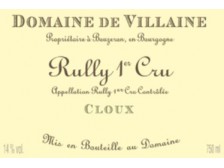
Aubert de Villaine, the emblematic co-owner and manager of La Romanée-Conti, lives and works in Bouzeron, the first village south of the Côte de Beaune, on his Domaine acquired in 1971. Assisted since 2003 by his nephew Pierre de Benoist, he practises the same high-flying viticulture as at La Romanée-Conti, combining tradition, openness, purity, rigour and organic cultivation (since 1986).
Domaine rated one star in the Revue du Vin de France guide, and named one of the top 5 producers of 2021 by the magazine Bourgogne Aujourd'hui.The 2022 vintage in the press:
La Revue du Vin de France (Guide 2026): 92/100 "Slightly reduced, Les Cloux is tighter and has bitter notes."
More- To keep or to drink:
- Wait 1 to 2 years
- Apogée:
- 2028-2040
- Alcohol degree:
- 13.5%
-
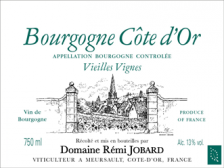
Rémi Jobard is one of Meursault's most respected winemakers, diligently producing the archetype of the great Meursault wines in organic farming since 2008: rich, generous and mineral, subtly wooded and perfectly suited to ageing (8 to 15 years).
More- To keep or to drink:
- Ready to drink
- Apogée:
- 2025-2032
- Organic certification:
- 2008
- Alcohol degree:
- 13%
-
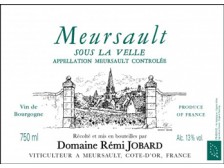
Rémi Jobard is one of Meursault's most respected winemakers, diligently producing the archetype of the great Meursault wines in organic farming since 2008: rich, generous and mineral, subtly wooded and perfectly suited to ageing (8 to 15 years).
More- To keep or to drink:
- Ready to drink
- Apogée:
- 2026-2033
- Organic certification:
- 2008
- Alcohol degree:
- 13%
-
Rémi Jobard is one of Meursault's most respected winemakers, diligently producing the archetype of the great Meursault wines in organic farming since 2008: rich, generous and mineral, subtly wooded and perfectly suited to ageing (8 to 15 years).
More- To keep or to drink:
- Ready to drink
- Apogée:
- 2026-2035
- Organic certification:
- 2008
- Alcohol degree:
- 13%
-
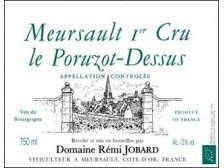
Rémi Jobard is one of Meursault's most respected winemakers, diligently producing the archetype of the great Meursault wines in organic farming since 2008: rich, generous and mineral, subtly wooded and perfectly suited to ageing (8 to 15 years).
More- To keep or to drink:
- Wait 1 to 2 years
- Apogée:
- 2027-2037
- Organic certification:
- 2008
- Alcohol degree:
- 13.5%
-
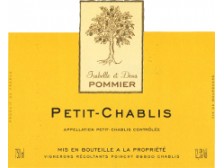
Isabelle and Denis Pommier started in 1990 with only 2 ha. They have made gradual progress, both in the constitution of their vineyards (now 16 ha) and in their cultivation practices (tillage, disbudding, certified organic from the 2014 vintage). Their wines, vinified and aged for a long time in oak barrels for Croix aux Moines and the 1st crus, have a richness and amplitude that contrast with the usual extreme vivacity of the Chablis.
According to the Bettane & Desseauve 2025 guide, “perhaps the most spectacular growth in the Chablis region over the last fifteen years”.
Quoted in the guide of the Revue du Vin de France.
The 2023 vintage in the press:
La Revue du Vin de France (Guide 2026) : 90/100 "More iodine-rich, the Petit Chablis delivers a deep body, faithful to the estate's style, with its salinity giving it length."
More- To keep or to drink:
- Ready to drink
- Apogée:
- 2025-2029
- Organic certification:
- 2014
- Alcohol degree:
- 12.5%
-
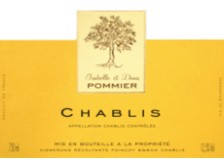
Isabelle and Denis Pommier started in 1990 with only 2 ha. They have made gradual progress, both in the constitution of their vineyards (now 16 ha) and in their cultivation practices (tillage, disbudding, certified organic from the 2014 vintage). Their wines, vinified and aged for a long time in oak barrels for Croix aux Moines and the 1st crus, have a richness and amplitude that contrast with the usual extreme vivacity of the Chablis.
According to the Bettane & Desseauve 2025 guide, “perhaps the most spectacular growth in the Chablis region over the last fifteen years”.
Quoted in the guide of the Revue du Vin de France.
The 2023 vintage in the press:
Bourgogne Aujourd'hui (December 2025): 91/100 "The estate produced 47,000 bottles of this beautiful blended cuvée. Aromas of citrus and white fruits... Fresh fruit flavours on the palate, with good body, good balance and a salty finish typical of Chablis."
More- To keep or to drink:
- Ready to drink
- Apogée:
- 2026-2033
- Organic certification:
- 2014
- Alcohol degree:
- 12.5%
-
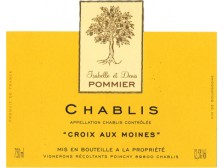
Isabelle and Denis Pommier started in 1990 with only 2 ha. They have made gradual progress, both in the constitution of their vineyards (now 16 ha) and in their cultivation practices (tillage, disbudding, certified organic from the 2014 vintage). Their wines, vinified and aged for a long time in oak barrels for Croix aux Moines and the 1st crus, have a richness and amplitude that contrast with the usual extreme vivacity of the Chablis.
According to the Bettane & Desseauve 2025 guide, “perhaps the most spectacular growth in the Chablis region over the last fifteen years”.
Quoted in the guide of the Revue du Vin de France.
The 2023 vintage in the press:
La Revue du Vin de France (Guide 2027) : 92/100 “Croix aux Moines has a more straightforward and taut profile, with citrus notes on the finish.”
Bourgogne Aujourd'hui (December 2025): 92/100 "This cuvée, produced from 1.15 hectares of 65-year-old vines, reveals precise, elegant aromas of white fruit and citrus... The wine is harmonious, delicious, invigorating and dense, with fresh, juicy fruitiness and good ageing potential."
Bettane et Desseauve (Guide 2027) : 89/100
More- To keep or to drink:
- Ready to drink
- Apogée:
- 2026-2033
- Organic certification:
- 2014
- Alcohol degree:
- 13%
-
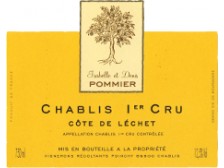
Isabelle and Denis Pommier started in 1990 with only 2 ha. They have made gradual progress, both in the constitution of their vineyards (now 16 ha) and in their cultivation practices (tillage, disbudding, certified organic from the 2014 vintage). Their wines, vinified and aged for a long time in oak barrels for Croix aux Moines and the 1st crus, have a richness and amplitude that contrast with the usual extreme vivacity of the Chablis.
According to the Bettane & Desseauve 2025 guide, “perhaps the most spectacular growth in the Chablis region over the last fifteen years”.
Quoted in the guide of the Revue du Vin de France.
The frosts of April 2021 were dramatic in Chablis: Domaine Pommier's 2021 harvest is barely a quarter of a normal harvest.
More- To keep or to drink:
- Ready to drink
- Apogée:
- 2025-2035
- Organic certification:
- 2014
- Alcohol degree:
- 13%