Catalog

-
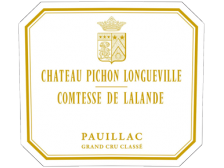
Mr Rouzaud (Champagne Roederer) acquired it in 2007 and has since strengthened the technical team by adding the advice of Mr Boissenot. Pichon-Comtesse remains faithful to the style that has made it so successful, as dense, suave, charming, enchanting and above all endearing.
The 2010 vintage in the press:
Vinous (N. Martin - February 2020): 94/100 "The 2010 Pichon-Longueville Comtesse de Lalande is again, very deep in colour. It has a compact nose that demands aeration, opening up with blackberry, raspberry coulis, graphite and light iris aromas, all well defined but implying that it has more to give in the future. The palate is medium-bodied with firm tannins, a fine bead of acidity, a little peppery in style with a smooth and harmonious, more Saint-Julien like finish. it is an extremely charming and drinkable Pauillac though."
More- To keep or to drink:
- Ready to drink
- Apogée:
- 2022-2040
- Alcohol degree:
- 14%
-
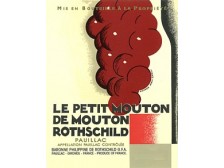
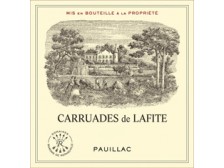
Mouton-Rothschild's second wine, which appeared in 1993, has since made its place among its peers (Carruades de Lafite, Forts de Latour, Pavillon Rouge) by offering each vintage a great Pauillac, full, fleshy, muscular, barely less deep and full-bodied than its famous big brother but with the same cassis finish. Petit Mouton has grown up!
The 2022 vintage in the press:
Vinous (N. Martin – January 2026): 93/100 “The 2022 Le Petit Mouton has a well-defined bouquet with graphite-tinged black fruit that gains intensity in the glass. The palate is medium-bodied with grainy tannins, quite peppery in style but there is ample sapidity and freshness on the finish. Very fine.”
La Revue du Vin de France (Guide 2026) : 96/100 "Le Petit Mouton is a fruit bomb that explodes in the mouth. It coats the palate with notes of blackcurrant, raspberry and blackberry... both dense and airy, it is a very fine, long and balanced wine."
Vinous (A. Galloni - January 2025): 91/100 "The 2022 Le Petit-Mouton is a rich, powerful wine, almost exaggeratedly so in this vintage. A blast of dark cherry, plum, leather, cloves and licorice stains the palate with notable resonance. There's a lot of wine here, but the 2022 is going to need quite a few years to shed some of its considerably youthfulness. The long, sustained finish is very promising."
J-M Quarin (February 2025): 93/100 "Beautiful dark red colour. Intense, ripe fruity nose, particularly smoky when the glass is shaken. Juicy on the attack, suave in the middle palate, with a distinguished touch, the wine rises in the finish, deep, flavoursome and long."
Bettane + Desseauve (Guide 2026) : 94/100
More- To keep or to drink:
- Wait 5 to 10 years
- Apogée:
- 2032-2044
-
Mouton-Rothschild's second wine, which appeared in 1993, has since made its place among its peers (Carruades de Lafite, Forts de Latour, Pavillon Rouge) by offering each vintage a great Pauillac, full, fleshy, muscular, barely less deep and full-bodied than its famous big brother but with the same cassis finish. Petit Mouton has grown up!
The 2020 vintage in the press:
Vinous (N.Martin - November 2024): 94/100 “The 2020 Le Petit Mouton has a seductive bouquet with a mixture of red and black fruit, cedar and pencil lead, seeming to gain precision in the glass-very classic in style. the palate is medium-bodied with a sweet core of cassis and blackberry fruit, very composed and very pure. A cashmere-textured finish fans out gloriously. This is a seriously fine Pauillac for long-term cellaring (written before its identity was revealed).”
Bettane et Desseauve (Guide 2024): 94/100
More- To keep or to drink:
- Wait 3 to 5 years
- Apogée:
- 2030-2044
-
Mouton-Rothschild's second wine, which appeared in 1993, has since made its place among its peers (Carruades de Lafite, Forts de Latour, Pavillon Rouge) by offering each vintage a great Pauillac, full, fleshy, muscular, barely less deep and full-bodied than its famous big brother but with the same cassis finish. Petit Mouton has grown up!
The 2018 vintage in the press:
Vinous (A. Galloni - March 2021): 93/100 "Just as it was from barrel, the 2018 Le Petit-Mouton is fleshy, radiant and very easy to enjoy. Soft contours and silky tannins add to its considerable allure. Because of low yields, the Petit-Mouton was aged entirely in new oak. Rich, sumptuous and bold to the core, the 2018 is a rock star wine."
More- To keep or to drink:
- Wait 1 to 2 years
- Apogée:
- 2027-2042
- More
- To keep or to drink:
- Ready to drink
- Apogée:
- 2025-2038
-
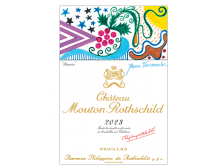
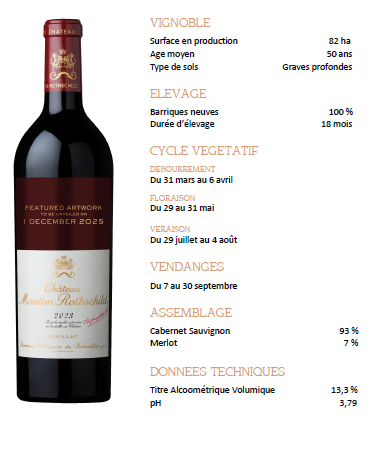
Mouton-Rothschild's upgrade in 1973 from second to first grand cru classé was as legitimate as it was deserved in view of the quality of its terroir, a plateau of 90 hectares of deep gravel to the north of Pauillac, with Lafite-Rothschild as a neighbor. Despite this promotion, and even though it regularly tops the rankings in tastings, Mouton-Rothschild remains to this day the least expensive of the Médoc's premier crus classés. Its powerful, full-bodied style and its ability to age well have led Mr. Bettane to write "perhaps the most formally perfect wine in the Médoc...".
The 2023 vintage in the press:
La Revue du Vin de France (Guide 2027) : 98/100 “Mouton Rothschild delivers a 2023 vintage of masterful balance. The vibrant fruit, underpinned by perfectly controlled ripeness, expresses itself with freshness and intensity. The wine, full-bodied and deep, retains remarkable energy thanks to perfectly integrated structure. The Cabernets display a complex aromatic palette centred on black fruits, spices and a hint of graphite. The finish, with its impressive length, affirms the wine’s standing with panache.”
Vinous (A. Galloni – March 2026): 100/100 “The 2023 Mouton Rothschild is bright and explosive in the glass. Vibrant, rich, deep and so beautifully expressive, the 2023 Mouton is one of my early candidates for wine of the vintage. Cabernet Sauvignon is bumped up to 93% (the highest ever, just behind the 2010), with 7% Merlot and no Cabernet Franc or Petit Verdot in the blend. Time in the glass brings out darker shades of fruit along the wine's complex, dynamic personality. This is a magnificent Grand Vin.”
Vinous (N. Martin – February 2026): 96/100 “The 2023 Mouton Rothschild has a deep, opaque hue. The bouquet is immediately satisfying with a controlled explosion of blackberry, cassis and violets that is quintessential Mouton. Very fine delineation. The palate is medium-bodied yet intense, quite chiseled tannins, gentle grip, supremely well focused with a captivating, mineral-driven finish that is less flamboyant in style compared to recent vintages. Very persistent, this is a Mouton Rothschild with grandeur.”
JM Quarin (February 2026): 97/100 “Deep black colour. An intense, refined, fruity and subtle nose. Becomes pure and precise when swirled in the glass. Deep nuances of black fruit. Meticulous on the palate, very aromatic on the mid-palate, with a classy texture and a flavour of black fruit; the wine flows smoothly, full-bodied and powerful, towards a long, succulent finish, with Pauillac-style tannins that linger on the palate.”
Bettane et Desseauve (Guide 2027) : 98/100
More- To keep or to drink:
- Wait 5 to 10 years
- Apogée:
- 2033-2070
- Grape varieties:
- 93% Cabernet Sauvignon, 7% Merlot
-
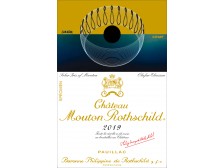
Mouton-Rothschild's upgrade in 1973 from second to first grand cru classé was as legitimate as it was deserved in view of the quality of its terroir, a plateau of 90 hectares of deep gravel to the north of Pauillac, with Lafite-Rothschild as a neighbor. Despite this promotion, and even though it regularly tops the rankings in tastings, Mouton-Rothschild remains to this day the least expensive of the Médoc's premier crus classés. Its powerful, full-bodied style and its ability to age well have led Mr. Bettane to write "perhaps the most formally perfect wine in the Médoc...".
The 2019 vintage in the press:
J-M Quarin (September 2023): 97/100 “Dark, purple, youthful color. Very aromatic nose, fine, fruity, fresh and ripe at the same time. Smoky when the glass is shaken. Meticulous on entry, particularly tasty in the middle, with graceful touch and a body that melts delicately, the wine evolves on moderate power, towards a great finish that leaves room for aroma. Particularly harmonious tannic extraction. No austerity for the vintage.”
Vinous (A. Galloni - February 2022): 99/100 “The 2019 Mouton Rothschild has come together beautifully since I tasted it from barrel; Today, it is unquiestionably one of the wines of the vintage. Powerful and statuesque in its beauty. Mouton is remarkable in every way. Layers of dark-toned fruit confer seriousness and intensity that builds with time. All of the finesseI saw in barrel is still present. Since then, the 2019 has gained flesh and vibrancy. Magnificent."
More- To keep or to drink:
- Wait 3 to 5 years
- Apogée:
- 2029-2040
-
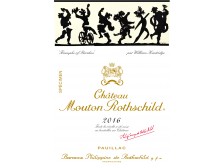
Mouton-Rothschild's upgrade in 1973 from second to first grand cru classé was as legitimate as it was deserved in view of the quality of its terroir, a plateau of 90 hectares of deep gravel to the north of Pauillac, with Lafite-Rothschild as a neighbor. Despite this promotion, and even though it regularly tops the rankings in tastings, Mouton-Rothschild remains to this day the least expensive of the Médoc's premier crus classés. Its powerful, full-bodied style and its ability to age well have led Mr. Bettane to write "perhaps the most formally perfect wine in the Médoc...".
The 2016 vintage in the press:
J-M Quarin (October 2021): 100/100 “Deep, intense, dark color. Very aromatic nose, fine, fruity, complex and creamy. Ample on the attack, velvety and fleshy in the mid-palate, then rich, powerful yet melting, this wine multiplies all the gustatory registers. The finish is complex, savory, with a noble touch, great flavor and immense length. And even after spitting it out, something suave and delicious happens. What a wonder to say so much with such a moderate alcohol level!”
Vinous (A. Galloni - January 2019): 100/100 “A towering, thrilling wine, the 2016 Mouton Rothschild is unbelievably beautiful today. Aromatics, fruit density and vertical structure all come together. In the glass, the 2016 is remarkably vivid and powerful, and yet a gentler, more feminine side emerges with time in the glass. The intense, mineral, savory profile recalls the 1986, but the 2016 has more grace, inner sweetness and sophistication than that wine. Even so , the 2016 is going to need at least a number of years in bottle before it starts drinking well, although it won't be the bruiser the 1986 remains to this day. This is breathtaking wine from Mouton, Tecnical Director Philippe Dhalluin and his team."
More- To keep or to drink:
- Wait 3 to 5 years
- Apogée:
- 2030-2045
-
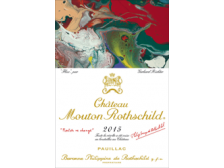
Mouton-Rothschild's upgrade in 1973 from second to first grand cru classé was as legitimate as it was deserved in view of the quality of its terroir, a plateau of 90 hectares of deep gravel to the north of Pauillac, with Lafite-Rothschild as a neighbor. Despite this promotion, and even though it regularly tops the rankings in tastings, Mouton-Rothschild remains to this day the least expensive of the Médoc's premier crus classés. Its powerful, full-bodied style and its ability to age well have led Mr. Bettane to write "perhaps the most formally perfect wine in the Médoc...".
The 2015 vintage in the press:
Vinous (N. Martin - February 2025): 96/100 “The 2015 Mouton-Rothschild has a very Pauillac-like bouquet with cassis, violet and pencil shaving aromas that are all beautifully defined. The palate is medium-bodied with fine-boned tannins. This is so sapid with touches of shucked oyster shells toward the persistent finish. It is excellent."
More- To keep or to drink:
- Wait 1 to 2 years
- Apogée:
- 2028-2045
- Alcohol degree:
- 13.5%
-
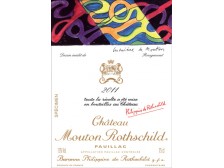
Mouton-Rothschild's upgrade in 1973 from second to first grand cru classé was as legitimate as it was deserved in view of the quality of its terroir, a plateau of 90 hectares of deep gravel to the north of Pauillac, with Lafite-Rothschild as a neighbor. Despite this promotion, and even though it regularly tops the rankings in tastings, Mouton-Rothschild remains to this day the least expensive of the Médoc's premier crus classés. Its powerful, full-bodied style and its ability to age well have led Mr. Bettane to write "perhaps the most formally perfect wine in the Médoc...".
The 2011 vintage in the press:
Vinous (N. Martin - September 2021): 92/100 "The 2011 Mouton-Rothschild feels surprisingly reduced on the nose and needed a lot of coaxing. Leather, mocha, liquorice develops in the glass, quite bretty compared to its peers. The palate is medium-bodied, fleshy and ripe, that mocha translating over from the nose, minty with touches of white pepper on the finish. A very decent Pauillac, a solid rather than spectacular effort from Mouton this year."
More- To keep or to drink:
- Ready to drink
- Apogée:
- 2026-2042
- Alcohol degree:
- 13%
-
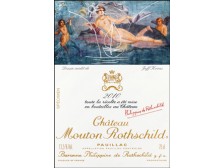
Mouton-Rothschild's upgrade in 1973 from second to first grand cru classé was as legitimate as it was deserved in view of the quality of its terroir, a plateau of 90 hectares of deep gravel to the north of Pauillac, with Lafite-Rothschild as a neighbor. Despite this promotion, and even though it regularly tops the rankings in tastings, Mouton-Rothschild remains to this day the least expensive of the Médoc's premier crus classés. Its powerful, full-bodied style and its ability to age well have led Mr. Bettane to write "perhaps the most formally perfect wine in the Médoc...".
More- To keep or to drink:
- Wait 1 to 2 years
- Apogée:
- 2028-2050
- Alcohol degree:
- 13.5%
-
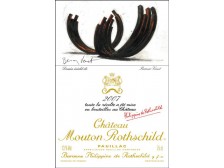
Mouton-Rothschild's upgrade in 1973 from second to first grand cru classé was as legitimate as it was deserved in view of the quality of its terroir, a plateau of 90 hectares of deep gravel to the north of Pauillac, with Lafite-Rothschild as a neighbor. Despite this promotion, and even though it regularly tops the rankings in tastings, Mouton-Rothschild remains to this day the least expensive of the Médoc's premier crus classés. Its powerful, full-bodied style and its ability to age well have led Mr. Bettane to write "perhaps the most formally perfect wine in the Médoc...".
The 2007 vintage in the press:
Vinous (A. Galloni - January 2016): 94/100 "The 2007 Mouton-Rothschild is a gorgeous wine, especially within the context of the vintage. Open, expressive aromatics and forward fruit make the 2007 an excellent choice for drinking now and over the next two decades or so. Although the 2007 is not an epic Mouton, it is without question one of the best recent vintages for current drinking. Smoke, tobacco, cedar and licorice add the closing shades of nuance."
More- To keep or to drink:
- Ready to drink
- Apogée:
- 2019-2032
- Alcohol degree:
- 13%
-
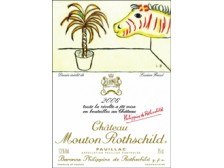
Mouton-Rothschild's upgrade in 1973 from second to first grand cru classé was as legitimate as it was deserved in view of the quality of its terroir, a plateau of 90 hectares of deep gravel to the north of Pauillac, with Lafite-Rothschild as a neighbor. Despite this promotion, and even though it regularly tops the rankings in tastings, Mouton-Rothschild remains to this day the least expensive of the Médoc's premier crus classés. Its powerful, full-bodied style and its ability to age well have led Mr. Bettane to write "perhaps the most formally perfect wine in the Médoc...".
The 2006 vintage in the press:
Vinous (A. Galloni - January 2016): 92/100 "The 2006 Mouton-Rothschild is dark, powerful and intense, with firm tannins that need time to soften. This is an especially dark, somber Mouton. dark black fruit, smoke, menthol gravel and cured meats are some of the signatures. Slight vegetal notes underpin the fruit. I am not sure the 2006 has enough freshness to be a long-term ager or the depth of fruit to outlast tannins."
More- To keep or to drink:
- Ready to drink
- Apogée:
- 2020-2036
- Alcohol degree:
- 13%
-
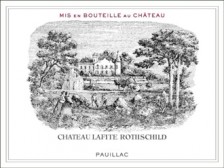
Appointed cellar master in 1994, Mr. Chevallier focused on developing Lafite-Rothschild wines without losing any of the characteristic bouquet of blackcurrant, graphite and cedar. This objective was quickly achieved, placing Lafite at the top of the 1st classified growths (this was already the case in 1855), and revered as such by the Chinese market. The incredible qualities of Lafite's terroir make it a unique vintage and give Cabernet Sauvignon (more than 90% present each year) its most beautiful aromatic expressions.
The great 2020 vintage was awarded the supreme score of 100/1000 by the Revue du Vin de France: "Spectacular, bordering on perfection".
The 2020 vintage in the press:
Hachette (Guide 2024) : Coup de ♥ “With admirable depth, a Lafite on elegance rather than power.”
La Revue du Vin de France (November 2023): 100/100 “Spectacular and verging on perfection. It shows absolute distinction and elegance. The pinnacle of Cabernet aristocracy, falling into the mouth like a tailor-made suit. The alliance of power and elegance”.
Bettane et Desseauve (Guide 2024): 98/100
Vinous (N. Martin - December 2022): 98/100 "The 2020 Lafite-Rothschild, which contains the highest proportion of Merlot since the 2016, hit the bull's eye from barrel. Revisiting the wine in the bottle since July, it still bursts from the glass with copious blackberries, touches of bluberry and juniper, pencil lead of crushed stone. Wonderful delineation. The palate is medium-bodied with finely-chiseled tannins, quite linear and "correct"- aquintessential Lafite-Rothschild in many ways. It gently builds in the mouth while keeping a restraint on things, finishing with fine sapidity yet a little more juiciness than you would have found a decade or two earlier. This has the potential to evolve beautifully over several decades."
More- To keep or to drink:
- Wait 5 to 10 years
- Apogée:
- 2035-2060
- Alcohol degree:
- 12.5%
-
Appointed cellar master in 1994, Mr. Chevallier focused on developing Lafite-Rothschild wines without losing any of the characteristic bouquet of blackcurrant, graphite and cedar. This objective was quickly achieved, placing Lafite at the top of the 1st classified growths (this was already the case in 1855), and revered as such by the Chinese market. The incredible qualities of Lafite's terroir make it a unique vintage and give Cabernet Sauvignon (more than 90% present each year) its most beautiful aromatic expressions.
The great 2020 vintage was awarded the supreme score of 100/1000 by the Revue du Vin de France: "Spectacular, bordering on perfection".
The 2007 vintage in the press:
Vinous (N. Martin - March 2018): 93/100 "The 2007 Lafite-Rothschild is a strong performer in what was a challenging growing season. At 11 years of age the 2007 is beginning to drink well with blackberry, briary, graphite and smoke on the nose, perhaps still that old touch of antique buerau. The palate is medium-bodied with fine-grain tannins and tobacco, well balanced yet typically understated on the finish. The 2007 is not the greatest Lafite-Rothschild for sure, but it should offer 15 to 20 years of drinking pleasure."
More- To keep or to drink:
- Ready to drink
- Apogée:
- 2014-2030
- Alcohol degree:
- 12.5%
-
Appointed cellar master in 1994, Mr. Chevallier focused on developing Lafite-Rothschild wines without losing any of the characteristic bouquet of blackcurrant, graphite and cedar. This objective was quickly achieved, placing Lafite at the top of the 1st classified growths (this was already the case in 1855), and revered as such by the Chinese market. The incredible qualities of Lafite's terroir make it a unique vintage and give Cabernet Sauvignon (more than 90% present each year) its most beautiful aromatic expressions.
The great 2020 vintage was awarded the supreme score of 100/1000 by the Revue du Vin de France: "Spectacular, bordering on perfection".
The 1999 vintage in the press:
Vinous (N. Martin - September 2019): 92/100 "Personally, I have liked this First Growth since I first tasted it in barrel. Now 20 years old, it is beginning to show a little bricking ion the rim. The bouquet is clean and detailed, with black currant, raspberry, melted tar and cedardeveloping in the glass (but less of the allspice that I observed in previous bottles). The palate is medium-bodied and maybe more compact than expected, possibly due to this being ex-cellar. While not a concentrated Lafite-Rothschild, it is very harmonious and elegant, brushed with a subtle pepperiness toward the finish and a tang of dried orange peel on the aftertaste. Delightful."
More- To keep or to drink:
- Ready to drink
- Apogée:
- 2010-2032
- Alcohol degree:
- 12.5%
-
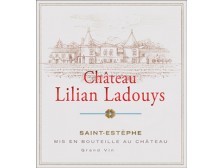
After 15 years of wandering, Lilian-Ladouys was bought in 2008 by Mr Lorenzetti. As at Pédesclaux, extraordinary investments are bearing fruit: Lilian-Ladouys is once again one of the most beautiful crus bourgeois of Saint-Estèphe.
And even of the Médoc, by winning the Coupe des crus bourgeois with its 2012, or by being rated 90/100 by M. Galloni (Vinous) for its 2014.
More- To keep or to drink:
- Ready to drink
- Apogée:
- 2017-2028
- Alcohol degree:
- 13%
-
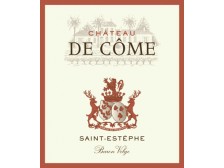
Very rare are the crus of the north of the Médoc to have launched out for the moment in the organic conversion because of a stronger hygrometry than everywhere else in the Gironde. De Côme, a Petit Cru Bourgeois (superior) of 7 ha, has become after 7 years of efforts (and the loss of 2/3 of the 2018 harvest) the first growth of Saint-Estèphe certified organic, in a supple, fine and silky version of the appellation.
More- To keep or to drink:
- Ready to drink
- Apogée:
- 2023-2032
- Organic certification:
- 2018
- Alcohol degree:
- 13%
-
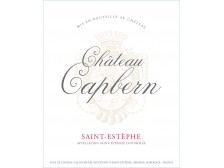
Owned by the same people since 1894, Capbern's history is intimately linked to that of Calon-Ségur. With a vineyard of 38 hectares spread over two distinct areas (one near Calon, the other near Meyney), Capbern has a more chalky terroir, providing just the right amount of acidity and freshness to counterbalance the natural richness of Saint-Estèphe.
With more body than the Marquis (thanks to its high proportion of Cabernet Sauvignon, but also to longer ageing), Capbern is a mini-Calon, for a quarter of the price.The 2022 vintage in the press:
Vinous (N. Martin - January 2025): 91/100 "The 2022 Capbern takes a few minutes to really coalesce on the nose. It has more red fruit than I recall compared to en primeur, with raspberry and wild strawberry scents, touches of wilted rose petal and a hint of dried blood in the background. This opens nicely with aeration. The palate is medium-bodied with a rounded, very harmonious opening, well-judged acidity and a judicious dab of spice toward the finish. This finishes with style, perhaps better than the aromatics at the moment. It is promising."
Vinous (A. Galloni - January 2025): 90/100 "The 2022 Capbern is a powerful, dense wine. Black cherry, chocolate, new leather, dried herbs, licorice and gravel infuse the 2022 with notable depth and presence. This is quite an attractive Capbern. Drink it over the next handful of years."
More- To keep or to drink:
- Ready to drink
- Apogée:
- 2026-2040
-

A historic Saint-Estèphe cru (the second oldest vineyard in the appellation), Tronquoy is ideally situated on the famous "Terrace 3", with its deep clay gravel (up to 8 metres). The vineyard's 30 hectares were bought by Messrs Bouygues shortly after Montrose, and are now managed with the same care and determination to embody the Bordeaux revival: modern vat room, conversion to organic viticulture, quest for freshness and brilliance in the wines...
Tronquoy is still too little known, and is currently Saint-Estèphe's nugget in the making, offering wines that are both accessible when young and with excellent ageing potential.Awarded one star in the 2026 Guide of the Revue du Vin de France.
The 2019 vintage in the press:
La Revue du Vin de France (Guide 2025): 92/100 “The 2019 vintage is tasting very well today, with a noble beginning of evolution on the nose, notes of tobacco, cedar and pepper. On the palate, the wine is melted and firmly in place, stretched out by supple tannins.”
Vinous (N. Martin - January 2023): 92/100 “The 2019 Tronquoy-Lalande has a concentrated nose with fairly intense black fruits, hints of boysenberry, a little richer than some of its peers. The palate is medium-bodied with a dense, powerful, almost plodding entry, very saline on the palate, but I'm looking for more precision and finesse on the finish. This could well develop over time. Tasted blind at Southwold's annual tasting.”
J-M Quarin (March 2022): 94/100 "Dark, beautiful and deep colour. Nose currently a little discreet, but very elegant. Elegant hint of blackberry jam. Full-bodied on the attack, rich and enveloping on the palate, the wine develops powerfully with a deep flavour. The finish is slightly austere, but behind the tannins there is a superb aromatic return. A racy wine."
More- To keep or to drink:
- Ready to drink
- Apogée:
- 2024-2035
- Organic certification:
- 2024
- Alcohol degree:
- 14.5%
-
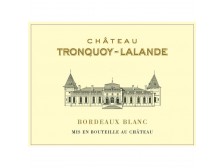
A historic Saint-Estèphe cru (the second oldest vineyard in the appellation), Tronquoy-Lalande is ideally situated on the famous "Terrace 3", with its deep clay gravel (up to 8 metres). The vineyard's 30 hectares were bought by Messrs Bouygues shortly after Montrose, and are now managed with the same care and determination to embody the Bordeaux revival: modern vat room, conversion to organic viticulture, quest for freshness and brilliance in the wines...
Tronquoy-Lalande is still too little known, and is currently Saint-Estèphe's nugget in the making, offering wines that are both accessible when young (excellent 2019, rated 93/100 by M. Quarin) and with excellent ageing potential (2012 now at its peak, with a creamy texture that makes it gourmet).Ch. Tronquoy-Lalande is renamed Tronquoy (tout court) as of the 2019 vintage.
The 2012 vintage in the press:
Vinous (N. Martin - February 2022): 90/100 "The 2012 Tronquoy-Lalande has a slightly meatier/dried blood tinged bouquet with scents of melted tar coming through with time and later a distant touch of mint. The palate is medium-bodied with rather rustic tannins. A bold Saint-Estèphe that lacks a bit of grace, ferrous and overtly spicy on the finish."
More- To keep or to drink:
- Ready to drink
- Apogée:
- 2020-2030
- Alcohol degree:
- 13.5%
-
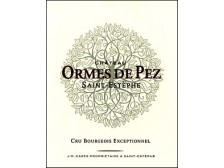
On the terroir of Pez, known to be the best in St-Estèphe (excluding classified growths), the Cazes family uses the same recipes here as those that made Lynch-Bages so successful: generous fruit and opulent texture. Ormes de Pez is an'almost' Lynch-Bages but at a quarter of the price!
The 2022 vintage in the press:
La Revue du Vin de France (December 2025): 95/100 "The Cazes family (Lynch-Bages) takes meticulous care of this Saint-Estèphe estate. The wines never lack charm and voluptuousness. Delicious when young and very vibrant, they are, like this 2022, capable of ageing well."
Vinous (N. Martin - January 2025): 93/100 "The 2022 Ormes de Pez, aged in 45% new oak, has a very perfumed and pure bouquet featuring black cherry, raspberry, cedar and iodine scents. Perhaps it needs a little more Saint-Estèphe character to filter through? The palate is medium-bodied and well balanced, with grainy tannins and a core of black fruit mixed with cracked black pepper and a pinch of sea salt. There is pleasing sapidity and a touch of graphite lingering on the Pauillac-styled aftertaste. This is very fine."
J-M Quarin (February 2025): 93/100 "Beautiful dark red. Intense nose with ripe fruit. The palate is fascinating for its juicy character, its full body in the middle and its long, savoury finish with fatty tannins."
Bettane + Desseauve (Guide 2027) : 92/100
More- To keep or to drink:
- Wait 1 to 2 years
- Apogée:
- 2028-2040
- Alcohol degree:
- 14.5%
-
On the terroir of Pez, known to be the best in St-Estèphe (excluding classified growths), the Cazes family uses the same recipes here as those that made Lynch-Bages so successful: generous fruit and opulent texture. Ormes de Pez is an'almost' Lynch-Bages but at a quarter of the price!
The 2021 vintage in the press:
La Revue du Vin de France (Guide 2025): 92/100 “This is a very greedy, deliciously fruity wine with undeniable charm.”
Vinous (N.Martin - November 2023): 91/100 “The 2021 Ormes de Pez is quite striking on the nose, brinier than i recall from barrel, with lifted blackberry and boysenberry fruit and a touch of balsamic. The palate is medium-bodied with grainy tannins, again, very saline in the mouth and slightly granular in texture, with black olive tapenade toward the finish. Quite feisty at the moment, give this three or four years in bottle.”
More- To keep or to drink:
- Wait 1 to 2 years
- Apogée:
- 2027-2036
- Alcohol degree:
- 13%
-
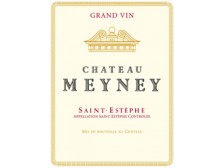
On a magnificent gravelly hillock that has nothing to envy that of its neighbour Montrose, Meyney (Crédit Agricole property) is a serious candidate for the title of best Médoc bourgeois cru in each vintage. Long, complex, refined, distinguished tannins: a great Médoc cut for long ageing. Recommended by Mr. De Boüard (Angelus) from the 2014 vintage.
The 2023 vintage in the press:
La Revue du Vin de France (Guide 2027) : 94/100 “Meyney 2023 is serious but not austere; a deep, concentrated wine that is very smooth yet retains excellent balance. The finish concludes with a lovely after-taste of black fruits, accompanied by elegant tannins.”
Vinous (A. Galloni – March 2026): 93/100 “The 2023 Meyney is every bit as convincing as it was en primeur. Dark and quite savory, the 2023 has a lot to offer. Gravel, incense, tobacco, licorice, dried herbs, chocolate and pressed lavender infuse this mid-weight Saint-Estèphe with a good deal of character. Beams of tannin shape the insistent, driving finish.”
J-M Quarin (March 2026): 93/100 "A beautiful dark red with black highlights. Intense nose, with pure, ripe and fresh fruit. Mellow on the palate, the wine develops into a full-bodied wine, with a fine richness that constantly runs across the palate. It finishes long, with very well-coated tannins and noble accents in the aroma. A result that makes you want to drink it. A great success."
Vinous (N. Martin - February 2026): 91/100 "The 2023 Meyney has an open, expressive nose with more red fruit than its appellation peers, raspberry and wild strawberry mixed with loam, later hints of blackberry. The palate is medium-bodied, with grainy tannins on the entry. Fine density, showing more grip than in barrel, with an earthy and quite sustained finish. There is promise here."
Le Point (May 2026) : 16/20 “Cassis, soft on the palate, fresh, light, beautifully integrated, with a lively finish.”
Bettane et Desseauve (Guide 2027) : 95/100
More- To keep or to drink:
- Wait 1 to 2 years
- Apogée:
- 2027-2038
- Organic certification:
- 2024
- Alcohol degree:
- 13.5%
-
On a magnificent gravelly hillock that has nothing to envy that of its neighbour Montrose, Meyney (Crédit Agricole property) is a serious candidate for the title of best Médoc bourgeois cru in each vintage. Long, complex, refined, distinguished tannins: a great Médoc cut for long ageing. Recommended by Mr. De Boüard (Angelus) from the 2014 vintage.
The 2021 vintage in the press:
La Revue du Vin de France (Guide 2025): 93/100 “A dense wine, still a little under the influence of its wood, but with potential. Prieur, much more supple, can be drunk now."
Vinous (N.Martin - November 2023): 92/100 “The 2021 Meyney, which has been on a strong run of form of late, has a lovely bouquet with vivid red berry fruit, crushed stone and orange rind scents that are focused and lively. The palate is medium-bodied with a structured opening (as you would expect), more fruit concentration than its peers and a truffle-tinged finish. This will cruise nicely over the next 15 to 20 years.”
Bettane + Desseauve (Guide 2026) : 91/100
En Magnum (September–October–November): 92/100 “The red fruit comes through with depth, enhanced by spicy notes. Well-structured on the palate, it shows great ageing potential.”
More- To keep or to drink:
- Ready to drink
- Apogée:
- 2026-2033
- Organic certification:
- 2024
-
On a magnificent gravelly hillock that has nothing to envy that of its neighbour Montrose, Meyney (Crédit Agricole property) is a serious candidate for the title of best Médoc bourgeois cru in each vintage. Long, complex, refined, distinguished tannins: a great Médoc cut for long ageing. Recommended by Mr. De Boüard (Angelus) from the 2014 vintage.
The 2020 vintage in the press:
La Revue du Vin de France (September 2023): 95/100 “The wine is solidly constituted but also very racy, and finds its balance. It has plenty of substance and superb tannin definition, which harmonize on the finish.”
Vinous (N.Martin - November 2024): 93/100 “The 2020 Meyney has a crisp, focused and detailed bouquet with precise blackberry, blueberry and cedar scents that are almost Pauillac in style. The palate is medium-bodied with impressive concentration on the entry, layers of licorire-tinged black fruit and peppery finish that wants to make a statement; But it's just a bit squidgy. It will require five or six years in bottle just to shave its edges.”
J-M Quarin (June 2023): 92/100 “Dark, intense and beautiful color. Very aromatic, fruity, creamy and slightly truffled nose. Meticulous on entry, refined to the touch, very aromatic, the wine develops on a graceful general bearing. It melts in the finish, fragrant, long, sappy and very good”.
More- To keep or to drink:
- Wait 1 to 2 years
- Apogée:
- 2028-2042
-
On a magnificent gravelly hillock that has nothing to envy that of its neighbour Montrose, Meyney (Crédit Agricole property) is a serious candidate for the title of best Médoc bourgeois cru in each vintage. Long, complex, refined, distinguished tannins: a great Médoc cut for long ageing. Recommended by Mr. De Boüard (Angelus) from the 2014 vintage.
The 2018 vintage in the press:
La Revue du Vin de France (december 2022): 94/100 “This wine has a fantastic terroir, worthy of a classified growth. This explains why it enjoys an admirable reputation, well-deserved in view of the many great wines that have been produced here. Some very fine old vintages can still be found (such as the admirable 1986 or 1989). However, the château doesn't make wines for wine-lovers in a hurry, like the 2019s or 2018s; a decade in the cellar is essential to fully enjoy them.”
Vinous (A. Galloni - March 2021): 93/100 "The 2018 Meyney is every as impressive as it was en primeur. Technical Director Anne Le Naour has done a terrific job in reining in some of the excess weight and power of previous vintages, but without sacrificing richness. Classy and layered, Meyney boasts fabulous depth and tons of character. Ripe red/purplish fruit, spice, blood orange, smoke and incense are some of the many aromas and flavors that mesh together.[...] The 2018 Meyney is a wine of immense oleasure. Best of all, it is tremendous value."
More- To keep or to drink:
- Wait 1 to 2 years
- Apogée:
- 2028-2040
- Alcohol degree:
- 14.5%
-
On a magnificent gravelly hillock that has nothing to envy that of its neighbour Montrose, Meyney (Crédit Agricole property) is a serious candidate for the title of best Médoc bourgeois cru in each vintage. Long, complex, refined, distinguished tannins: a great Médoc cut for long ageing. Recommended by Mr. De Boüard (Angelus) from the 2014 vintage.
The 2014 vintage in the press:
Vinous (N. Martin - February 2020): 93/100 "The delightful 2014 Meyney marks a year when winemaker Anne Le Naour and her team raised theier game once more. A nose of lovely red berry fruit mixed with wilted rose petals and cedar gains intensity with aeration. The palate demonstrates much finer tannins than previous vintages, well-pitched acidity and superb precision on the classically styled finish. This is just entering its drinking plateau."
More- To keep or to drink:
- Ready to drink
- Apogée:
- 2022-2034
- Alcohol degree:
- 14%
-
On a magnificent gravelly hillock that has nothing to envy that of its neighbour Montrose, Meyney (Crédit Agricole property) is a serious candidate for the title of best Médoc bourgeois cru in each vintage. Long, complex, refined, distinguished tannins: a great Médoc cut for long ageing. Recommended by Mr. De Boüard (Angelus) from the 2014 vintage.
The 2012 vintage in the press:
Vinous (N. Martin - February 2022): 90/100 "The 2012 Meyney offers mainly red fruit on the nose laced with soy and peppery notes, moderate in terms of complexity. The palate is medium-bodied with firm tannins, quite structured with good weight, though it is missing some precision towards the finish that feels a tad bitter."
More- To keep or to drink:
- Ready to drink
- Apogée:
- 2018-2028
- Alcohol degree:
- 13.5%
-
On a magnificent gravelly hillock that has nothing to envy that of its neighbour Montrose, Meyney (Crédit Agricole property) is a serious candidate for the title of best Médoc bourgeois cru in each vintage. Long, complex, refined, distinguished tannins: a great Médoc cut for long ageing. Recommended by Mr. De Boüard (Angelus) from the 2014 vintage.
More- To keep or to drink:
- Ready to drink
- Apogée:
- 2020-2032
- Alcohol degree:
- 13.5%